
How to clean artificial plants realistically comes down to one thing: remove dust and grime without leaving shine, streaks, or that “plastic” look people notice across the room.
If your faux plants look dull, grayish, or oddly glossy after you wipe them, you’re not alone. Most artificial greenery collects a mix of dry dust, kitchen grease, pet dander, and even HVAC residue, and each one reacts differently to cleaning.
This guide breaks it into practical scenarios, quick tests, and step-by-step methods, plus a few mistakes that quietly ruin color and texture.
Why artificial plants stop looking “real” (it’s not just dust)
When artificial plants look fake, it’s usually a surface issue, not the design. In real homes, these are the common culprits.
- Dry dust buildup dulls color and blurs leaf veins, especially on matte finishes.
- Sticky film from cooking oils, candles, or fireplaces grabs dust and turns it gray.
- Hard-water minerals leave pale spots after rinsing or misting.
- Sun and heat wear can fade dye or make some plastics brittle, so aggressive scrubbing creates scuffs.
- Wrong “shine” products can create an unnatural gloss that screams “fake” under lighting.
According to EPA, indoor air can contain a mix of particles and residues that settle on surfaces over time, which is why decorative items near vents and kitchens get dirty faster than you expect.
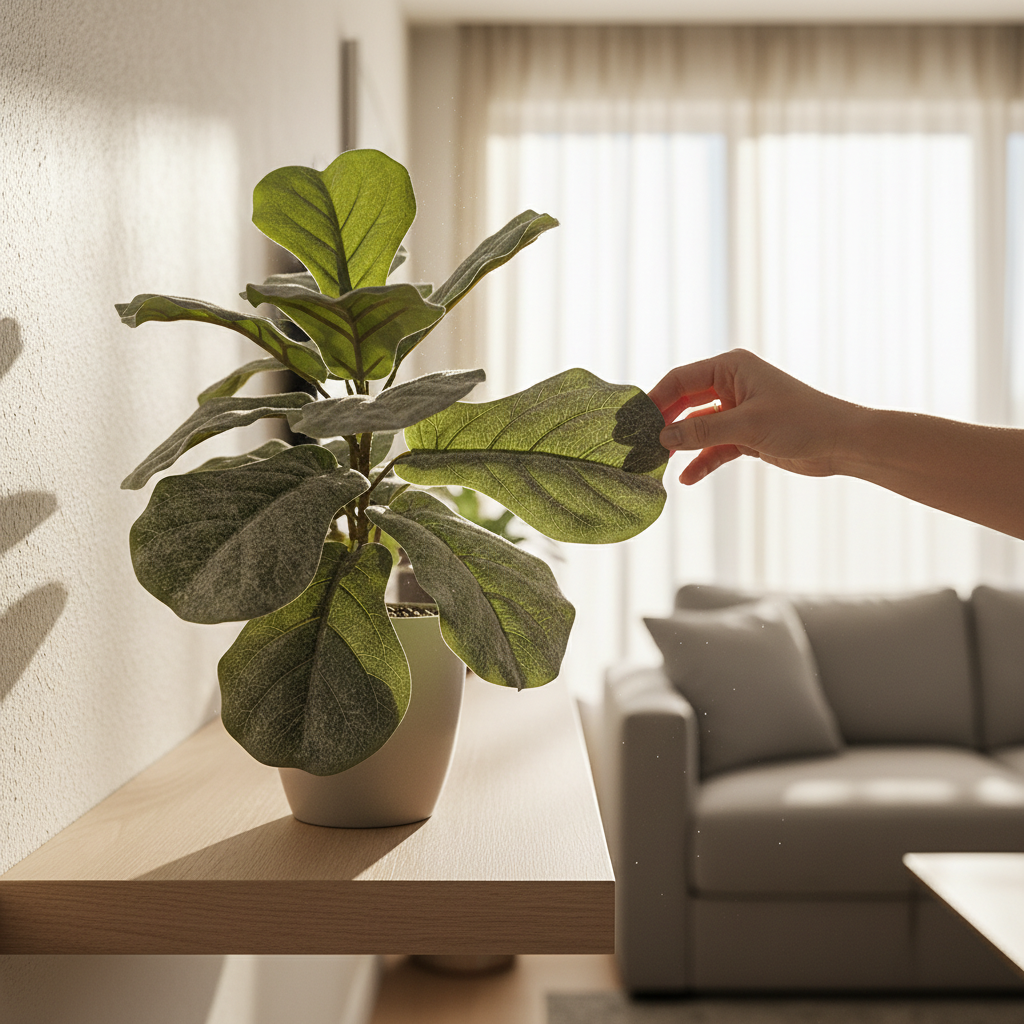
Quick self-check: what kind of dirt are you dealing with?
Before you clean, do two fast checks. It saves you from rubbing oily grime into a bigger mess.
- Finger swipe test: swipe one leaf. If it turns to powder, it’s mostly dry dust. If it smears, you have oil or residue.
- Damp cloth test: dab a hidden leaf. If you see brown/gray transfer and the leaf feels tacky, treat it like kitchen-film dirt.
Then consider material details: flocked leaves (velvety), silk/polyester fabric petals, latex-coated leaves, and rigid plastic all prefer different handling.
Choose the right method: a simple decision table
If you want results that look natural, match the method to the plant type and location.
| Situation | Best approach | Avoid |
|---|---|---|
| Light dust on plastic greenery | Microfiber + soft brush, finish with air dry | Gloss sprays that add shine |
| Dust in tight crevices (succulents, ferns) | Cool hair dryer, soft paintbrush, or canned air | Hot air, close-range blasting |
| Kitchen residue or sticky film | Mild soap solution, damp wipe, then rinse-wipe | Soaking the whole arrangement (may loosen glue) |
| Fabric flowers or silk leaves | Dry dusting, spot clean, gentle blot | Heavy wetting that warps fabric |
| Outdoor faux plants | Rinse + mild soap, shade-dry | Harsh cleaners that fade color |
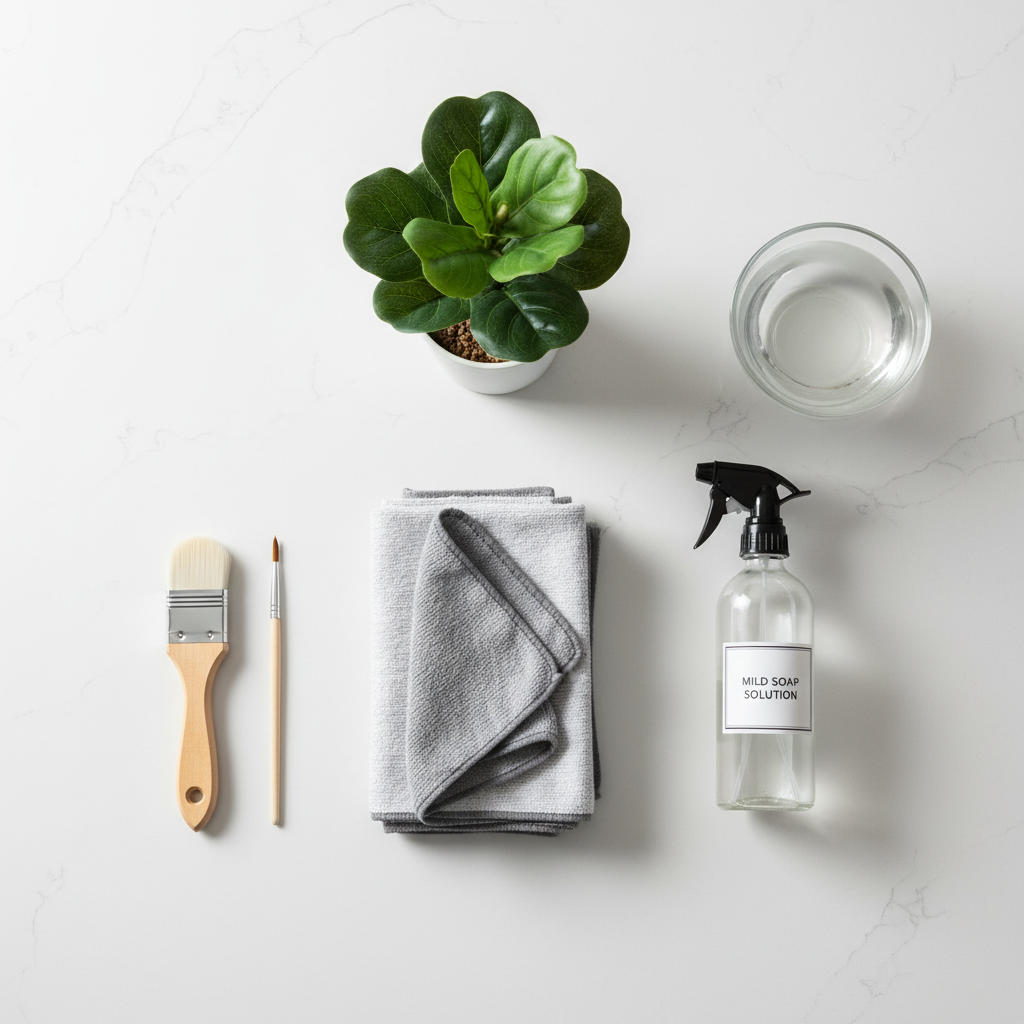
The realistic clean: step-by-step for most artificial plants
If you’re cleaning typical plastic or latex-style leaves, this is the safest “default” workflow. It’s also the easiest way to clean artificial plants realistically without changing the finish.
1) Dry remove what you can
- Take the plant outside or over a tub to contain dust.
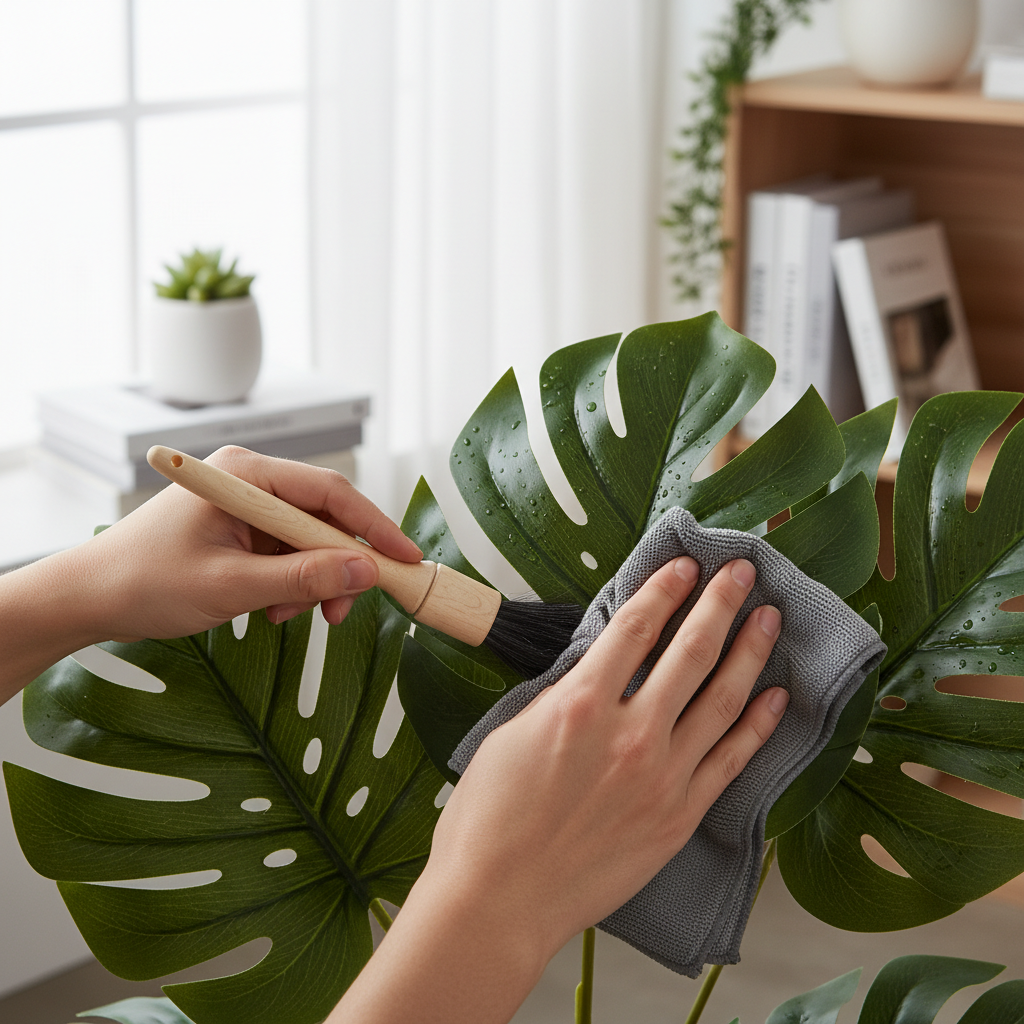
- Use a microfiber cloth for broad leaves and a soft brush for texture and stems.
- For dense foliage, use a hair dryer on cool from 12–18 inches away.
2) Mix a gentle cleaner
In many homes, plain water is not enough once dust bonds with oils. Try a mild mix:
- Warm water + a few drops of mild dish soap
- Optional: a small splash of white vinegar if you suspect hard-water spots, but test first
Keep it mild. Strong degreasers can strip coatings or discolor dyes, especially on cheaper faux greenery.
3) Wipe, don’t soak
- Dampen the cloth, wring it out well, then wipe leaf-by-leaf.
- Use cotton swabs for tight corners and textured stems.
- If you hit sticky grime, let the damp cloth sit on the spot for 10–20 seconds, then wipe again.
4) “Rinse-wipe” to prevent residue
This is where many people lose the realistic finish. Soap left behind attracts more dust.
- Use a second cloth dampened with clean water.
- Wipe once more, then air dry fully before returning to its spot.
Tricky materials: silk, flocked, and delicate arrangements
Some faux plants are designed to look real because of texture, and that same texture gets damaged easily. If you’re aiming to clean artificial plants realistically, you’ll want to protect that surface even if it means a slower method.
Silk/polyester leaves and faux flowers
- Start with dry dusting using a soft brush.
- Spot clean using a barely damp cloth and blot rather than rub.
- Let them dry in shape, away from direct sun.
Flocked (velvet-like) leaves
- Avoid wet cleaning when possible; water can mat the fibers.
- Use cool air + a very soft brush, working in one direction.
- If there’s sticky residue, test a tiny hidden area with minimal moisture.
Arrangements with glued moss, stones, or floral foam
- Wipe leaves individually and keep moisture away from the base.
- If the top dressing looks dusty, remove loose debris with a dry brush instead of rinsing.
Key points that keep faux plants looking real
- Matte beats shiny: if your plant looks glossy after cleaning, you likely left residue or used a product that adds shine.
- Clean in sections: top to bottom prevents redepositing dust.
- Two-cloth rule: one for cleaning, one for rinse-wipe.
- Dry completely: moisture in joints and wire stems can loosen adhesives over time.
- Placement matters: plants near stoves and vents need gentler, more frequent cleaning.
Common mistakes (and what to do instead)
A lot of “quick hacks” work once, then your greenery starts looking worse. Here are the repeat offenders.
- Using furniture polish: it can create an unnatural sheen and attract dust faster. Use rinse-wipe instead.
- Soaking everything: water can seep into wrapped stems, glued seams, and arrangements. Stick to controlled moisture.
- Scrubbing textured leaves: it scuffs finishes and flattens detail. Use soft brushing and patience.
- Skipping the test spot: dyes and coatings vary a lot. Test on a hidden leaf first.
According to CPSC, it’s smart to follow safety guidance and product labels when using household chemicals. If you’re unsure about a cleaner interacting with coatings or dyes, keep the formula mild or consult a professional cleaner for advice.
When you might want professional help
Most faux plants clean up well at home, but a few scenarios are worth extra caution.
- High-value arrangements with specialty materials or heavy flocking where water damage is likely.
- Large trees (6–10 ft) with integrated lights or complex frames where moisture could cause issues.
- Mold concerns nearby: if the surrounding area has dampness or musty smells, cleaning décor alone won’t solve the source, and it may be worth consulting a qualified professional.
Practical routine: keep them fresh with less effort
If you hate deep-cleaning days, a small routine keeps things looking believable. This is also the easiest way to keep cleaning artificial plants realistically from turning into a project.
- Weekly: quick microfiber pass on the most visible leaves.
- Monthly: cool-air blowout for dense foliage and crevices.
- Quarterly: damp clean + rinse-wipe for plants near kitchens, entryways, or vents.
Conclusion: the “realistic” look is mostly about residue control
When faux greenery looks tired, the fix is rarely dramatic, it’s usually a careful dust removal followed by a gentle wipe that doesn’t leave soap or shine behind. If you do the quick dirt check, clean with controlled moisture, and finish with a rinse-wipe, your plants tend to read as fresh again in normal room light.
If you want one next step, pick your dirtiest plant and do the two-cloth method today, then move it a little farther from the kitchen vent if that’s where the grime starts.
FAQ
- How do you clean artificial plants realistically without making them shiny?
Stick to microfiber + mild soap only when needed, then do a clean-water rinse-wipe. Shine usually comes from residue or polish-type products. - Can I put artificial plants in the shower?
Sometimes, but it depends on the build. Simple plastic plants may tolerate a gentle rinse, while glued arrangements and fabric florals often don’t. If you try it, use cool water and let it fully dry. - What’s the safest cleaner for faux plants?
In many cases, warm water with a few drops of mild dish soap works well. Strong degreasers, bleach, and abrasive powders can damage coatings, so test a hidden spot first. - How do I remove greasy kitchen film from artificial leaves?
Use a wrung-out damp cloth with mild soap, let it sit briefly on sticky areas, then wipe and rinse-wipe. Going too wet can loosen adhesives around stems and joints. - How do I clean artificial plants with tiny leaves (like ferns)?
Dry methods help most: cool hair dryer, soft brush, or canned air at a safe distance. If buildup is sticky, spot wipe the worst areas rather than trying to wet everything. - Can I use vinegar to clean artificial plants?
Vinegar can help with mineral spots, but it may affect dyes or coatings on some materials. Use a very diluted mix and test an inconspicuous leaf before doing the whole plant. - How often should faux plants be cleaned?
It varies by placement. Near kitchens, pets, or vents, light cleaning monthly is common, while low-traffic areas might only need a quarterly wipe plus occasional dusting.
If you’re cleaning several arrangements at once and want a more hands-off setup, it can help to keep a dedicated microfiber cloth, soft brush, and a labeled mild-mix spray bottle in the same bin, you’ll actually use them when you notice that first dull layer.