
How to choose perfect curtain length usually comes down to two things: where you mount the rod and where you want the fabric to end, because a half-inch mistake can make “custom” curtains look oddly short or messy fast.
If you have ever ordered panels online and they arrived pooling like a wedding dress, or worse, hovering above the floor like high-water pants, you already know why length matters. Curtain length affects privacy, light control, and the perceived height of a room, sometimes more than people expect.
This guide walks you through measuring (the part most people rush), choosing a finish that fits your room, and sanity-checking your plan before you buy. I’ll also point out the common traps, like measuring from the wrong starting point or forgetting curtain rings add height.
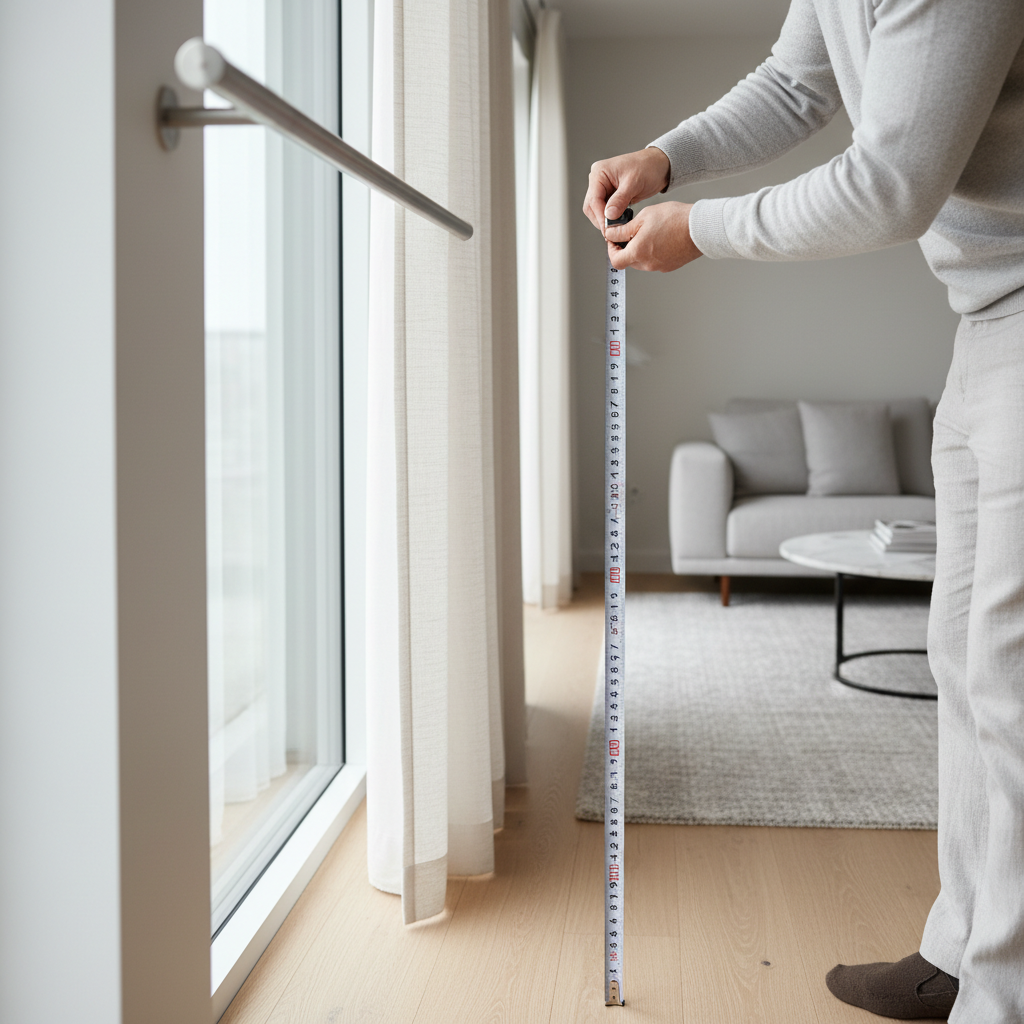
Start with the decision that controls everything: rod placement
The same window can take totally different curtain lengths depending on where the rod sits. Many “wrong length” complaints are really “rod mounted too low” problems.
- Standard look: rod a few inches above the window frame.
- Taller, more finished look: rod closer to the ceiling or just below crown molding, which visually stretches the wall.
- Wider look: rod extends past the window on both sides, so panels can stack off the glass.
According to The Shade Store, mounting drapery higher and wider than the window can make the window appear larger and lets in more light when curtains are open.
How to measure curtain length (without the usual gotchas)
When people ask how to choose perfect curtain length, they often focus on the number on the product page. The more important step is measuring from the exact spot the curtain will hang to the exact spot you want it to end.
Step-by-step measuring
- Decide your hanging method: rod pocket, grommet, back tab, clip rings, or drapery hooks.
- Measure from the top reference point:
- Rod pocket/back tab: measure from the top of the rod.
- Grommet: measure from the top of the rod to the floor, then confirm where the grommets will actually sit (they can dip slightly).
- Clip rings: measure from the bottom of the ring to the floor, and remember clips can add a bit of drop depending on style.
- Drapery hooks (pinch pleat): measure from the ring/eyelet where the hook hangs, not from the rod.
- Measure to your planned endpoint: sill, apron, just above the floor, kiss the floor, or puddle.
- Measure in at least two spots (left and right). Floors aren’t always level, especially in older homes.
Quick reality check: if you are changing the rod height later, do not order based on your current setup. Measure after the placement is decided.
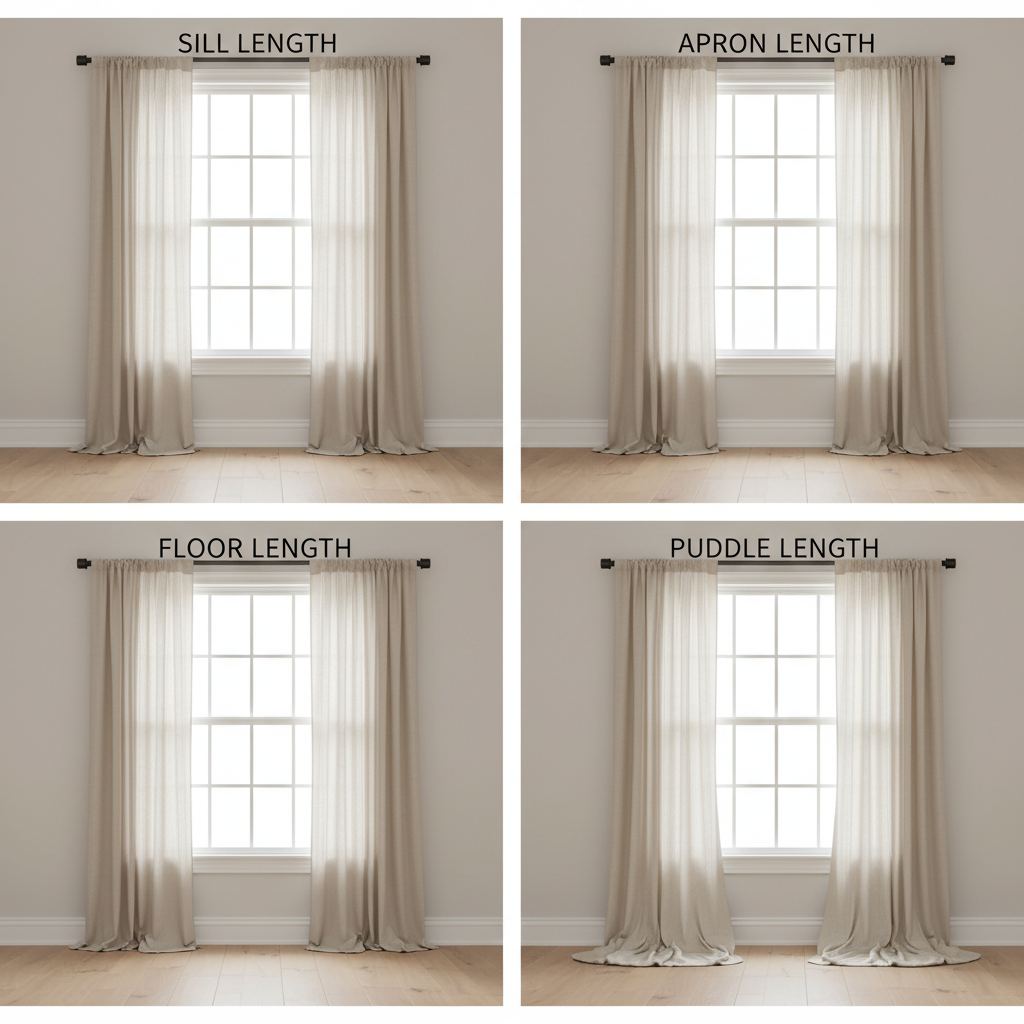
Pick a “finish” style: sill, apron, floor, or puddle
Length is not one-size-fits-all. The “right” finish depends on the room function, the fabric weight, and how much fuss you’re willing to live with.
| Finish | Where it ends | Best for | Watch-outs |
|---|---|---|---|
| Sill length | Right at the window sill | Kitchens, bathrooms, small windows | Can look “short” in formal rooms |
| Apron length | A few inches below sill | Casual spaces, when there’s furniture under the window | Must clear radiators/vents |
| Floor length | About 1/2 inch above the floor | High-traffic rooms, rentals, homes with pets | Too high looks accidental, measure carefully |
| “Kiss” the floor | Just touches the floor | Living rooms, bedrooms, a tailored look | Needs accurate hemming and level floors |
| Puddle | Extra fabric on the floor (1–3+ inches) | Formal spaces, decorative drapery | Dust, cleaning hassle, tripping risk |
A practical length checklist by room (what usually works)
There are exceptions, but if you want a low-regret starting point, use the room’s job as the deciding factor.
- Living room: kiss the floor or 1/2 inch above, especially if you open and close curtains often.
- Bedroom: floor length is common, and blackout liners feel more polished when panels are long enough to overlap slightly.
- Dining room: floor length reads “finished,” puddling can work if you rarely touch them.
- Kitchen: sill or apron, because splashes and cleaning are real.
- Bathroom: usually not full drapery, but if you do use curtains, keep them clear of wet zones.
- Kids’ room/pets: avoid puddling; choose a hem that stays off the floor.
If you’re still torn, choose the tailored option. It’s easier to live with, and it’s easier to adjust later.
Self-test: are you about to buy the wrong length?
Before you click “checkout,” run through this quick self-check. It catches most mistakes I see with ready-made panels.
- You measured from the top of the window, not from the rod or ring where the fabric starts.
- You plan to use clip rings, but you did not account for the extra drop.
- Your floor slopes, and you only measured in the center.
- You’re choosing puddle length for a room where people walk close to the window.
- You’re mounting the rod “just over the trim” because it feels safe, but you actually want a taller look.
- You picked a standard 84-inch panel without comparing it to your real measurement.
If two or more bullets hit home, slow down and re-measure. This is the point where how to choose perfect curtain length becomes less about taste and more about math.
Ready-made lengths vs custom: choosing the closest match
In the U.S., common ready-made panel lengths are often 63, 84, 95, 108, and 120 inches, but availability varies by brand. The trick is picking the closest length that supports your finish style, then deciding whether hemming makes sense.
When ready-made is usually fine
- Your measurement lands near a standard size, and you’re aiming for 1/2 inch above the floor or a slight “kiss.”
- You’re okay with a small gap, especially in casual rooms.
- You can use rings or hooks to fine-tune height a little.
When custom or hemming becomes worth it
- You want a crisp kiss-the-floor look, and your floors are not perfectly level.
- You’re investing in heavier fabric that shows uneven hems.
- Your rod is mounted high, and standard panels come up short.
According to Consumer Reports, measuring carefully is a key step when buying window coverings, since small measurement errors can lead to poor fit and light gaps.

Common mistakes (and the fixes that actually help)
A few mistakes show up again and again, and most are easy to avoid once you know what you’re looking for.
- Buying “standard” 84-inch panels for an 8-foot wall with a high-mounted rod: go 95 or 108, or plan to hem, not “hope.”
- Ignoring stack-back space: if panels can’t stack off the glass, the window looks narrower and you lose light.
- Puddling in a busy space: looks romantic in photos, feels annoying in real life, especially with pets or a robot vacuum.
- Forgetting hardware height changes: rings, clips, and header styles shift where the fabric starts.
- Not steaming or pressing before judging length: many fabrics relax after hanging, so evaluate after wrinkles drop out.
Key takeaway: treat curtains like a small installation project, not just a textile purchase. A 10-minute measuring redo is cheaper than “making it work” for years.
Conclusion: a simple plan you can follow today
If you want an easy path, decide rod height first, measure from the real hanging point to the endpoint you want, then pick a finish that matches the room’s function. That’s the core of how to choose perfect curtain length without second-guessing.
Action steps: grab a tape measure and write down two numbers, your measurement on the left and right side of the window, then compare them against the ready-made lengths you’re considering before you commit.
FAQ
- How do I choose curtain length if my floor is uneven?
Measure on both sides and decide which “error” you can live with. Many people hem to the shorter side so panels don’t drag, or use a kiss-the-floor look and adjust slightly with rings. - How high should I hang curtains to make a room look taller?
Often, mounting the rod closer to the ceiling or just below crown molding creates that taller effect. Keep the length consistent so panels still reach the floor cleanly. - Is it okay if curtains don’t touch the floor?
Yes, especially in casual rooms or high-traffic areas. The gap just needs to look intentional, typically a small clearance rather than several inches. - What curtain length works best with baseboard heaters or radiators?
Many homeowners choose sill or apron length to keep fabric away from heat sources. If you want longer panels, it can be worth asking a qualified installer or HVAC professional what clearance is appropriate for your setup. - Do clip rings change curtain length?
They can. Clips and rings add height between the rod and where the fabric begins, so measure using the actual hardware, or at least account for the drop listed by the manufacturer. - Should bedroom blackout curtains be longer?
They often look better at floor length, and a little extra width helps reduce light gaps. Length alone won’t guarantee darkness, but short panels can leak light at the bottom. - What if my curtains are slightly too long?
If it’s minor, you may be able to raise the rod slightly, swap to different rings, or hem. Avoid “folding at the top” hacks unless it’s temporary, it usually looks bulky.
If you’re measuring and still feel stuck between two lengths, you’re not alone, the last inch is the annoying part. If you want a more hands-off route, many curtain retailers can review your measurements and suggest a finish style based on your room and hardware, which can reduce the risk of ordering panels that look off once they’re up.