
Best hanging closet organizers are the quickest way to turn a cramped closet into usable space, especially when shelves are missing, drawers overflow, or “folded” clothing becomes a leaning tower by day three.
The tricky part is that “hanging organizer” can mean a lot of things: fabric cubbies, hanging shelves, sweater racks, shoe towers, even combo units with drawers. Some work beautifully for tees and jeans, others sag, twist, or steal rod space you can’t spare.
This guide focuses on what actually matters when you’re buying: the closet rod you have, what you’re storing, how much structure you need, and the small details that decide whether you love it or fight it.
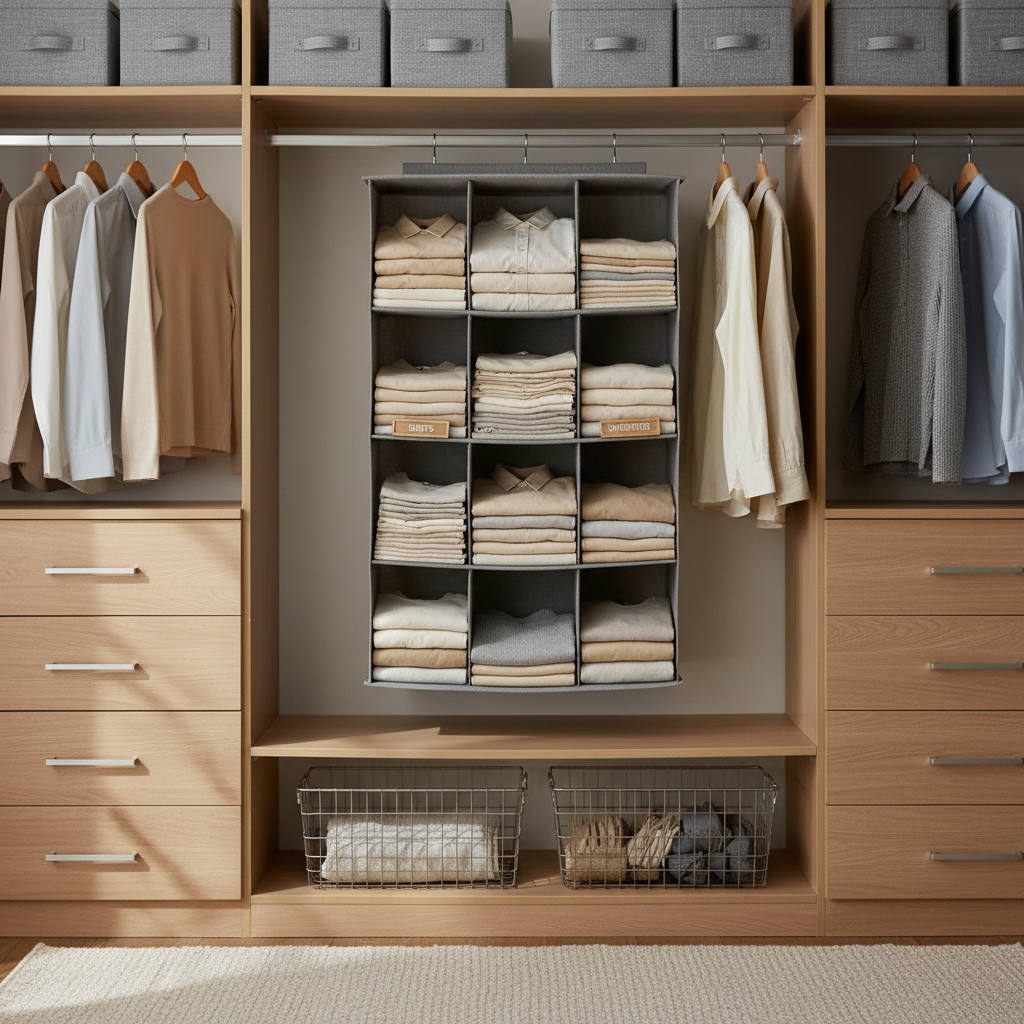
What “best” means for hanging closet organizers (it depends)
If you want the best hanging organizer for clothes, start by deciding what you’re optimizing for: more storage, faster mornings, protecting knits, or keeping categories separated. The “right” pick often changes by closet type.
- Small apartment closet: prioritize vertical cubbies, slim width, and rigid inserts so stacks don’t slump.
- Reach-in shared closet: prioritize defined zones (his/hers or work/casual) and easy access, not maximum capacity.
- Walk-in closet: you can go wider or add drawers, but you still want stability and breathable materials.
- Kids’ closet: lower hanging height, lighter loads, and clearer sections so clothes get put away.
Key takeaway: a hanging unit is only “best” if it matches your rod height, your clothing weight, and how you actually put laundry away.
Types of hanging closet organizers and when each works
Most disappointments come from buying the wrong style, not from buying a “bad” brand. Here are the common types and what they’re realistically good at.
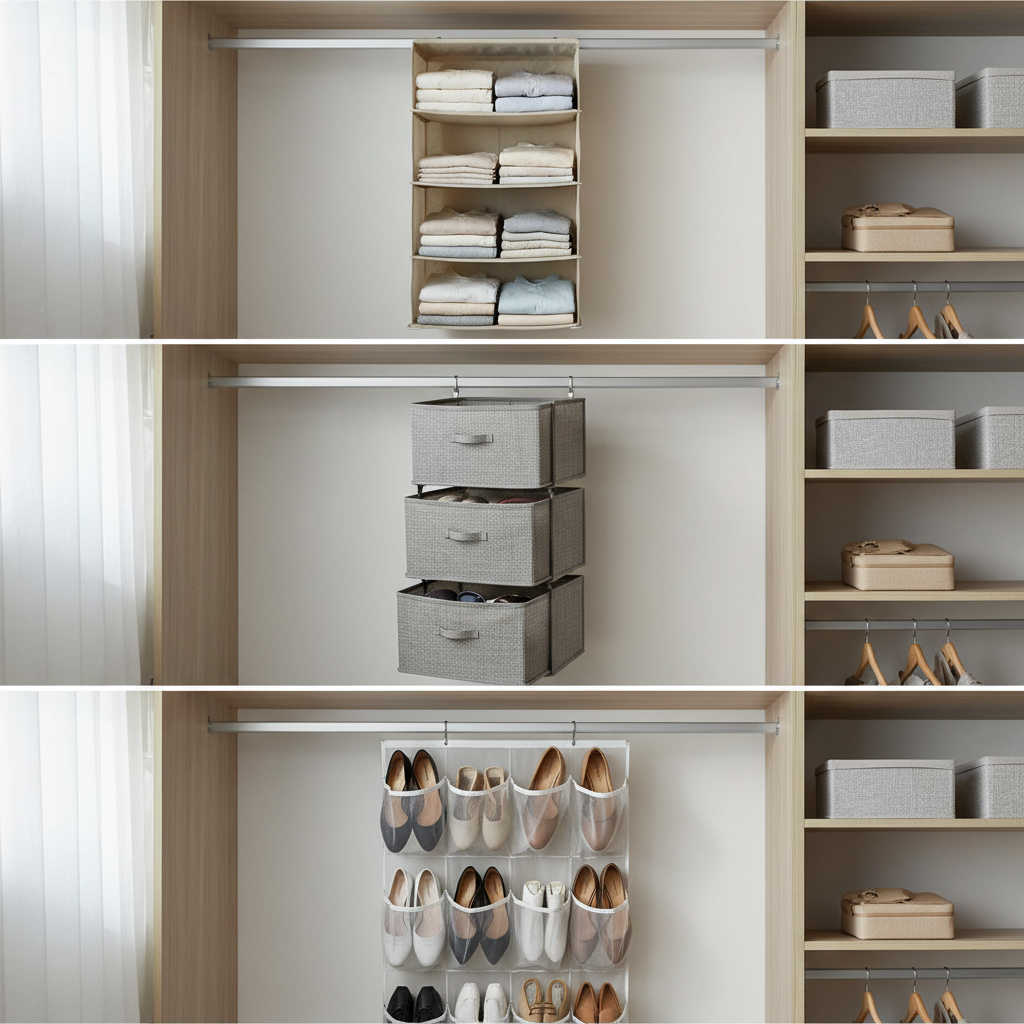
Fabric hanging shelves (cubby towers)
This is the classic: 4–10 cubbies stacked vertically. Great for tees, leggings, pajamas, kids’ outfits, and light sweaters. Less great for heavy denim if the shelves are floppy.
- Look for: rigid shelf boards, side panels with structure, reinforced stitching
- Avoid if: you plan to load it with jeans in every cubby
Hanging closet organizers with drawers
These add soft drawers or bins at the bottom. They can be helpful for socks, underwear, workout gear, or accessories, but cheap drawers often sag and become “stuff zones.”
- Look for: drawer supports, handles, and a frame that keeps its shape
- Best for: small items you want hidden, not stacked
Sweater racks and shelf dividers
If your problem is sweaters getting stretched or collapsing stacks, a dedicated sweater rack can be more stable than cubbies. Dividers help if you already have a shelf but need separation.
- Look for: wide panels, sturdy hanging hardware, breathable material
- Best for: knits, hoodies, heavier folds
Shoe hanging organizers
Shoe organizers work, but they’re often over-bought for clothing. Use them for flats, sandals, gym shoes, or small accessories (belts, scarves) if you’re careful about snagging.
- Look for: deep pockets, reinforced seams, washable fabric
- Watch out: pocket organizers can block airflow if you cram damp shoes inside
A quick comparison table (so you can decide faster)
If you’re scanning, this table usually narrows the field in under a minute.
| Organizer type | Best for | Main downside | What to check before buying |
|---|---|---|---|
| Fabric cubby tower | Tees, light sweaters, kids’ clothes | Can sag under heavy loads | Rigid inserts, max weight, width fits rod space |
| Cubbies + drawers | Socks, underwear, accessories | Drawers slump, become clutter magnets | Drawer support, frame stiffness, handle quality |
| Sweater rack | Knits, hoodies, heavier folds | Less flexible sizing | Panel width, airflow, sturdy hooks |
| Shoe pocket organizer | Flats, sandals, small items | Snags, blocked airflow | Pocket depth, seam strength, washable fabric |
How to choose the right size and material (the details people skip)
The best hanging closet organizers succeed or fail on boring details: the rod, the spacing, and whether the organizer holds its shape after a month.
- Measure rod-to-floor height: you want clearance below the organizer so it doesn’t press into shoes, baskets, or a hamper.
- Check rod space you’re giving up: wide organizers can steal hanging space for dresses, coats, and button-downs.
- Prefer rigid shelf inserts: thin cardboard inserts bend, and that bend becomes a permanent slump.
- Material matters: nonwoven fabric is common and affordable; canvas-like fabric tends to hold shape better; mesh improves airflow.
- Hardware: strong hooks and a reinforced top panel reduce twisting, especially when drawers are involved.
According to the U.S. Consumer Product Safety Commission (CPSC), tip-over and falling hazards are important considerations for storage products, especially around children. A hanging organizer isn’t furniture, but the same idea applies: don’t overload it, and keep heavy items lower to reduce the chance of it dropping or swinging.
Self-check: which organizer fits your closet and clothes?
If you’re not sure what to buy, answer these quickly. Your choices usually become obvious.
- What’s piling up? If it’s tees and lounge sets, cubbies work. If it’s denim and hoodies, look for more structure.
- Do you fold consistently? If folding doesn’t stick, drawers/bins can be more forgiving than open shelves.
- Is the rod already crowded? If yes, choose a slimmer organizer or use two narrow units instead of one wide one.
- Do you hate visual clutter? Closed bins or drawers feel calmer than open cubbies.
- Do you live in a humid area? Breathable fabric and airflow matter more, and you may want fewer “tight pockets.”
Rule of thumb: for most people shopping “best hanging closet organizers,” a 6-shelf cubby with rigid inserts is the safest starting point, then you customize with bins.
Set-up tips that make a cheap organizer work better
Even a decent organizer can feel annoying if it’s installed in the wrong spot or loaded in the wrong way. These small tweaks typically help.
Load from heavy to light
- Bottom cubbies: jeans, sweatshirts, heavier knits
- Middle: tees, workout gear, pajamas
- Top: light items or seasonal backups
Use bins to “compress categories”
A couple of matching bins can turn three messy cubbies into a clean system: one bin for socks, one for gym gear, one for accessories. It also makes laundry day faster because you’re moving containers, not re-stacking loose piles.
Keep one cubby intentionally empty
This sounds wasteful, but it prevents the overflow spiral. That empty slot becomes the landing zone for “worn but not dirty” items, or the place you dump a clean load before you sort.
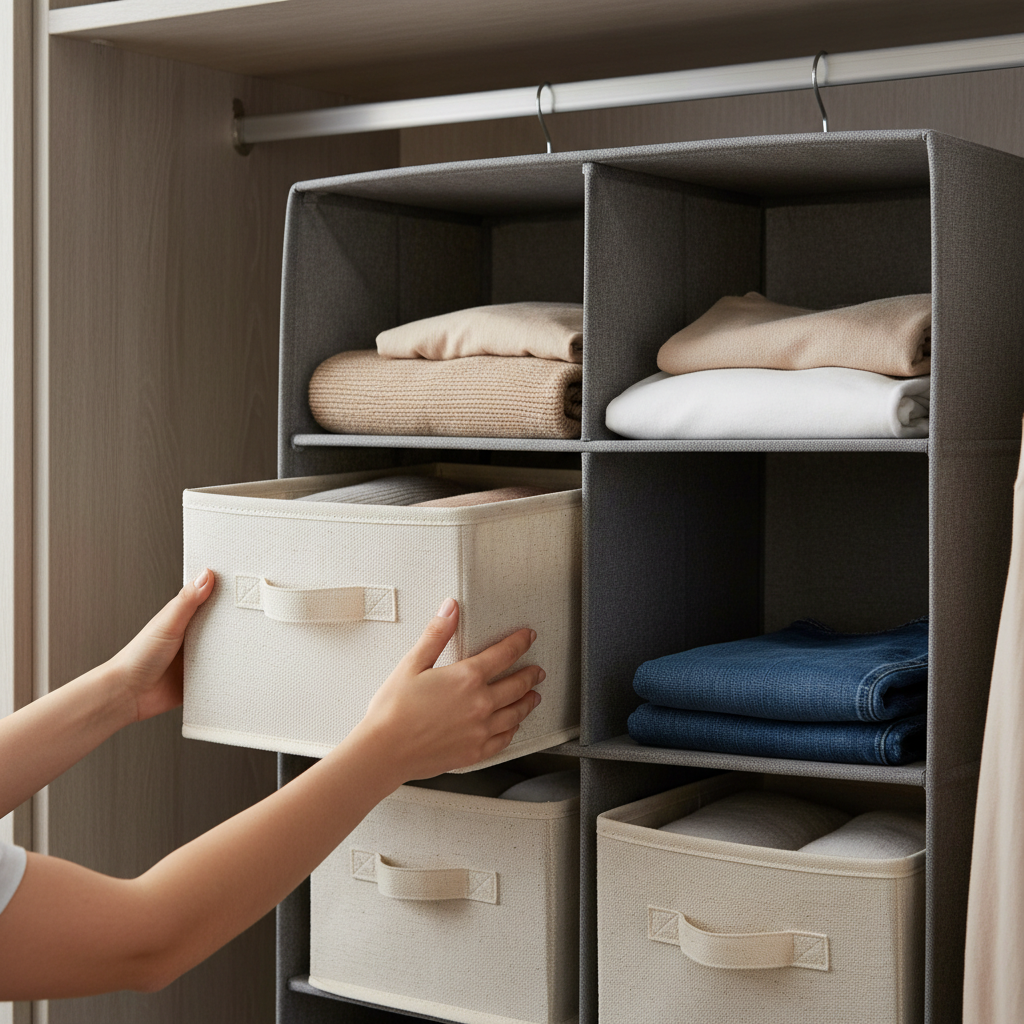
Mistakes to avoid (so you don’t end up with a sagging tower)
A lot of “this organizer is terrible” reviews are really “this organizer is doing a job it wasn’t built for.” Here’s what commonly goes wrong.
- Overloading every shelf: fabric shelves bow, then stacks slide forward. Leave breathing room.
- Storing sharp hardware: belts with buckles, brooches, or tools can snag fabric and tear seams.
- Ignoring closet rod strength: if the rod already sags under hangers, adding a loaded organizer may stress it more.
- Buying too long for the closet: bottom shelves dragging the floor collect dust and make drawers hard to open.
- Using it as a “no-fold solution”: cubbies still need basic folding or bins, otherwise it becomes a fabric junk drawer.
When it’s worth getting help or upgrading the system
If your closet rod is loose, the wall anchors look questionable, or the rod is pulling out, consider asking a handyman or a contractor to check it. That’s not alarmist, it’s just common sense with older closets or DIY installs.
Also, if you’ve tried best hanging closet organizers twice and still can’t keep the space usable, it might be a layout problem: you may need a second rod, a shelf, or a different storage mix (bins plus a dresser, not more hanging).
Conclusion: picking the best hanging closet organizer without overthinking
The best choice is usually the one that matches your closet reality: enough structure to avoid sagging, the right height for your rod, and a layout that fits how you sort clothes. If you want an easy win, start with a rigid-insert cubby tower, keep heavier items lower, and add two bins for small stuff.
Action step: measure your rod-to-floor height today, then decide whether you’re solving a “folded stacks” problem or a “tiny items everywhere” problem. That single decision will narrow your options fast.
FAQ
- What are the best hanging closet organizers for sweaters?
Look for wider shelves, rigid inserts, and a design that won’t bow under weight. Many people also prefer breathable fabric or mesh so knits don’t feel compressed. - Do hanging closet organizers damage closet rods?
They can if the rod is already weak or the organizer is overloaded. Keep heavy items low, stay within the product’s weight guidance, and consider getting the rod checked if it visibly sags. - How many shelves should a hanging organizer have?
For most reach-in closets, 5–7 shelves is practical. Taller units can be great, but only if you can reach the top and still have clearance below. - Are hanging organizers better than adding shelves?
They’re faster and renter-friendly, but built-in shelves usually hold more weight and feel sturdier. If you need long-term structure, shelves often outperform fabric solutions. - What should I store in a hanging closet organizer vs on hangers?
Store fold-friendly items like tees, activewear, pajamas, and light knits in cubbies. Hang items that wrinkle easily or need shape, like blazers, dresses, and button-down shirts. - How do I stop a hanging organizer from swaying or twisting?
Choose one with reinforced top panels and solid hooks, then balance weight across shelves. If your closet allows it, some people lightly stabilize the bottom against a wall or add a non-slip strip where it touches. - What size hanging organizer fits a standard closet?
It varies by home, so measure the rod space you can spare. In many cases, a 12–15 inch wide unit fits well without sacrificing too many hangers, while wider units work better in walk-ins.
If you’re trying to simplify your closet without a full remodel, a well-chosen hanging organizer can be the “good enough” system that finally sticks. If you want, share your closet width, rod height, and what you’re storing most, and it’s easier to narrow down the right style and size.