
Small space gardening ideas for apartment balconies work best when you treat your balcony like a tiny “microclimate” with hard limits: light, wind, weight, and watering. Once you plan around those, you can grow herbs, greens, flowers, and even compact veggies without turning your outdoor corner into a cluttered chore.
A lot of balcony gardens fail for boring reasons, not lack of talent: the wrong pots dry out too fast, the “full sun” label gets misread, or a heavy setup becomes unsafe. The good news is most fixes are simple and cheap once you know what to check.
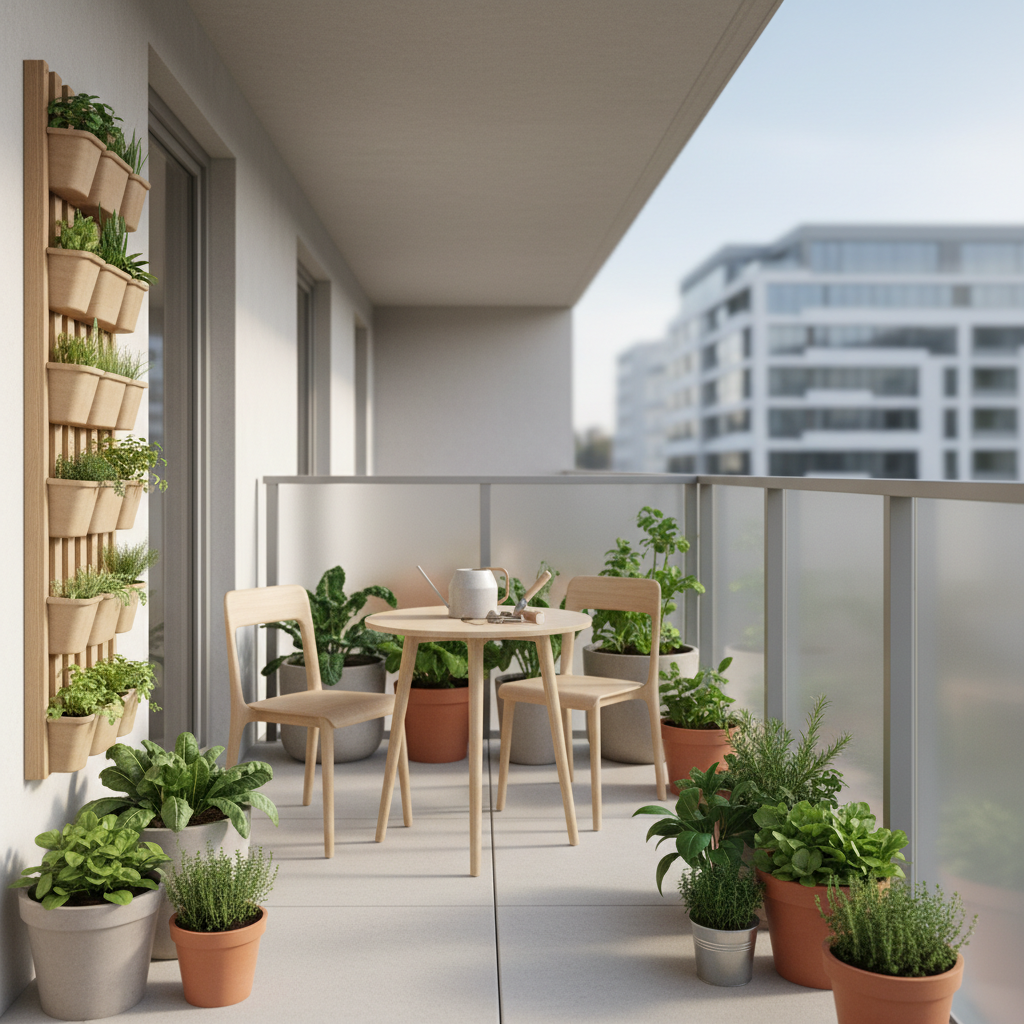
This guide walks you through quick ways to judge your balcony conditions, proven layout ideas, a practical plant list, and a simple routine that keeps things thriving even if you travel or forget to water sometimes.
Start with the non-negotiables: sun, wind, water, and weight
Before buying plants, spend two normal days noticing your space. It feels slow, but it saves money and frustration.
- Sun hours: Track direct sun (not “bright shade”). Many balconies get 2–4 hours, which changes plant options.
- Heat and reflected light: South- and west-facing balconies can run hotter than you expect because walls bounce heat back.
- Wind: High floors dry containers fast and can snap tall stems, you may need sturdier pots or a windbreak.
- Water access: If you can’t easily carry water, plan for a hose hookup, watering can size, or self-watering containers.
- Weight and rules: Apartment policies and balcony load limits vary, so avoid large wet soil troughs unless you’re confident it’s allowed.
According to the USDA (U.S. Department of Agriculture), choosing plants suited to your region and site conditions is one of the biggest factors in gardening success, especially when temperature and sun exposure differ even within the same property.
A quick balcony garden self-check (2 minutes)
If you want a fast “what should I do first” answer, this checklist usually points you in the right direction.
- I get 6+ hours of direct sun: prioritize tomatoes, peppers, basil, strawberries, dwarf citrus (with care).
- I get 3–5 hours: aim for leafy greens, many herbs, bush beans, compact cucumbers with support.
- I get under 3 hours: lean into mint family herbs, lettuce, arugula, microgreens, shade-tolerant ornamentals.
- My balcony is windy: choose heavier pots, low-profile plants, and flexible supports, skip tall flimsy trellises.
- I travel or forget to water: self-watering planters, drip kits, saucers, and mulch become “must-haves.”
- I can’t drill or attach anything: focus on freestanding shelves, tension rods, railing planters rated for safety.
If you checked more than two “hard” constraints (low sun + wind + no easy water), your best results will come from fewer plants done well, not more pots.
Layout ideas that actually save space (without feeling cramped)
Most balconies can fit more plants by building upward and keeping the floor clear. The trick is to avoid blocking light and airflow.
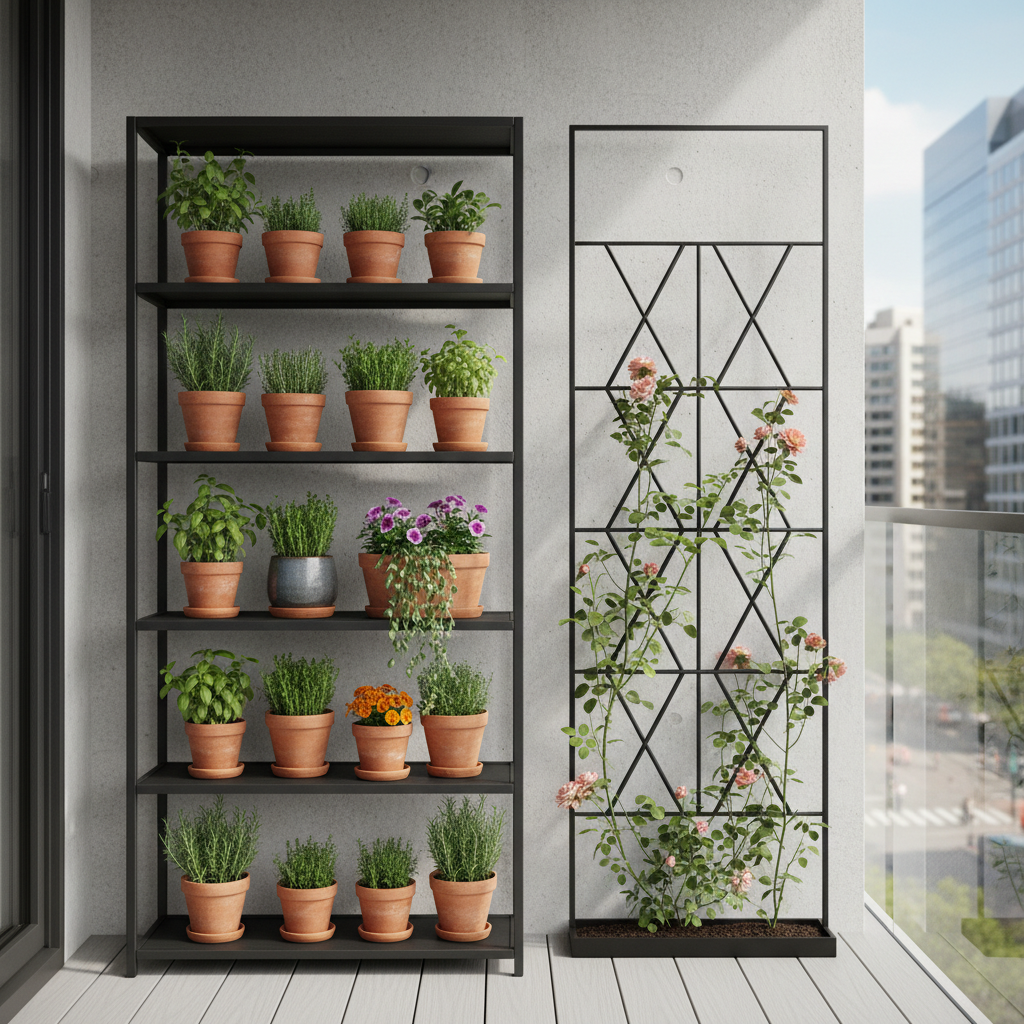
1) Vertical stacking (the “bookcase” approach)
- Use a narrow outdoor shelf (metal or sealed wood) and put sun-loving plants on top, shade-tolerant plants below.
- Keep 3–6 inches between pots when possible, crowded leaves invite mildew in humid cities.
2) Railing planters, but with safety in mind
- Choose models that lock to the rail and sit level, especially on higher floors.
- Keep heavier containers on the floor side, not hanging outward, many buildings forbid outward-facing planters.
3) Corner zoning for “messy” tasks
- Put soil, watering can, and pruners in one corner so the rest stays livable.
- A shallow tray under that corner catches drips and reduces staining.
4) One trellis, multiple benefits
- A freestanding trellis can support peas, cucumbers, or compact beans while also acting as a light windbreak.
- Don’t overdo height, shorter and sturdier often performs better than tall and wobbly.
Container choices that make balcony gardening easier
In small setups, the container matters almost as much as the plant. You’re managing a tiny root zone that heats up and dries out fast.
| Container type | Best for | Watch-outs |
|---|---|---|
| Fabric grow bags | Tomatoes, peppers, potatoes | Dry quickly in wind; use a saucer and mulch |
| Self-watering planters | Herbs, greens, balcony “set and forget” | Don’t keep the reservoir stagnant; flush occasionally |
| Terracotta | Mediterranean herbs (rosemary, thyme) | Heavy and porous; can crack in freeze-thaw |
| Plastic/resin pots | Most plants, especially beginners | Overwatering risk; ensure drainage holes |
| Window boxes | Lettuce, flowers, shallow-root herbs | Soil volume is limited; needs frequent feeding |
Key point: drainage beats aesthetics. If a pot can’t drain well, roots can rot, and the plant looks “thirsty” even when soil is wet.
Plant picks that tend to thrive in apartment conditions
The best small space gardening ideas for apartment balconies usually rely on fast, forgiving plants. They give quick wins and help you learn your light patterns.
Reliable edibles
- Herbs: basil (sun), parsley (part shade), chives, thyme, oregano, mint (keep it contained).
- Leafy greens: lettuce mixes, arugula, spinach in cooler months, Swiss chard for longer seasons.
- Compact fruiting plants: patio tomatoes, dwarf peppers, strawberries in hanging baskets or troughs.
- Microgreens: if light is low, they still produce well near a bright window or with a small grow light.
Ornamentals that earn their keep
- Marigolds: hardy, cheerful, often used near veggies.
- Nasturtiums: edible flowers, trail nicely from pots.
- Compact grasses or sturdy foliage plants: helpful when wind is a constant factor.
Skip fussy varieties until you’ve had one full season on that balcony. Many people buy “full sun” plants for a bright-but-shaded space and blame themselves when the plant struggles.
Simple setup: soil, feeding, and watering that fits real life
You can do everything “right” and still lose plants if the routine is too complicated. Aim for steady, repeatable habits.
Soil: don’t use straight “garden dirt” in pots
- Use a potting mix designed for containers, it stays airy and drains well.
- If your balcony is exposed and dries fast, add a bit of compost and consider a moisture-retaining blend.
Feeding: light, consistent, and plant-specific
- Leafy greens like steady nitrogen, fruiting plants need more balanced feeding as they flower.
- If you prefer fewer decisions, a slow-release fertilizer labeled for containers can be easier, follow the label and don’t “double up.”
Watering: the #1 balcony pain point
- Water until you see runoff, then empty saucers if mosquitoes are an issue in your area.
- Mulch the top of pots (even a thin layer) to cut evaporation.
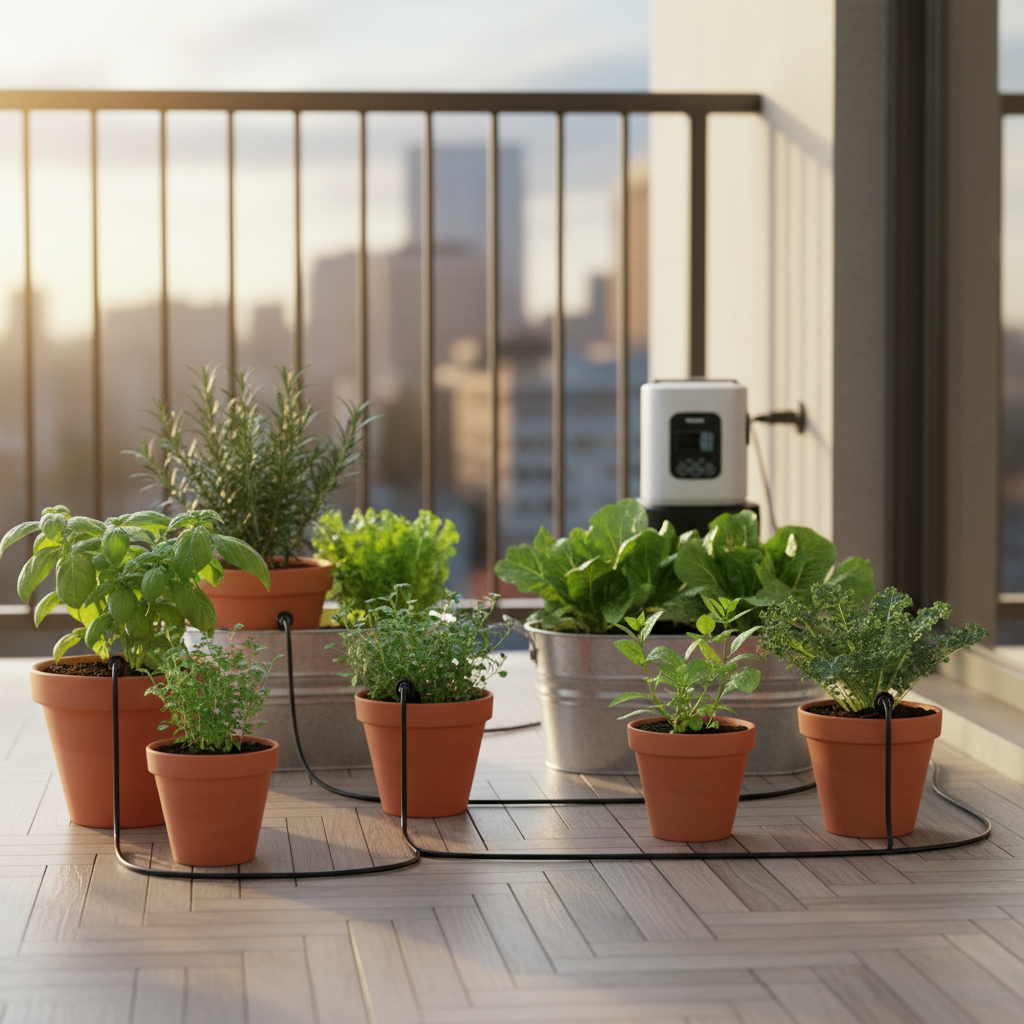
- If you’re gone often, consider a small drip kit connected to a faucet adapter, or self-watering reservoirs.
According to the EPA (United States Environmental Protection Agency), eliminating standing water where mosquitoes can breed is a practical prevention step; on balconies, that often means keeping saucers and buckets from holding water for long periods.
Common mistakes that waste time (and how to avoid them)
- Too many small pots: they dry out fast and create clutter. Fewer, slightly larger containers are calmer and easier.
- Overcrowding: packed leaves stay damp, pests and mildew show up sooner. Give plants some breathing room.
- Ignoring wind: flimsy trellises tip over, plants get shredded. Use heavier bases and softer ties.
- Planting the “wishlist” crop in the wrong light: if you want tomatoes but only get 2–3 hours of sun, shift the win to greens and herbs, you’ll feel better.
- No plan for drainage: water stains, unhappy neighbors, and root problems, solve this early with saucers, trays, and mindful placement.
When to get extra help or double-check rules
If you’re on a high floor, have strict building policies, or plan to use railing planters, it’s smart to confirm what your lease or HOA allows. When weight limits are unclear or the balcony shows structural wear, consider asking building management or a qualified professional rather than guessing.
For pest control and chemical products, follow label directions closely, and if you have kids, pets, or respiratory sensitivities, you may want to consult a local garden center or a licensed pest professional about lower-risk options.
Conclusion: a balcony garden that feels good to maintain
Small space gardening ideas for apartment balconies come down to a calm setup: match plants to your actual sun, choose containers that make watering easier, and build upward without turning the balcony into an obstacle course. If you do one thing this week, map your sun for a day and pick three plants that fit it, you’ll make better choices fast.
If you want momentum, start with one herb pot, one greens container, and one flowering plant for pollinator interest, then expand only after you like the routine.
Key takeaways
- Measure sun hours before shopping, “bright” and “direct sun” are not the same.
- Prioritize drainage and watering convenience, it prevents most beginner problems.
- Go vertical with shelves and a single sturdy trellis, not lots of tiny pots.
- Choose forgiving plants first, then experiment once your baseline works.
FAQ
What are the easiest plants for a small apartment balcony?
Herbs and leafy greens usually win because they tolerate containers well and give quick results. If you get strong sun, patio tomatoes and peppers can also work, but they ask for more water and support.
How much sun do I need for vegetables on a balcony?
Many fruiting vegetables prefer around 6 hours of direct sun, while greens can do well with less. If your balcony only gets a short sun window, lean into lettuces, arugula, parsley, and chives.
Can I garden on a balcony if it’s very windy?
Yes, but you’ll want heavier containers, shorter plants, and sturdy supports. Wind is often a watering problem in disguise, so expect to water more often or use self-watering planters.
What’s the best way to water plants when I travel?
Self-watering planters can cover short trips, and a simple drip kit can help for longer stretches if you have a water source. It’s worth testing your setup for a week before relying on it.
Are railing planters safe for apartment balconies?
They can be, if they lock securely and follow your building rules. Many residents choose inward-facing railing planters or keep heavier containers on the floor to reduce risk.
Do I need special soil for container gardening?
In most cases, yes. A potting mix made for containers drains better than yard soil, which can compact in pots and stress roots.
How do I keep bugs off my balcony plants?
Start with the basics: don’t overwater, give plants airflow, and check leaves weekly so small issues don’t explode. If you use any pesticide, follow the label and consider asking a local expert if you have pets or kids nearby.
If you’re trying to make your balcony greener without constant maintenance, it may help to sketch a simple layout and buy containers based on watering reality, not just looks, you’ll end up with a garden you actually enjoy using every day.