
how to organize a junk drawer once and for all comes down to one thing: giving random stuff a clear job, then making it easier to put back than to drop it in “just for now.” If your drawer has become the place where batteries, takeout menus, rubber bands, old keys, and mystery cords go to disappear, you’re not messy, you’re just missing a system.
This matters more than it sounds, because the junk drawer is where tiny problems hide until they become time-wasters. You’re late, you need a stamp, you can’t find tape, you dump the whole drawer, now the counter is a mess too. One drawer turns into a daily friction point.
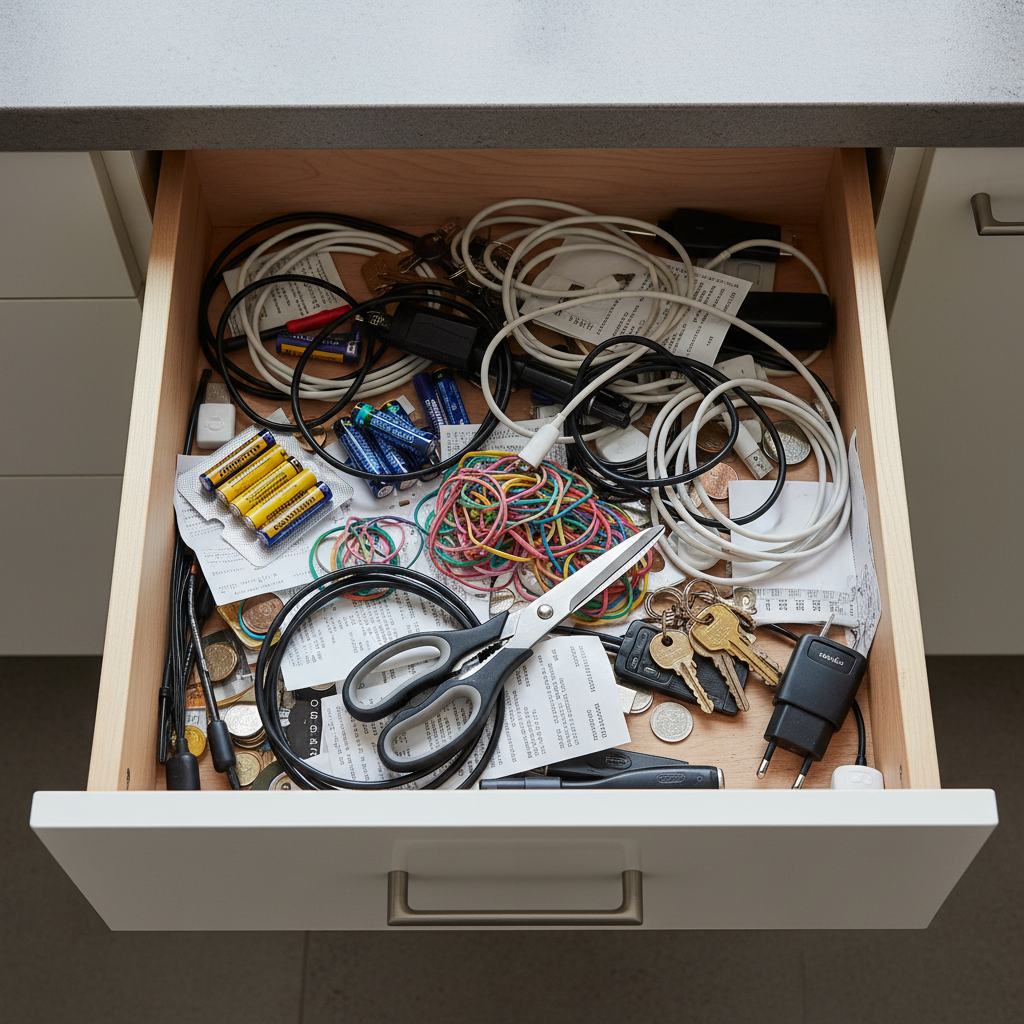
I’ll walk you through a reset that works for most U.S. homes and apartments, plus a maintenance plan so the drawer stays useful. No “perfect pantry” energy, just practical.
Decide what your junk drawer is actually for
Before you touch anything, pick a purpose. A drawer can be “misc storage,” but it still needs boundaries, otherwise it becomes a trash can with a handle.
Most households do best with one of these purposes:
- Quick-grab utility drawer: tape, scissors, batteries, small tools, mail opener, measuring tape.
- Kitchen admin drawer: pens, notepad, stamps, coupons, takeout menus, charger, spare keys.
- Family landing-zone drawer: hair ties, band-aids, small flashlight, sunglasses wipes, earplugs.
Pick one, then you have a simple rule: anything that doesn’t support that purpose needs another home, or it leaves.
Why junk drawers get out of control (and how to prevent a repeat)
In real homes, junk drawers usually blow up for a few predictable reasons, and it’s rarely laziness.
- No categories: when everything is “misc,” nothing has to be put away correctly.
- Too deep, too tall, too open: without dividers, small items migrate and stack.
- Decision fatigue: you don’t want to think about where a tiny item belongs, so the drawer becomes the default.
- Hidden duplicates: you buy new tape because you can’t find the old tape, then you have three.
According to National Association of Productivity & Organizing Professionals (NAPO), one of the biggest drivers of clutter is a lack of established “homes” for items. That’s exactly the junk drawer problem in miniature.
A fast self-check: do you need a reset or just better containers?
Not every drawer needs a full empty-and-scrub marathon. Use this quick checklist to decide.
- If you can’t close the drawer smoothly, you need a reset.
- If you find expired batteries, mystery keys, or old receipts you’ll never use, you need a reset.
- If items slide into one big pile but the contents are mostly useful, you may only need dividers.
- If you own multiples because you can’t find things, the issue is visibility and zones.
When in doubt, do the reset. It takes less time than people expect, and it stops the slow creep.
The “once and for all” method: empty, sort, zone, contain
This is the part most guides overcomplicate. Keep it blunt and physical. Put on a timer if you tend to spiral.
Step 1: Empty the drawer completely
Everything out, onto a towel or a baking sheet. Yes, even the weird coin that’s stuck in the corner.
Step 2: Sort into simple piles
Avoid fancy categories. You want piles you can recognize at a glance:
- Tools (scissors, mini screwdriver, tape measure)
- Office (pens, stamps, sticky notes)
- Power (batteries, charging cables, adapters)
- Fix-it (super glue, picture hooks, command strips)
- Small daily stuff (lip balm, matches, flashlight)
- Trash/recycle
- Relocate (items that clearly belong elsewhere)
Step 3: Make quick decisions, not perfect ones
If you haven’t used it in a year and it’s easy to replace, it’s a strong candidate to go. If you’re unsure, create a tiny “parking lot” zone in the drawer for a short trial, not a forever limbo.
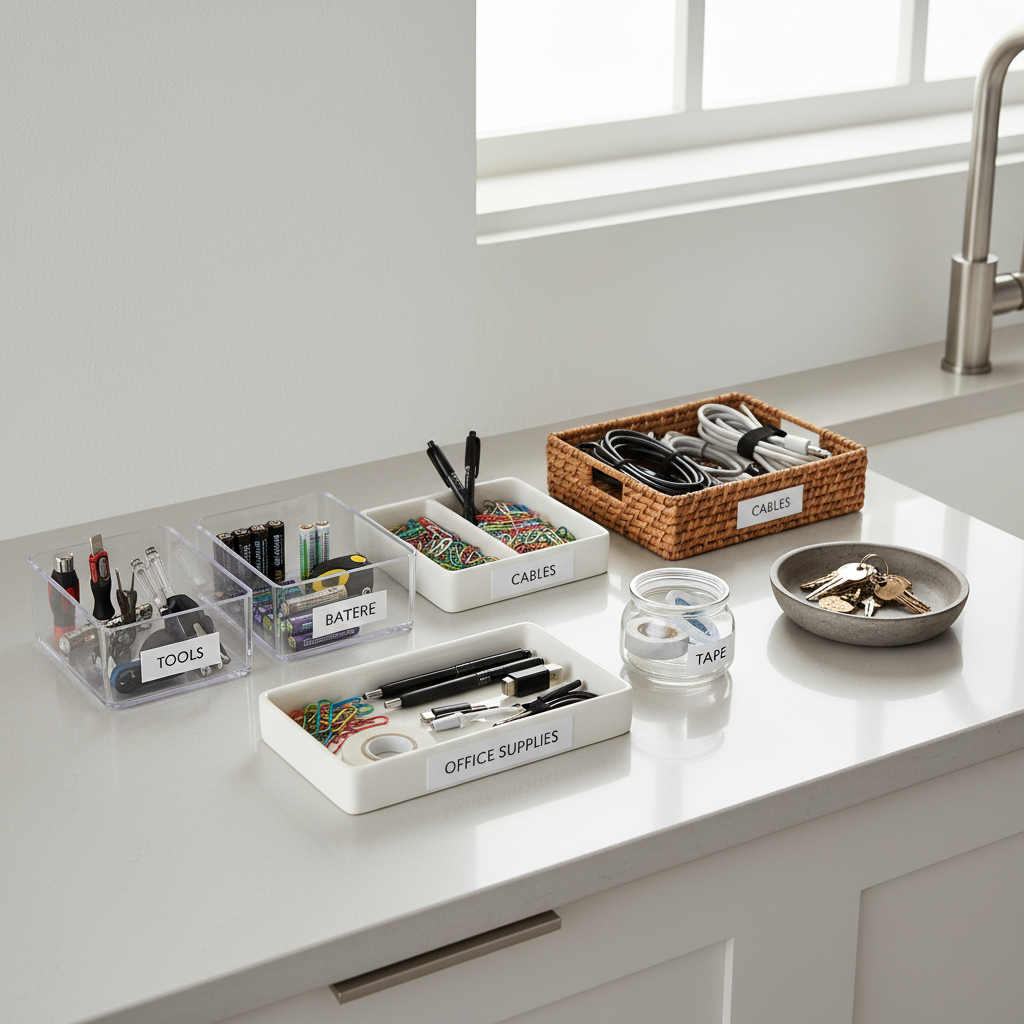
Step 4: Build zones inside the drawer
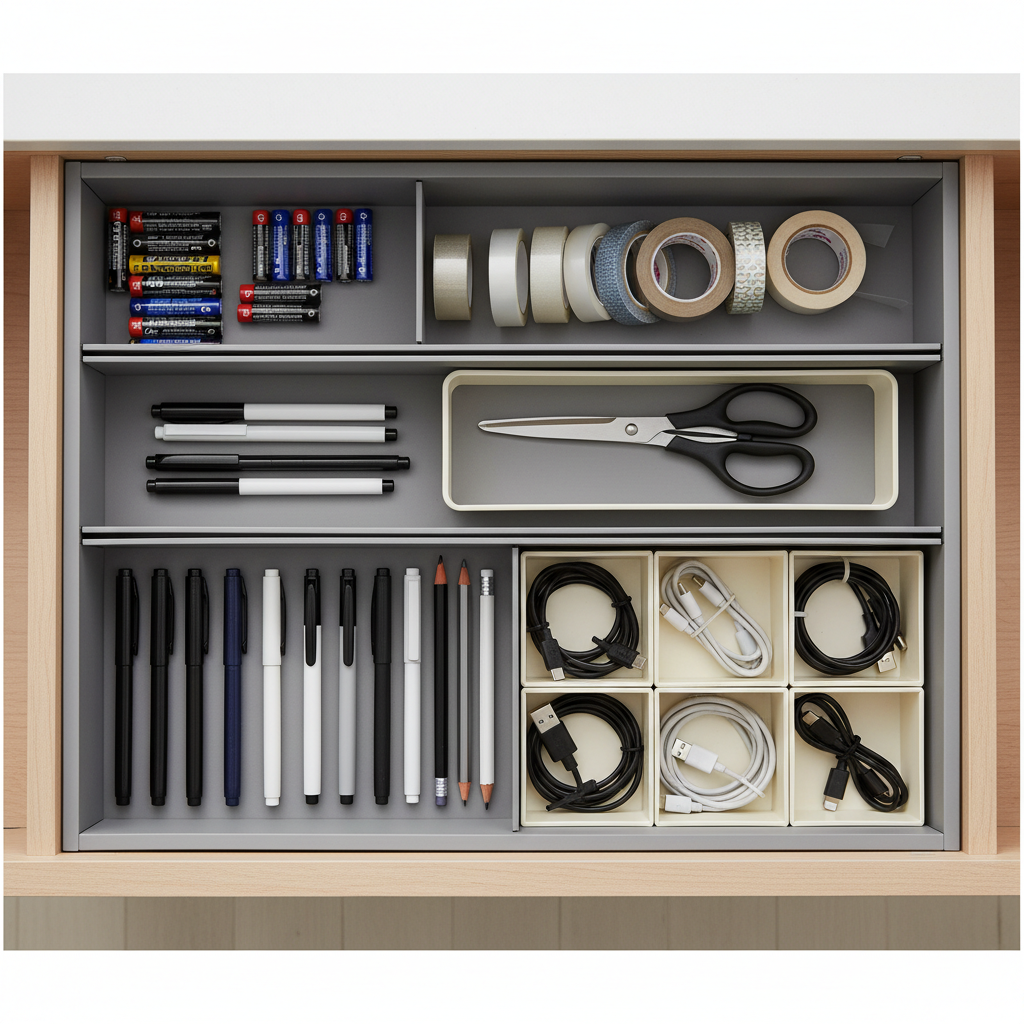
Zones beat “one big tray.” Think of the drawer like a tiny neighborhood: each block has rules.
- Front zone: most-used items (tape, scissors, pen).
- Middle zone: weekly items (batteries, stamps, flashlight).
- Back zone: rarely used but legitimate (small tool set, picture hangers).
Step 5: Contain with the right tools (no need to buy a set)
You can absolutely reuse small boxes, but the key is a snug fit so containers don’t drift.
- Shallow drawer dividers for pens and slim tools
- Small open bins for batteries and cords
- Micro tray for coins, SIM ejector tool, tiny screws
Quick safety note: if you store batteries, keep them dry and avoid loose battery contact with metal objects that could cause shorting. If you see swelling or corrosion, disposal rules vary by location, so check local guidance or a retailer recycling program.
What to keep (and what to kick out): a practical guide
The goal is not minimalism, it’s usefulness. Here’s a realistic decision table you can follow while you sort.
| Item type | Usually keep in the drawer | Usually move or toss |
|---|---|---|
| Basic tools | Scissors, small screwdriver, tape measure | Bulky tools better in a toolbox |
| Adhesives | Tape, a few command strips | Dried glue, extra refills you won’t use |
| Batteries | One small set, grouped by type | Loose, corroded, unknown batteries |
| Cables & chargers | 1–2 current-use cables | Duplicates, mystery cords, outdated connectors |
| Paper | Stamps, 1–2 takeout menus you actually use | Old receipts, expired coupons, random manuals |
If you want the drawer to stay stable, treat duplicates as the real enemy. One spare, maybe two, rarely more.
Make it stay organized: a 2-minute maintenance routine
Most people can do a great clean-out once, then the drawer slowly backslides because there’s no “closing shift.” This is where how to organize a junk drawer once and for all becomes real life, not a weekend project.
- Weekly (2 minutes): toss obvious trash, put runaway items back in their zones.
- Monthly (5 minutes): remove paper clutter, test the pen that always disappoints, check battery stash.
- Seasonal (10 minutes): do a quick “duplicates audit” and relocate anything that migrated in.
One habit that works: every time you open the drawer to put something in, put one thing back where it belongs. It sounds small, but it stops the pile from forming.
Common mistakes that ruin a junk drawer (even after a good clean-out)
A few patterns show up over and over, and they’re fixable.
- Over-zoning: if you create 18 tiny categories, you’ll stop using the system. Keep it broad.
- Storing “maybe someday” items: the drawer isn’t a museum for old keys and mystery parts.
- Buying organizers before measuring: most wasted money here comes from poor fit.
- No limit per category: decide a physical cap, like “one bin of batteries,” then stop.
Also, don’t ignore sticky, leaky, or sharp items. Wrap blades, cap markers, and consider storing anything hazardous out of reach of kids and pets. If you have safety concerns in your household, it may be worth asking a professional organizer for setup ideas that match your space and routines.
Key takeaways you can use today
- Pick a purpose for the drawer so you have a clear yes/no filter.
- Zones beat perfection, front for daily items, back for occasional.
- Containment matters, shallow dividers and small bins prevent the pile.
- Maintenance is tiny, but it has to be scheduled.
If you want a simple next step, set a 20-minute timer, do the full empty-and-sort, then stop when the zones are in place. You can refine labels and containers later, but the system needs to exist first.
Conclusion: keep the drawer useful, not magical
When you follow how to organize a junk drawer once and for all with a purpose, a few sturdy zones, and an easy maintenance rhythm, the drawer stops being a guilt trap and starts acting like a tool. Pick one category to reduce today, cables or paper usually give the fastest win, then do a two-minute reset at the end of the week so the mess never gets momentum again.