
Best small coffee tables for small living rooms are the ones that solve two problems at once: they fit the footprint you actually have, and they still feel comfortable to live with every day.
If you’ve ever bought a “small” table online and it showed up looking weirdly tiny, or worse, it blocked the walkway and made the room feel cramped, you already know why this choice matters. In a compact living room, a coffee table is basically a traffic controller.
This guide walks through sizing that works in real rooms, shapes that help with flow, and a short list of top picks by use case, because “best” usually means best for your layout, not a generic list.
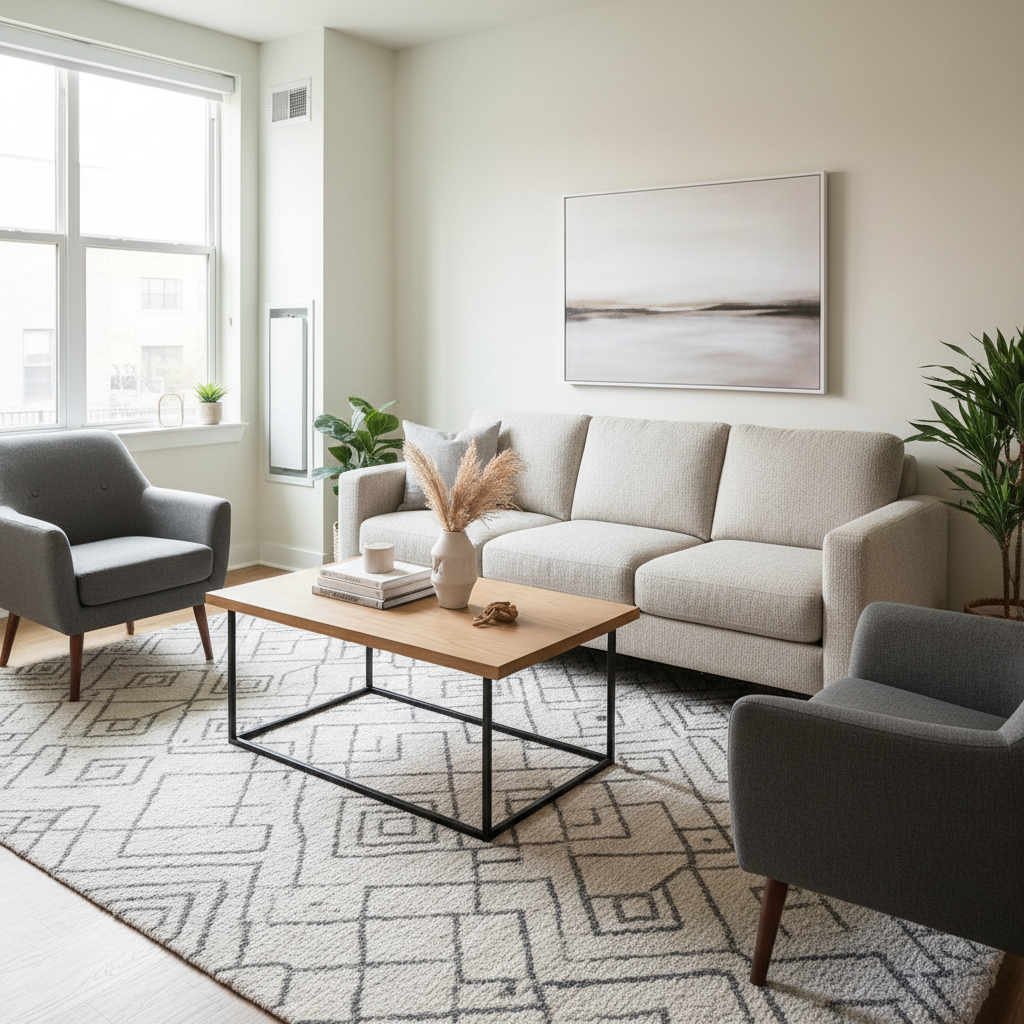
What “Best” Really Means in a Small Living Room
The best small coffee tables for small living rooms usually do three things well: they keep pathways open, they match your seating scale, and they offer enough function that you don’t miss a bigger table.
There’s also a quiet fourth factor people forget until it’s too late: how you move around the table. Sharp corners, heavy bases, and oversized overhangs can make a small room feel tense, even if the dimensions look fine on paper.
- Flow: you can pass by without turning sideways.
- Reach: you can set down a drink from the main seats without leaning forward like a crunch.
- Flex: it adapts to guests, work-from-couch days, or movie-night snacks.
Quick Size Rules That Prevent Regret
Before you look at styles, get your target dimensions. You don’t need a measuring seminar, just a few guardrails that tend to work in many US apartments and smaller homes.
Height (the comfort rule)
A safe target is a table height close to your sofa seat height. Many designers aim for about 1–2 inches lower than the cushion top, though sofa heights vary a lot, so measure yours.
Length (the proportion rule)
Many rooms look balanced when the coffee table is around two-thirds the length of the sofa. Shorter can work, but it can start feeling “floating” unless you add side tables.
Clearance (the movement rule)
Leave enough space between sofa and table to sit comfortably and stand up without bumping knees. In tight rooms, you may intentionally go smaller and use nesting pieces to regain surface area when needed.
Key takeaway: measure the usable rectangle, not the “room size.” Radiator edges, ottomans, and entry paths matter more than the listing square footage.

Shape & Material Choices That Make Small Rooms Feel Bigger
When people search best small coffee tables for small living rooms, they usually expect “round vs rectangle” advice, but the real win is picking a shape that matches your traffic patterns.
Round and oval: easier circulation
Round tables soften tight corners and reduce shin bumps. Oval is the “cheat code” if you want some length without the hard edges, especially in narrow living rooms.
Rectangle: best for sectionals and straight sofas
A rectangle often aligns cleanly with a standard sofa. If your walkway is tight, consider rounded corners or a slimmer depth so it doesn’t feel like a block.
Square: only if the seating is square
Square tables can work in a conversation-style setup, like a loveseat plus two chairs. In a narrow room, they can feel bulky fast.
Materials that visually “lighten” the room
- Glass: visually open, but shows smudges and may feel less kid-friendly.
- Light wood: warm and casual, often easier to style than pure white.
- Metal frames: slimmer profiles that read less heavy.
- Mixed materials: a thin top with open legs can look smaller than it measures.
According to American Society of Interior Designers (ASID)... comfortable layouts prioritize circulation and function; in small spaces, that usually means letting movement dictate furniture choices more than aesthetics alone.
Best Small Coffee Tables for Small Living Rooms (By Scenario)
Rather than a single “top 10,” here are practical best-fit picks by living style. Use these as a short list of what to shop for, not as brand-specific hype.
| Scenario | What to buy | Why it works |
|---|---|---|
| Super tight walkway | Round pedestal or small oval | No corners to catch, smoother traffic flow |
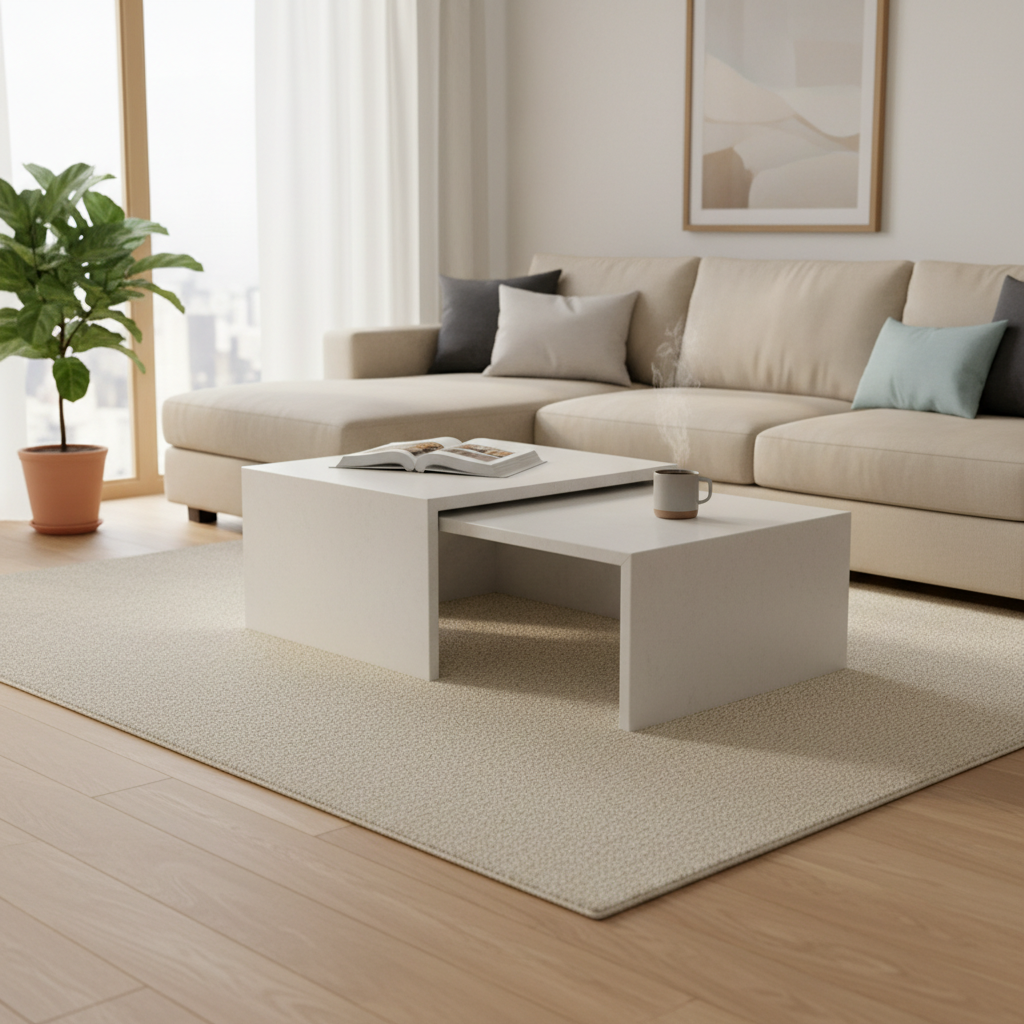
| Need more surface sometimes | Nesting tables (2–3 pieces) | Expand for guests, tuck away daily |
| Minimal storage elsewhere | Lift-top with hidden compartment | Hides clutter, doubles as casual work surface |
| Small space, messy life | Tray-top or table with a lower shelf | Creates zones for remotes, books, coasters |
| Rental-friendly flexibility | C-shaped side table + small coffee table | Lets you “add surface” without upsizing the main table |
If you’ve been cycling through options, this is where many people land: a slightly smaller main table plus one flexible “helper” piece often feels better than forcing one table to do everything.
A Fast Self-Check: Which Table Type Fits You?
Use this quick checklist before you hit “add to cart.” It keeps you honest about how your room actually works.
- If you bump into corners now, you’ll likely prefer round/oval.
- If you eat in the living room often, a lift-top may beat a pretty low table.
- If you host even a few times a month, nesting or an ottoman + tray can feel like extra square footage.
- If you hate visual clutter, pick closed storage over open shelves.
- If you have kids or pets, consider soft edges and stable bases.
Key point: the best small coffee tables for small living rooms usually match your habits more than your Pinterest board.
How to Shop Smarter (So It Looks Right When It Arrives)
Online shopping is where “small” gets misleading. Here’s how to reduce surprises without overthinking it.
Step 1: Tape it out on the floor
Painter’s tape (or even a folded sheet) gives you instant reality. Mark the outline, then walk around it like you’re carrying laundry or a grocery bag.
Step 2: Check the base, not just the top
Some tables have wide splayed legs that steal walkway space. A compact base often feels easier in a tight plan.
Step 3: Decide your “must-have function”
- Storage: drawers, shelf, or lift-top compartment
- Mobility: lightweight or casters if you reconfigure often
- Durability: scratch resistance if you use it hard
Step 4: Don’t ignore delivery and assembly
A table that barely fits the room might not fit the stairwell. Measure doorways and tight turns, especially in older buildings.
Common Mistakes (and What to Do Instead)
Most “wrong coffee table” stories fall into a few predictable patterns.
- Mistake: buying the smallest table possible. Do instead: choose the smallest size that still feels usable, then add a slim side table if needed.
- Mistake: prioritizing style over edges. Do instead: in tight paths, rounded corners usually feel calmer day to day.
- Mistake: glass in a high-touch home. Do instead: consider tempered glass only if you’re comfortable maintaining it; otherwise try light wood or laminate.
- Mistake: overstuffing storage shelves. Do instead: pick a table with fewer, better “homes” for essentials, so it stays visually quiet.
According to Consumer Product Safety Commission (CPSC)... furniture tip-over and stability are real considerations in many homes; if you have kids or pets, choosing a stable base and placing heavy items thoughtfully is a sensible precaution.
Conclusion: The “Right” Small Coffee Table Is a Layout Decision
The best small coffee tables for small living rooms usually aren’t the trendiest ones, they’re the ones that respect clearance, match seating scale, and add function without making the room feel busy.
If you only do two things after reading this, do these: tape out the footprint and pick a shape that supports your main walkway. That alone eliminates most bad buys.
If you want a quick shopping shortcut, start with an oval or a compact nesting set, then adjust based on whether you need storage or a work-friendly surface.