
how to organize a small closet on a budget comes down to two things: editing what you own, and giving what stays a “home” that makes sense for your mornings.
If your closet feels cramped, it usually is not because you need a bigger closet, it’s because you have too many categories competing for the same few inches, plus storage that wastes vertical space. The good news, most fixes cost less than a couple of takeout orders.
I’ll walk you through a practical sequence, what to buy versus what to DIY, and a simple maintenance routine so the closet stays organized past the first weekend.
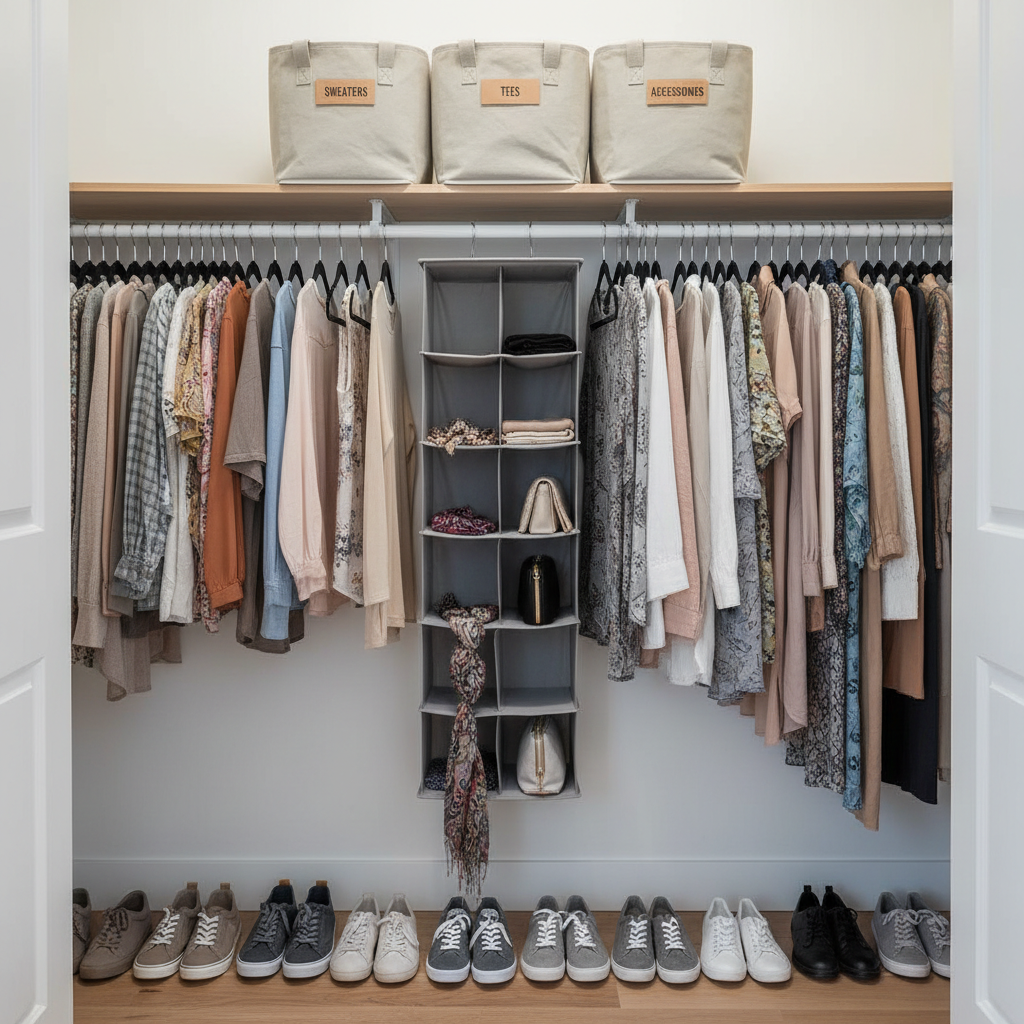
Start with the real reason small closets get messy
Most small closets “fail” for predictable reasons, and naming yours helps you avoid buying random organizers that never get used.
- Too many items per category, especially tops, outerwear, and shoes you keep “just in case.”
- Wrong hanging strategy, bulky hangers, long garments blocking short ones, dead space under hanging clothes.
- No landing zone for in-between items: worn-but-not-dirty jeans, the one hoodie you grab daily, bags that float around.
- Seasonal mixing, heavy coats and summer pieces fighting for the same prime real estate.
Organizing is less about making it look pretty, more about reducing friction. If you can pull a shirt without triggering an avalanche, you’re on the right track.
A quick self-check: what kind of closet are you organizing?
Before you purge or shop, take five minutes and answer these. Your answers decide the layout.
- Do you hang most items, or do you mostly fold?
- Is your closet single rod, double rod, or a mix with shelves?
- Do you dress for one main lifestyle (office, scrubs, trades) or multiple?
- Do you have high shelves you can’t reach easily?
- Where do shoes live today, and do they block the floor?
Many people searching how to organize a small closet on a budget are really dealing with “too many categories” more than “not enough tools,” so don’t skip the next step.
Edit first, then measure, then buy
Budget organizing works best when you commit to a realistic amount of stuff. You do not need minimalism, you need a limit that your closet can handle.
Do a fast, low-drama edit
- Pull out obvious no’s: damaged, uncomfortable, never-worn, or duplicates you never choose.
- Make one small “maybe” pile with a rule: if you don’t wear it within 30 days (or next appropriate season), it goes.
- Separate seasonal items right away, they distort your decisions.
According to Goodwill Industries International, donating usable clothing helps extend an item’s life through reuse, which is a solid motivator if you feel guilty letting things go.
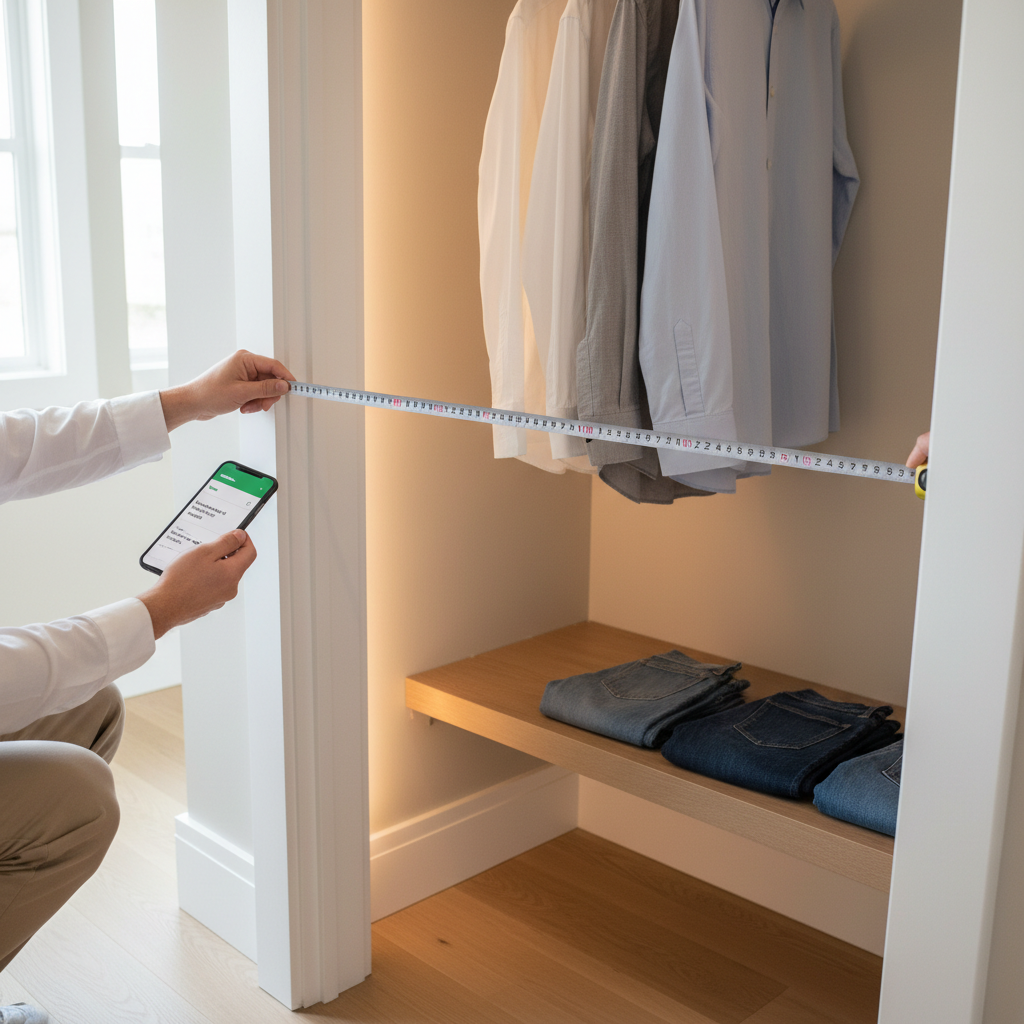
Measure what matters (so you don’t waste money)
- Rod length
- Floor-to-rod height
- Shelf depth
- Floor space for shoes or a narrow unit
Write it in your phone. It’s the easiest way to avoid buying bins that don’t fit and ending up back at square one.
Budget-friendly tools that actually change the space
You can organize with almost anything, but a few low-cost pieces create the biggest “space back” effect. If you only buy three things, start here.
| Tool | Why it helps in a small closet | Budget tip |
|---|---|---|
| Slim hangers | Reduces bulk, aligns clothing so you can see options | Buy one matching type, skip mixed packs |
| Hanging shelf organizer | Creates vertical cubbies without installing shelves | Use for sweaters, jeans, or workout sets |
| Over-the-door hooks | Adds “landing zone” for bags, robes, tomorrow’s outfit | Choose padded hooks to reduce door damage |
| Clear or fabric bins | Turns top shelf into zones instead of chaos | Label with painter’s tape before buying nicer labels |
| Shoe solutions | Protects floor space, prevents shoe piles | Try a slim rack or vertical over-door organizer |
If your budget is tight, prioritize “space-making” tools over decor. Pretty boxes are nice, but vertical structure is what makes the closet usable.
Set up a simple layout: zones that match how you get dressed
This is where most people overcomplicate things. The easiest system is the one that mirrors your routine, not the one that looks good on a reel.
Use these core zones
- Prime zone (eye level): daily workwear, go-to tops, everyday pants.
- High zone (top shelf): seasonal backstock, extra linens, rarely used bags in bins.
- Low zone (floor): shoes you wear weekly, a narrow hamper if space allows.
- In-between zone: hooks for “worn again,” gym bag, belt, hat.
Hanging rules that save space
- Hang by type and length, short items together so the bottom space stays open.
- Put bulky outerwear at one end, not scattered.
- Use a single direction for hangers so scanning feels effortless.
When people ask how to organize a small closet on a budget, they often want a shopping list, but layout does more than any bin, and it costs nothing.
Three step-by-step setups (pick the one that fits your closet)
Choose one scenario and follow it. Mixing all three usually leads to clutter again.
Scenario A: One rod, one shelf, almost no floor space
- Switch to slim hangers and hang short items together.
- Add a hanging shelf organizer for folded items.
- Top shelf: 2–4 bins labeled by category (seasonal, accessories, sentimental).
- Door: hooks for bag, jacket, tomorrow outfit.
Scenario B: You have floor space but no shelves
- Keep hanging simple: tops and outerwear only.
- Add a narrow drawer unit or cube shelf for underwear, tees, gym gear.
- Use a shoe rack that matches your daily shoe count, not your aspirational collection.
Scenario C: Shared closet (two people, one small space)
- Split the rod left/right, then split again by category so it stays fair.
- Create two labeled bin sets on the top shelf.
- Agree on one rule: no “temporary” piles on the floor.
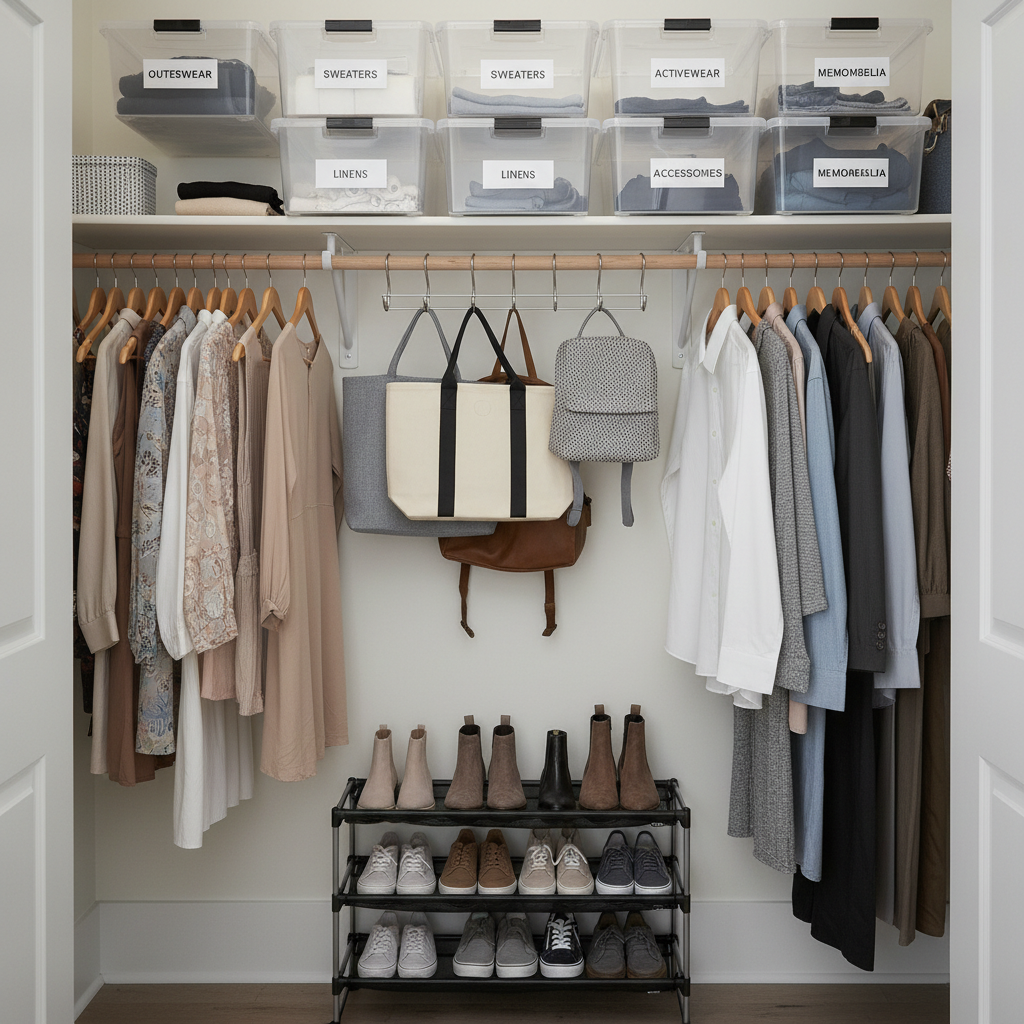
Keep it organized: a 10-minute reset and a realistic routine
The closet only stays tidy if the system matches your life on a busy Tuesday, not your life on “organizing day.”
Try the 10-minute weekly reset
- Put stray items back into their zones.
- Move “worn again” items either to laundry or back to hangers.
- Re-stack one bin or one shelf, just one, so it never becomes a disaster.
Key takeaways that prevent re-clutter
- One-in, one-out for tops and shoes works better than occasional giant purges.
- Labels are not childish, they reduce decision fatigue.
- If something has no home, it becomes clutter, give it a home or let it go.
In many households, how to organize a small closet on a budget becomes easier once you treat space as a limit, not a puzzle you can outsmart forever.
Common mistakes that waste money (and patience)
A few traps show up again and again, especially when you’re trying to keep costs low.
- Buying organizers before editing, you end up storing clutter more neatly, not owning less.
- Too many tiny containers, they look organized but create micro-messes and constant shuffling.
- Ignoring access, top-shelf items without a bin become a messy tower you avoid touching.
- Overloading the door, some doors sag, scratch, or stop closing properly, go lighter if the door feels stressed.
If you rent or worry about damage, stick to removable hooks and hanging solutions. For heavy installs or closet rod issues, asking a handyman can be worth it.
When it makes sense to get extra help
If your closet setup involves drilling, patching, or weight-bearing changes, it may be safer to consult a professional installer or handyman, especially in older homes where anchors matter. If you feel stuck because of chronic overwhelm or decision fatigue, a professional organizer can also help, even for a single session, though costs vary a lot by city.
According to the National Association of Productivity & Organizing Professionals (NAPO), professional organizers focus on creating sustainable systems, not just making a space look tidy for one day.
Conclusion: a small closet can feel bigger without spending big
Most “small closet” frustration fades once you edit the volume, measure your space, and build a few clear zones that match how you actually get dressed. Pick one setup from above, buy only the tools that create vertical structure, and give yourself a weekly 10-minute reset so the closet stays functional.
If you want one simple next step today, grab a trash bag and a donation bag, do a 15-minute edit, then measure your rod and shelf. That’s the point where budget organizing stops being guesswork and starts working.