
how to clean mattress from dust and stains starts with one unglamorous truth, most “spots” are a mix of dust, body oils, and moisture that slowly bond to fabric, so wiping the surface rarely fixes it for long.
If you’ve noticed grayish dust spots, yellowing, or random mystery marks, you’re not alone, and you don’t need a full mattress replacement in many cases. The right approach depends on what caused the stain, how deep it set, and whether you’re dealing with odor or allergy symptoms too.
This guide walks you through a practical, low-risk routine, vacuuming correctly, choosing a stain method that fits the stain type, and drying in a way that doesn’t trap moisture. I’ll also flag the common mistakes that make stains come back or leave a crunchy ring.
What “dust spots” on a mattress usually are (and why they happen)
Dust spots sound simple, but on mattresses they’re often more like dust + oils + humidity than dust alone. That combo sticks, darkens, and can look like faint gray freckles or larger smudges, especially on pillow-top seams.
- Body oils and sweat bind fine dust to the fabric, then oxidize and discolor over time.
- Humidity helps particles cling, and can turn a light mark into a set stain.
- Skin flakes and pet dander collect where you sit or sleep most, making the pattern uneven.
- Food and drink micro-splashes sometimes look like “dust” until you treat them and notice stickiness.
According to CDC (Centers for Disease Control and Prevention), dust mites are common indoor allergens, and soft surfaces can hold dust and allergen particles, so routine removal matters if you’re sensitive. You don’t need to panic, but you do want to clean in a way that doesn’t blow debris deeper into the mattress.
Quick self-check: identify what you’re dealing with before you scrub
Before you grab random sprays, do a 60-second check. It saves time, and it helps you avoid setting stains or bleaching fabric unevenly.
Use this short checklist
- Color: gray-brown (dust/oils), yellow (sweat), red-brown (possible blood), dark brown (coffee/tea), greenish (mildew risk).
- Texture: dusty/flat vs. tacky (sugary spill) vs. stiff/crusty (older protein-based stains).
- Smell: musty suggests moisture trapped; sour or “sleep smell” often tracks with sweat and oils.
- Age: fresh stains behave very differently from a 3-month-old mark.
- Mattress type: memory foam and pillow-tops hate soaking, hybrids tolerate a little more surface moisture.
If you see widespread green/black spotting or you suspect mold, that’s a different category, cleaning at home may not be enough, and it may be safer to consult a remediation professional.
What to gather: simple tools that make mattress cleaning safer
You don’t need a cabinet of specialty products. What you do need is control over moisture and a way to lift soil instead of smearing it.
- Vacuum with upholstery attachment (ideally with HEPA filtration if allergies are a concern)
- White microfiber cloths (less lint, less dye transfer)
- Spray bottle with water
- Baking soda
- 3% hydrogen peroxide (common drugstore strength) for some stains
- Dish soap (clear, mild)
- Optional: enzyme cleaner labeled for upholstery (helpful for sweat/urine/pet stains)
- Fan, dehumidifier, or access to sunlight for drying
Skip steamers for most mattresses unless the manufacturer specifically allows it. Steam can push moisture into foam layers, and that’s when “clean” turns into “musty” a week later.
Cleaning workflow that works for most homes (step-by-step)
If you want a repeatable routine, this is it. It’s also the least likely to create a water ring, which is a common frustration when people try to figure out how to clean mattress from dust and stains.
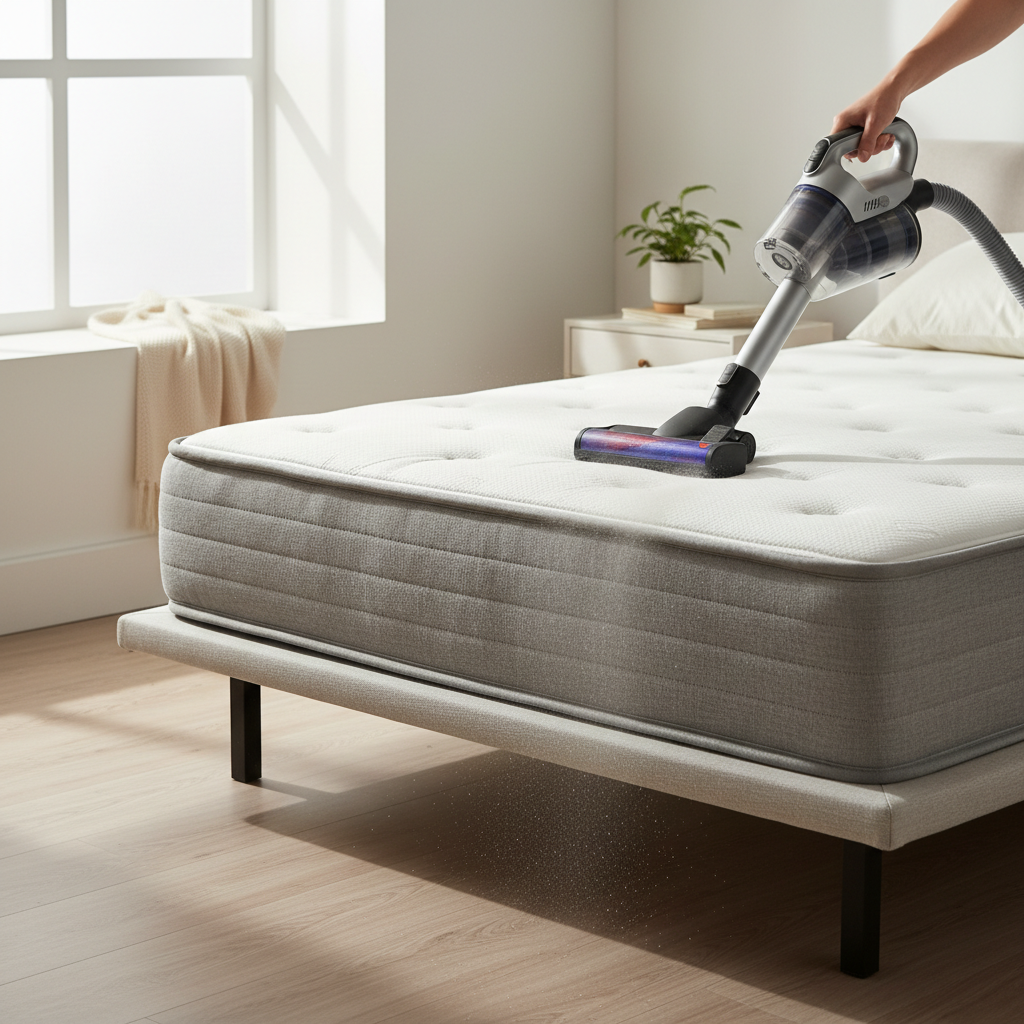
Step 1: Strip the bed and dry-vacuum thoroughly
Wash bedding on the hottest setting the fabric allows, then focus on the mattress. Vacuum slowly, overlapping passes, and spend extra time on seams and tufted areas where dust compacts.
Step 2: Pre-treat “dust spots” without soaking
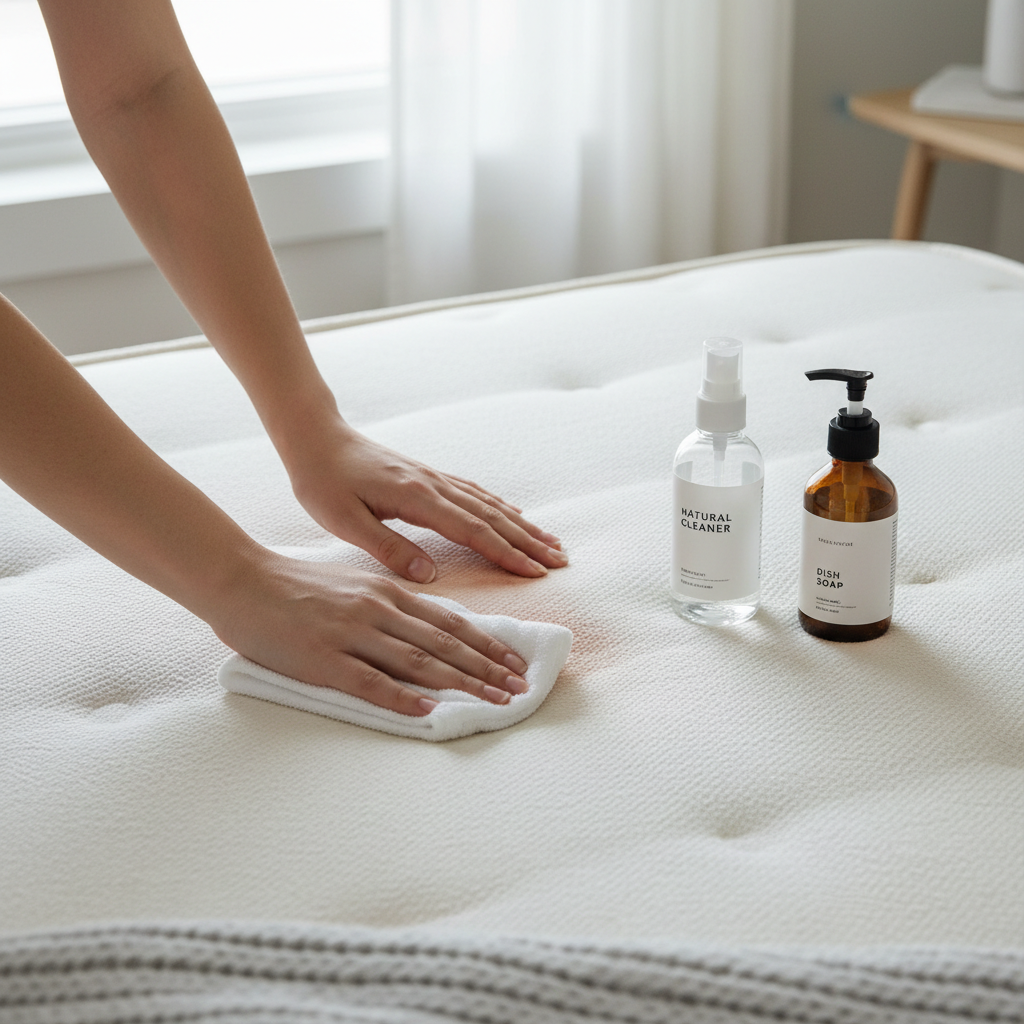
Lightly mist a cloth (not the mattress) with water and wipe the area to pick up surface grime. The goal is damp, not wet. If the cloth comes up gray, you’re lifting soil, keep rotating to a clean section.
Step 3: Apply the right spot treatment (match stain type)
Use one method from the table below, blot from the outside in, and avoid aggressive scrubbing. Scrubbing spreads stains and roughens fibers, making future dust stick faster.
Step 4: Dry fast, then deodorize if needed
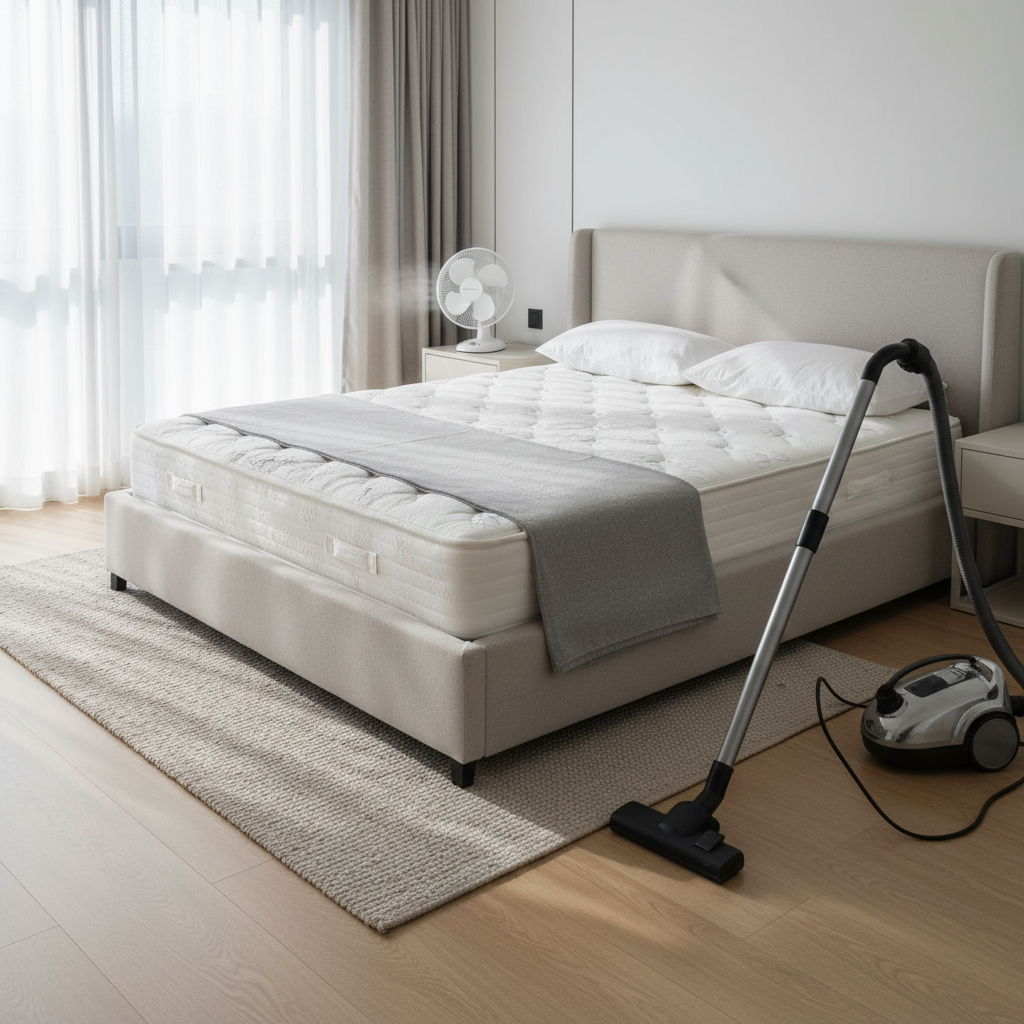
After spot treating, press with a dry towel to pull moisture up. Aim a fan across the surface for at least a few hours. When it feels fully dry, sprinkle baking soda lightly, let it sit 4–8 hours, then vacuum again.
Stain guide table: what to use for common mattress stains
Different stains respond to different chemistry. If you throw peroxide on everything, you risk discoloration. If you use too much soap, you leave residue that attracts more dirt.
| Stain type | What it often looks like | What to use | How to apply |
|---|---|---|---|
| Dust/oil buildup | Gray or brown smudges, dull patches | Warm water + a drop of dish soap | Blot with barely damp cloth, then blot dry |
| Sweat/yellowing | Yellow areas, “sleep outline” | Baking soda paste or enzyme cleaner | Thin layer, short dwell time, remove, dry fast |
| Blood | Pink to rust spots | Cold water; optional 3% peroxide spot test | Blot cold, then tiny peroxide dab if safe, blot again |
| Coffee/tea | Brown rings | Dish soap solution; small vinegar-water mix if needed | Blot outward-in, repeat lightly, avoid overwetting |
| Urine/pet accidents | Yellow stain, strong odor | Enzyme cleaner (upholstery-safe) | Saturate minimally as label requires, extract with towels, dry |
| Unknown old stain | Faded gray/yellow marks | Start mild: dish soap solution | Test small spot, repeat rather than escalate fast |
Always spot test any cleaner on an inconspicuous edge, especially on mattresses with bright white ticking or special finishes.
Hands-on stain removal recipes (with realistic guardrails)
Here are three “go-to” mixes that cover most household situations. Keep your expectations reasonable, older stains may lighten rather than disappear, and that’s still a win if the mattress is clean, dry, and odor-free.
1) Mild soap solution for dust spots and general grime
- Mix 1–2 cups warm water with 1–2 drops of clear dish soap.
- Dampen a cloth, blot the spot, then switch to a water-only damp cloth to remove soap residue.
- Press with a dry towel until the area feels barely damp.
2) Baking soda method for sweat and odor
- For surface odor: sprinkle a light, even layer of baking soda, let it sit, then vacuum slowly.
- For a localized stain: make a thin paste (baking soda + small amount of water), spread lightly, let it dry, scrape gently, then vacuum.
3) Peroxide for some set stains (use carefully)
- Use 3% hydrogen peroxide only after a spot test, it can lighten fabric.
- Dab with a cotton pad, wait a few minutes, blot with a clean damp cloth, then blot dry.
- If the stain is protein-based (like blood), keep water cold at first, warm water can set it.
According to EPA guidance on mold and moisture control, drying wet materials promptly helps prevent microbial growth, which is why the drying step matters as much as the cleaning step.
Drying and prevention: the part most people rush (and regret)
Moisture left inside a mattress can create lingering odor and, in some cases, microbial growth. If you’re cleaning in a humid region or you don’t have great airflow, plan ahead.
- Airflow beats heat: run a fan across the surface, not straight down into it.
- Use a dehumidifier if the room feels sticky or it’s raining outside.
- Wait to remake the bed until the surface feels dry and cool, not just “looks dry.”
- Add a washable protector: it’s the easiest way to reduce future dust/oil buildup and random stains.
- Vacuum the mattress every 1–2 months if allergies or pets are in the picture.
Mistakes that make stains worse (or come back)
- Overwetting: the fastest path to musty smells and “ghost stains” that reappear as they dry.
- Scrubbing hard: pushes grime outward and frays fabric, making it catch more dust later.
- Too much soap: residue turns into a dirt magnet, and the area looks dingy again.
- Mixing cleaners casually: avoid combining products, especially anything involving bleach or ammonia. If you’re unsure, keep it mild and simple.
- Skipping the second vacuum: baking soda and loosened debris need removal, not just time.
If anyone in your home has asthma or severe allergies, it may be smart to choose low-fragrance products and ventilate the room well, and if symptoms flare, consider checking with a healthcare professional.
When it’s time to call a pro (or consider replacement)
DIY cleaning covers a lot, but not everything. A professional upholstery/mattress cleaning service can help when extraction and controlled drying are required.
- Stains cover a large area or reach multiple layers, especially on foam mattresses
- Persistent musty odor after thorough drying
- Signs that look like mold or recurring dampness from a leak or high humidity
- Bed bug concerns, don’t “clean and hope,” consult a licensed pest professional
If the mattress is very old, sagging, or repeatedly getting wet, putting more effort into stain removal might not be the best use of time, at that point, prevention on a new mattress may be the more realistic route.
Key takeaways you can follow tonight
- Vacuum slowly before any moisture touches the surface, it prevents turning dust into mud.
- Choose a stain method that matches the stain type, and blot more than you scrub.
- Keep water use minimal, then dry aggressively with airflow.
- If you’re trying to master how to clean mattress from dust and stains, the repeatable habit is a protector + regular vacuuming, not stronger chemicals.
FAQ
How do I clean mattress dust spots without making a water ring?
Use a barely damp cloth and blot from the outside edge toward the center, then blot dry immediately. Rings usually come from overwetting and uneven drying, so keep moisture controlled and use a fan.
What’s the safest way to handle old yellow stains on a mattress?
Start mild, baking soda for odor and a gentle soap solution for surface grime, then evaluate. Enzyme cleaners can help with sweat-related staining, but test first and avoid soaking, foam layers hold moisture.
Can I use bleach to whiten mattress stains?
It’s usually a bad idea. Bleach can damage fibers, leave harsh residue, and discolor fabric unevenly. If whitening is the goal, try safer spot methods and accept that some older stains may only lighten.
How long should I let baking soda sit on the mattress?
For basic deodorizing, 4–8 hours works well in many homes, longer is fine if the room is dry. The key is vacuuming slowly afterward so the powder doesn’t remain in the fabric.
Is hydrogen peroxide safe for every mattress?
No. It can lighten fabric and affect some finishes, so a spot test matters. Use small amounts, blot, and avoid saturating, especially on memory foam mattresses.
How often should I vacuum my mattress if I have allergies?
Many people do well with every 1–2 months, plus washing bedding regularly, but it depends on pets, room dust, and symptoms. A HEPA vacuum and a quality protector can reduce buildup between cleanings.
My mattress smells musty after cleaning, what should I do?
Assume trapped moisture first. Increase airflow with a fan, open windows if outdoor humidity is lower, and consider a dehumidifier. If odor persists or you suspect mold, professional evaluation may be the safer next step.
If you’re trying to keep stains from coming back, a simple combo tends to be the least stressful, clean with minimal moisture, dry fully, then protect the surface with a washable cover so future dust and spills don’t sink in.
If you need a more hands-off option, look for a local mattress or upholstery cleaner who uses low-moisture methods and controlled drying, it can be a good fit when stains are widespread or odors won’t budge.