
How to organize winter coats in small closet comes down to two things: controlling bulk and giving each coat a “home” that matches how often you wear it.
If your closet feels packed every time temperatures drop, you’re not alone, winter outerwear takes up more cubic space than most people expect, and it fights with boots, hats, and bags for the same few inches. The good news is you usually don’t need a new closet, you need a better layout and a couple of small gear upgrades.
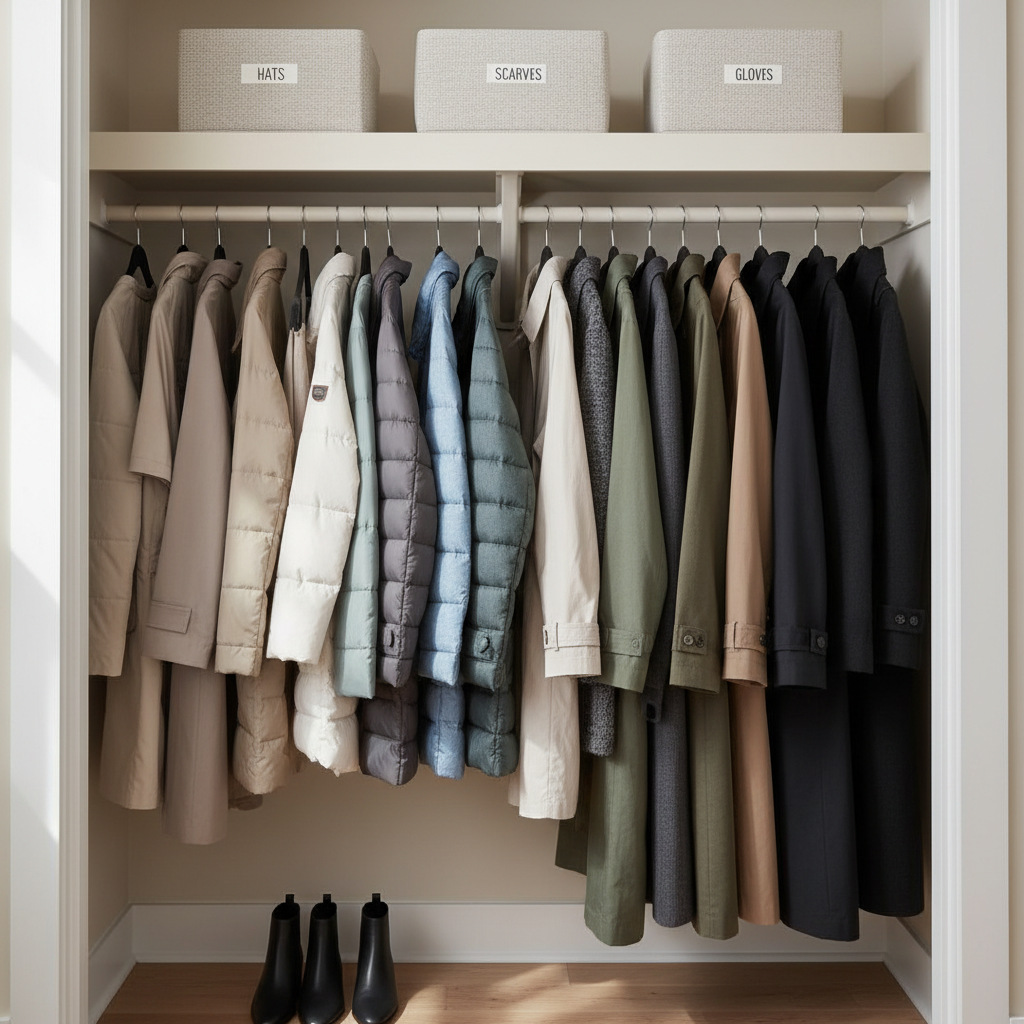
A common trap is trying to “make everything fit” without deciding what deserves prime closet space. That’s when coats get crushed, sleeves tangle, and you start avoiding the closet entirely. Below is a practical system you can set up in an hour, then tweak once you live with it for a week.
Start with a realistic coat inventory (and a quick decision rule)
Before you buy bins or swap hangers, take five minutes to count what you’re actually storing. In many households, the problem isn’t just the closet size, it’s the mix: one or two bulky parkas, a few midweight puffers, plus “maybe” coats that never leave the hanger.
- Daily drivers: the 1–2 coats you grab most weekdays
- Weather-specific: heavy snow coat, rain shell, dress coat
- Occasional/backup: old puffer, “just in case” extras
Decision rule that keeps things simple: if you didn’t wear it last winter and it doesn’t fill a very specific purpose, it probably shouldn’t take up premium closet real estate.
Why small closets get overwhelmed by winter coats
Most small closets fail for predictable reasons, and once you spot yours, fixing it gets easier.
- Too many thick hangers: they steal rail space, especially wooden suit hangers.
- Coats hung at random: long coats block bins below, short puffers waste vertical space.
- No “access zones”: everyday items mixed with once-a-month items, so everything feels cluttered.
- Accessories floating: hats, scarves, gloves end up on any open shelf, then coat storage gets squeezed.
According to U.S. Consumer Product Safety Commission (CPSC), tip-over incidents can happen when heavy items are stored improperly on unstable furniture, so if you’re tempted to stack heavy coats on a chair or tall freestanding rack, it’s worth thinking about stability and weight distribution.
A simple zoning plan that works in most closets
When people ask how to organize winter coats in small closet, what they usually need is a zoning plan, not more rules. Here’s one that fits most reach-in closets and stays easy to maintain.
Zone A: the “grab zone” (eye level, easiest reach)
Put your most-worn coats where your hand naturally lands. Limit it to what you truly use during the current stretch of weather.
- 1 heavy coat or parka
- 1 midweight coat (puffer or wool)
- 1 rain layer if your area swings warm/cold
Zone B: secondary coats (same rod, but to one side)
These are the “not daily, but not storage” pieces, dress coat, travel coat, backup puffer. They can live at the far left or right end so they don’t interrupt your daily flow.
Zone C: true storage (top shelf or bins)
Anything you won’t wear for 2–4 weeks goes up high or into a bin. If the coat is very compressible (some puffers), store it loosely to avoid crushing insulation over time.
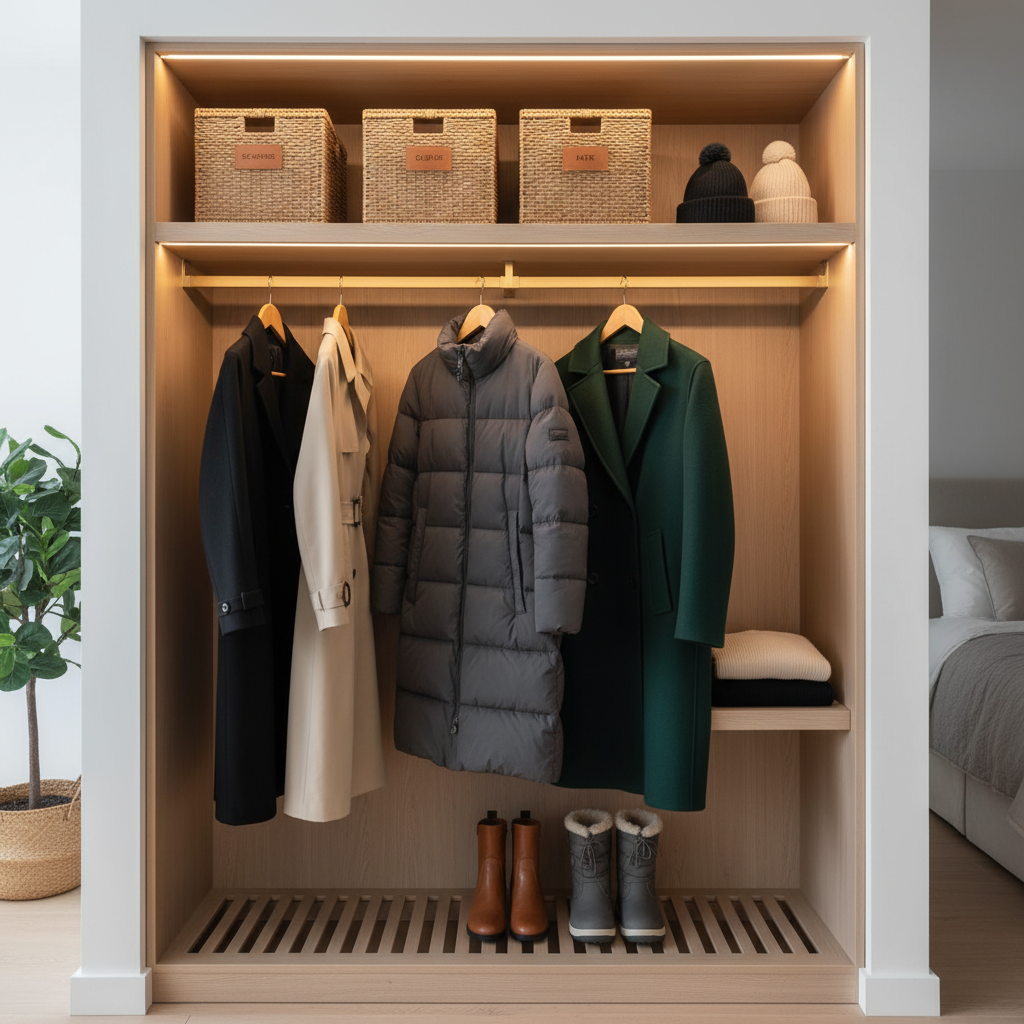
Gear that makes a small closet feel bigger (without a renovation)
You don’t need a shopping spree, but a couple of swaps can change the math of your hanging space.
- Slim velvet hangers: they reduce bulk and help coats stay put, especially slick puffers.
- Sturdy wide-shoulder hangers: better for heavy wool coats to avoid shoulder bumps, use only for the heaviest pieces.
- Coat hooks or door-mounted rack: ideal for “wet or worn once” coats that shouldn’t go back with clean items.
- Labeled bins: one for hats/gloves, one for scarves/earwarmers, so accessories stop invading coat space.
If you use vacuum bags, treat them as seasonal storage only, not everyday rotation. Some materials and insulation types can flatten if they stay compressed too long, so check your coat’s care label and consider looser storage when possible.
Step-by-step: organize winter coats in a small closet in one session
This is the fast workflow that tends to stick, because you’re not “organizing forever,” you’re making a decision once, then putting guardrails in place.
1) Pull coats out, then re-hang in the right order
- Hang long coats together on one end so they don’t block shorter items.
- Group by weight: heavy, midweight, light shells.
- Keep your top 1–2 coats centered or closest to the door.
2) Create one accessory station
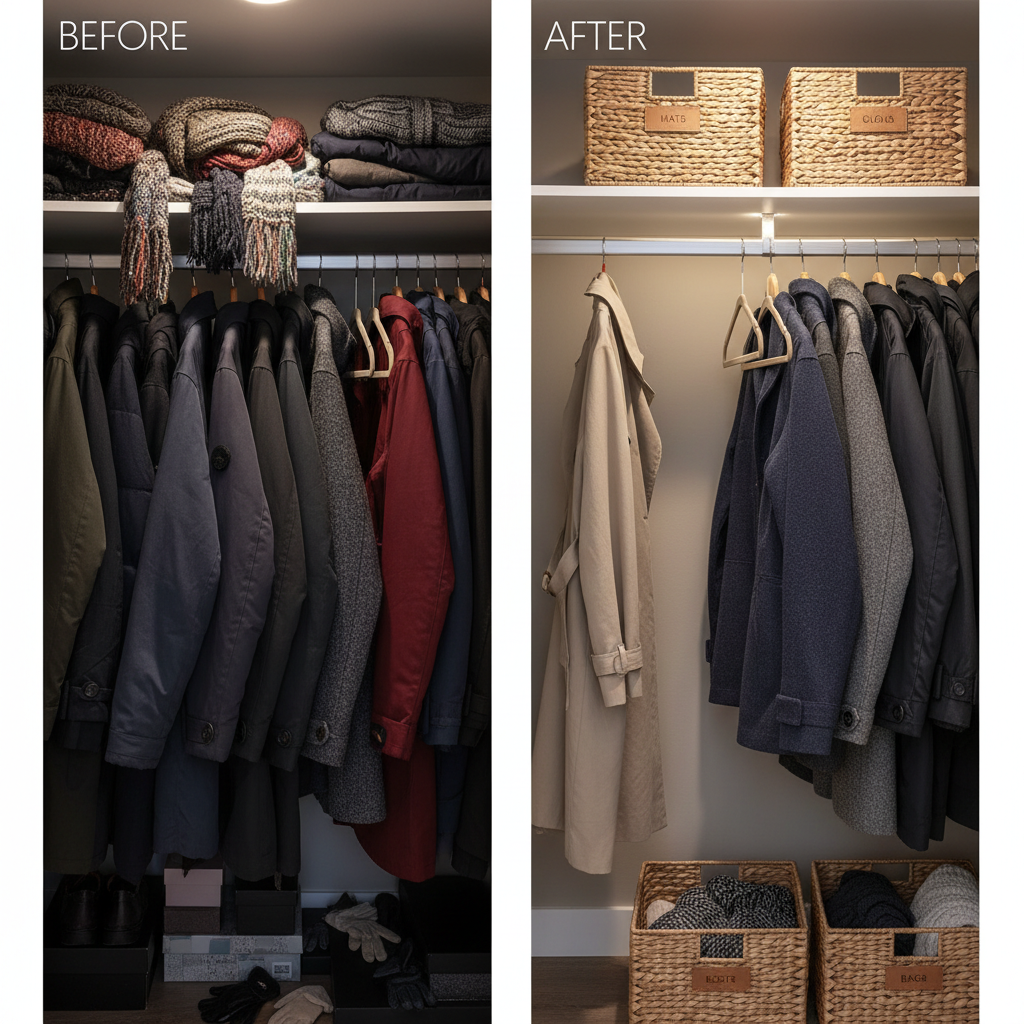
If your closet has a shelf, assign it. If it doesn’t, use a bin or hanging organizer. One container per category beats a “misc” basket that turns into a knot of scarves.
3) Add a “landing spot” for in-between coats
This small step prevents the whole system from collapsing. A hook by the door or the inside of the closet door is enough for coats that are damp, dusty, or worn once and airing out.
4) Set a capacity limit (so it stays organized)
Pick a simple rule you’ll actually follow, for example, only 6–10 coats on the main rod, with anything beyond that moving to Zone C storage.
Quick self-check: which small-closet problem do you have?
Use this checklist to diagnose what’s really crowding your space, then jump to the matching fix.
- Your coats slide off hangers: swap to velvet hangers, avoid narrow wire hangers for heavy pieces.
- You can’t see anything: separate “daily coats” from “occasion coats,” stop mixing them.
- The rod bows or feels overloaded: reduce heavy items on one section, consider storing 1–2 bulky pieces elsewhere.
- Accessories cause chaos: one bin per category, label it, and keep it near the grab zone.
- Closet smells musty: air out coats, ensure they’re dry before hanging, consider a breathable storage approach.
A practical table: storage options by coat type
Different coats behave differently, and that matters in a small space.
| Coat type | Best small-closet method | What to avoid |
|---|---|---|
| Heavy wool overcoat | Hang on sturdy hanger, give shoulder support | Thin hangers that cause shoulder dents |
| Puffer jacket | Hang on slim non-slip hanger or store loosely in bin | Long-term tight compression (can reduce loft) |
| Parka with faux fur trim | Hang, keep trim fluffed, brush lightly if needed | Crushing trim under other coats |
| Rain shell | Hang near front for quick layering | Storing wet inside closet, can cause odor/mildew |
| Dress coat (occasion) | Hang to the side, use garment bag if dusty area | Mixing with daily coats where it gets wrinkled |
Common mistakes that waste space (even when you “organized”)
A closet can look neat for a day and still be set up to fail. These are the usual culprits.
- Organizing by color only: pretty, but it ignores bulk and frequency, which are the real constraints.
- Keeping donation candidates on the rod: if it’s a “maybe,” it stays forever, move it out immediately.
- Letting the floor become storage: once boots and bags cover the floor, coats have nowhere to hang freely.
- Overusing vacuum bags for active season: you’ll avoid using the stored coat because it’s annoying to access.
When it’s worth getting extra help (or at least a second set of eyes)
If you’re dealing with persistent moisture, moldy smells, or a closet that regularly feels damp, it may be more than a coat problem. In many cases better ventilation and drying habits help, but if you suspect mold growth or an underlying humidity issue, consider talking with a qualified home professional.
And if the closet rod is loose, pulling from the wall, or bowing under weight, it’s smart to address that before you rehang everything. A handyman or contractor can usually reinforce hardware quickly, and it’s safer than hoping it holds through winter.
Key takeaways (keep this simple)
- Prime space is for coats you wear weekly, everything else moves to a side zone or top-shelf storage.
- Bulk beats beauty, organize by length and weight before you worry about color.
- Accessories need a container, otherwise they steal coat space without you noticing.
- A “landing hook” prevents backsliding, especially on wet or half-clean days.
Conclusion: a small closet can hold winter coats, if you assign space on purpose
If you’ve been stuck wondering how to organize winter coats in small closet, the biggest unlock is giving daily coats a dedicated grab zone, then pushing everything else into clear, labeled storage. Do that, and the closet stops feeling like a wrestling match.
Pick one action today: swap to slim hangers, or set up a single accessories bin, either change typically creates immediate breathing room, and it makes the next step easier.
FAQ
How many winter coats should I keep in a small closet?
Most people do well with 2–4 in active rotation, plus 1–2 specialty coats if weather truly demands it. If you’re over that, store off-season or backup pieces on the top shelf so the rod stays usable.
Is it okay to store puffers in vacuum bags?
For seasonal storage, often yes, but keep compression time reasonable and check the care label. If the puffer is part of your weekly rotation, vacuum bags usually create friction that makes you avoid wearing it.
What hangers work best for bulky winter coats?
Slim velvet hangers save space for most coats, but very heavy wool coats may benefit from a wider, sturdier hanger to support the shoulders. Mixing hanger types is normal, just don’t let bulky hangers take over the whole rod.
How do I keep my closet from smelling like wet coats?
Try not to hang damp coats in a tightly packed space, use a hook to air them out first, then return them once dry. If odor persists, cleaning the coat per label instructions and improving airflow usually helps, and ongoing dampness may justify professional advice.
Where should I put scarves, gloves, and hats if I have no shelf?
A hanging organizer on the rod end, a small bin on the floor, or an over-the-door pocket organizer can work, choose the one you’ll actually use daily. The key is one “home” so accessories stop migrating.
How do I organize coats for a family in one small closet?
Assign each person a mini-zone, even if it’s just a section of the rod plus a labeled bin for accessories. Without boundaries, one person’s bulky coat tends to sprawl into everyone else’s space.
What’s the fastest way to make room without buying anything?
Pull out the least-worn coats and store them temporarily in a suitcase, under-bed box, or a labeled bag on the top shelf. Then rehang by length so long coats don’t steal usable vertical space.
If you’re trying to keep a small closet functional all winter, a simple next step is creating a coat “rotation” setup with slim hangers, one accessory bin, and a door hook, it’s not fancy, but it makes daily mornings noticeably smoother.