
How to organize a small entryway usually comes down to one thing: stopping “drop-zone chaos” before it starts, because in a tight space, one backpack and three pairs of shoes can make the whole home feel messy.
If your entryway is a hallway sliver, a corner by the door, or a rental-friendly nook, you still can make it work, you just need fewer categories, better vertical storage, and a reset routine that takes under two minutes.
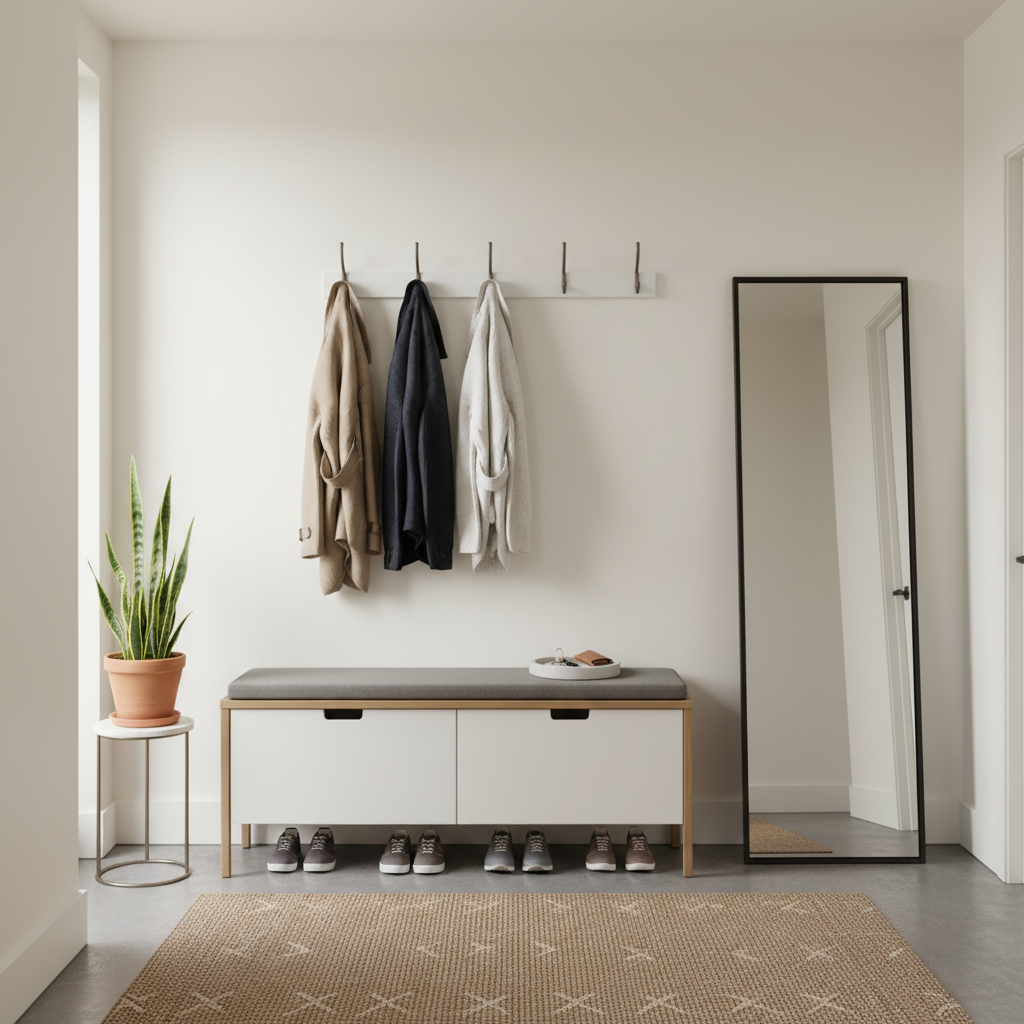
The good news, you don’t need a full mudroom to feel “put together.” You need a few decisions: what must live by the door, what can move elsewhere, and what storage matches how your household really behaves on a weekday.
Start with a quick reset, then define what your entryway is for
Before buying anything, clear the floor and surfaces, put everything into three piles: keep at the door, store nearby, relocate. This feels basic, but it’s where most small spaces succeed or fail.
A small entryway is not a storage unit. It’s a “transition zone,” so the goal is fast in, fast out, minimal decisions. According to USCPSC (U.S. Consumer Product Safety Commission), keeping walkways clear helps reduce common trip-and-fall hazards at home, which is an underrated reason to stay ruthless about floor clutter.
- Keep at the door: keys, one everyday coat per person, a small shoe rotation, pet leash if you use it daily.
- Store nearby: umbrellas, extra shoes, seasonal accessories, reusable bags.
- Relocate: sports gear, mail stacks, recycling, bulky backpacks, “maybe later” stuff.
Run a 60-second self-check: what’s making it messy?
If you’ve tried to tidy and it never sticks, it’s usually a “system” issue, not effort. Use this quick checklist to identify your main friction point, then you’ll know what to fix first.
- Shoes pile up because there’s no cap (too many pairs allowed by the door) or no clear parking spot.
- Coats migrate to chairs because hooks are too high, too few, or blocked by other items.
- Keys and wallets disappear because the landing spot is optional, not automatic.
- Mail becomes a tower because you don’t have a “decision point” (trash, shred, file).
- Kid stuff explodes because there’s no low, reachable zone they can actually use.
Once you know the culprit, organizing a small entryway gets simpler, you’re building for one problem, not trying to “Pinterest” the whole area.
Create three zones: drop, store, and move-through
When space is limited, zones keep you honest. You’re basically assigning each square inch a job, and removing the temptation to set things “temporarily” on the floor.
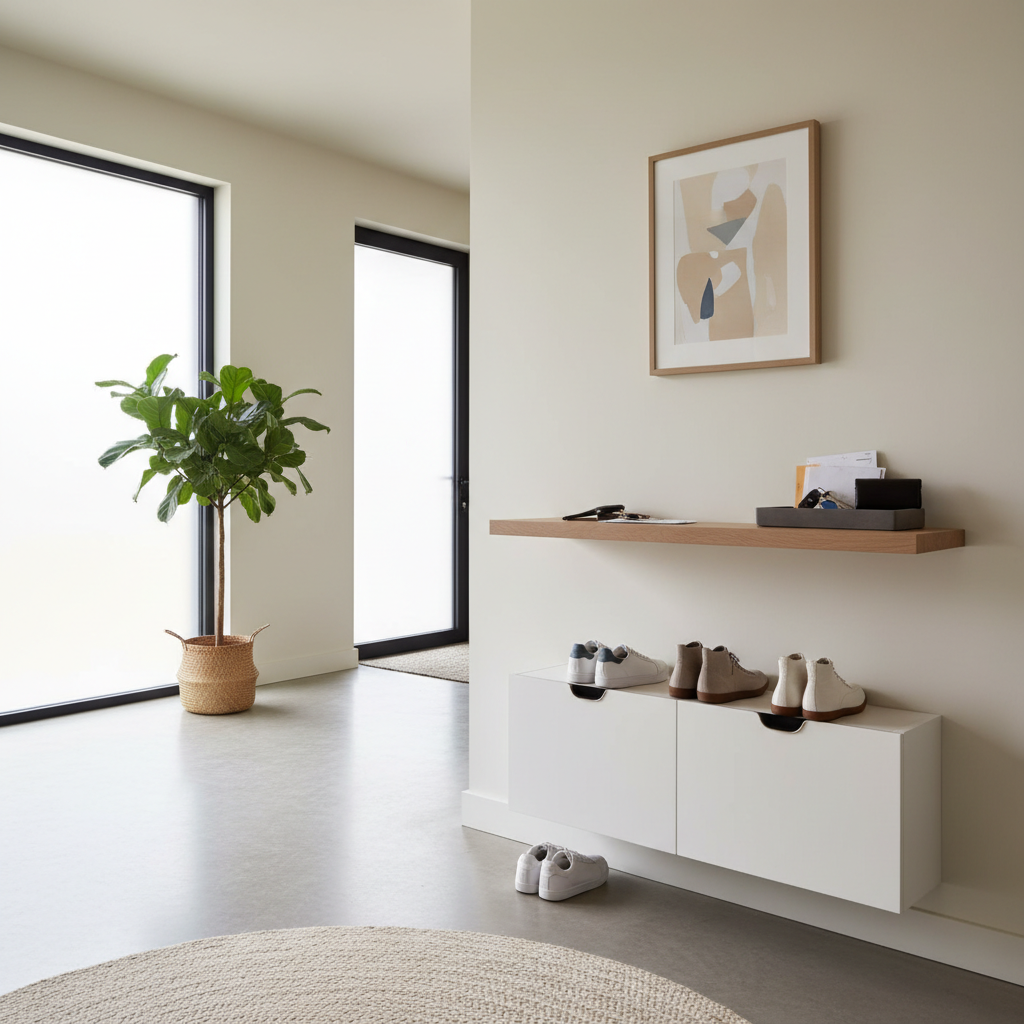
Drop zone: one small tray or bowl for keys, a hook for a bag, and a tiny mail slot if you truly need it. Keep this surface small on purpose.
Store zone: closed storage (shoe cabinet, baskets) hides visual noise, open storage (rack, cubbies) is faster but looks messy sooner. Choose based on your tolerance and how often you reset.
Move-through zone: protect the walking path. If your entry is also a hallway, prioritize depth over width, slim furniture beats bulky “cute” pieces.
Choose storage that matches your space (and your habits)
People get stuck here because they shop for a vibe, not a constraint. Below is a practical fit guide, use it like a decision shortcut.
| Entryway constraint | What usually works | What to avoid |
|---|---|---|
| Narrow hallway | Slim shoe cabinet, wall hooks, floating shelf | Deep benches, wide open racks |
| No closet | Hook rail + a few sturdy hangers, closed bins for extras | Overstuffed coat trees (they tip, they sprawl) |
| Rental limitations | Over-the-door hooks, tension rod solutions, adhesive hooks (rated for weight) | Heavy wall-mounted units without permission |
| Kids in the house | Low hooks, labeled bins, simple shoe spots | High-only storage that requires adult help |
| Wet/snowy climate | Boot tray, washable mat, towel hook | Fabric baskets on the floor (they soak and stain) |
If you’re deciding between two options, pick the one that makes the “right behavior” the easiest behavior. That’s the real secret behind how to organize a small entryway without constant re-tidying.
Step-by-step setup: a small entryway you can maintain
This is the setup order that tends to stick, because each step supports the next. Do it once, then adjust after a week of real life.
1) Cap the shoe count
Give each person a limit, typically 1–3 pairs by the door depending on space and weather. The rest goes to a closet, under-bed storage, or a bedroom shelf.
- Use a boot tray if you deal with rain or snow.
- If you hate bending, consider a tilting shoe cabinet or a higher shelf with a small stool nearby.
2) Put bags and coats on the wall, not on furniture
Hooks are the entryway MVP, but only if they’re reachable and not crowded. Aim for “one hook per daily item,” plus one spare.
- Place everyday hooks around shoulder height, kid hooks lower.
- If heavy bags are common, choose hardware rated for weight, when in doubt, ask a handyman or your landlord.
3) Create a tiny landing spot for small stuff
A shallow shelf, a wall pocket, or a tray on a narrow console works. Keep it intentionally small, so clutter can’t camp there.
- Keys: bowl, hook, or magnetic strip, pick one and commit.
- Mail: one slot for “needs action,” everything else gets recycled immediately.
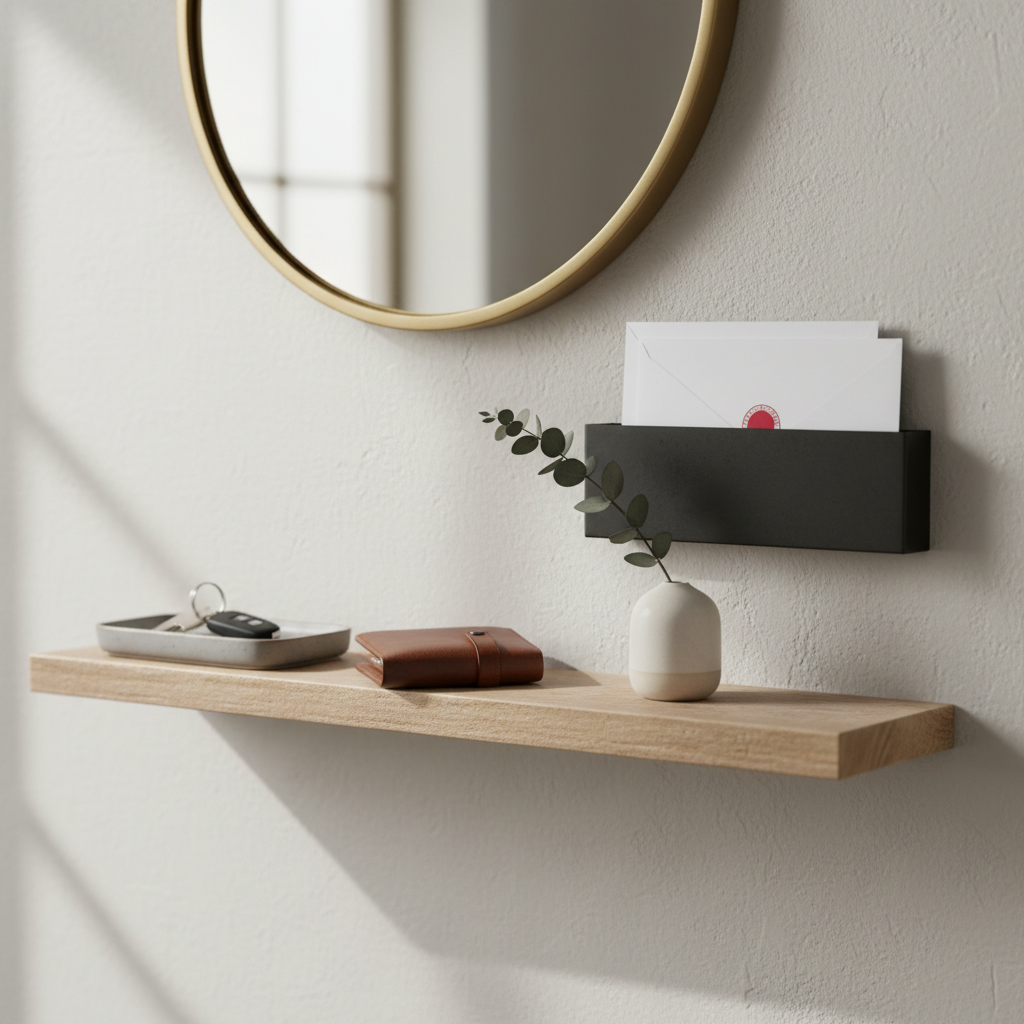
4) Add one “catch-all” that has rules
This might be a lidded basket, one drawer, or a small cabinet, meant for sunglasses, gloves, dog treats, whatever you actually grab at the door. The rule is simple: if it doesn’t fit, something must leave.
Common mistakes that keep small entryways cluttered
These are the patterns I see most when people say their entryway “never stays organized,” they’re easy to miss because each one feels harmless.
- Oversized furniture that blocks the walkway, even if it has great storage.
- No editing on shoes and coats, you can’t out-organize too much volume.
- Too many mini-bins with no labels, you end up with “mystery storage.”
- Drop zone creep, a console table turns into a junk table because it’s too big.
- Systems that require perfect behavior, if it takes two steps, people skip it.
Also, be careful with tall coat racks in tight areas, they can feel convenient, but in many homes they become a leaning tower of jackets, and the base steals precious floor space.
Make it last: a 2-minute routine and a simple weekly reset
Organizing a small entryway is half setup, half maintenance, and maintenance works best when it’s short and predictable.
- Daily (2 minutes): put shoes into their spots, hang coats and bags, empty the key tray of “extras.”
- Weekly (10 minutes): toss junk mail, wipe the shelf, swap out one muddy item, return stray stuff to its home.
- Seasonally: rotate bulky coats and boots out, so the entryway stays light.
Key takeaway: the best setup is the one your household follows on a tired Tuesday, not the one that looks perfect on a Saturday afternoon.
When it makes sense to get outside help
If you’ve tried the basics and the space still feels unworkable, you might be dealing with a layout or safety constraint more than an organization problem.
- If you need to mount heavy storage, and you’re unsure about studs, wiring, or rental rules, a qualified handyman can help you avoid damage.
- If trip hazards are a concern for older adults, consider asking an occupational therapist for home-safety suggestions, recommendations vary by person and mobility needs.
- If clutter feels emotionally loaded or tied to anxiety, it may help to talk with a mental health professional, especially if the stress impacts daily life.
Conclusion: keep the footprint small, keep the decisions smaller
A calm entryway is less about fancy storage and more about clear rules, a shoe limit, a reliable key spot, and a layout that protects your walking path. Pick one problem to solve first, set up your zones, then run the two-minute reset for a week, you’ll know quickly what needs adjusting.
If you want an easy starting action today, choose your key landing spot and cap shoes to a realistic number, those two changes alone often shift the whole feel of the space.
Quick highlights to remember:
- Limit volume before you buy organizers.
- Use vertical space with hooks and slim shelves.
- Protect the walkway so the area feels open and safe.
- Build a tiny routine that fits real life.