
How to arrange accent pillows on sectional sofa comes down to two things: picking a repeatable layout, and controlling size and color so the sectional looks intentional instead of messy.
If you have ever bought a “cute” pillow and then realized your sectional suddenly feels crowded, you are not alone. Sectionals have more seats, more corners, and more visual weight, so random pillow placement shows faster than it does on a standard sofa.
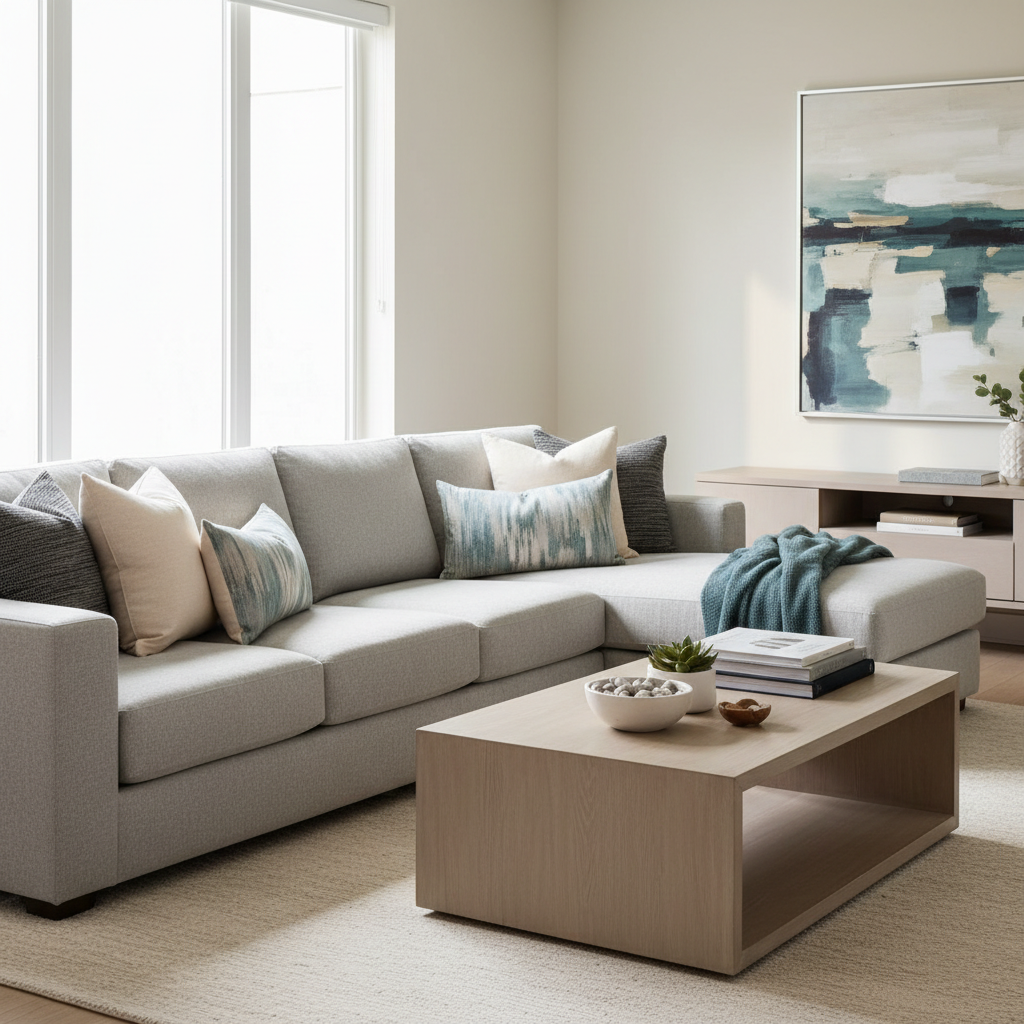
This guide gives you a few foolproof arrangements (for L-shape and U-shape), a quick self-check so you know which one fits your room, and practical rules stylists use to keep pillows comfortable, not just photogenic.
Start with the “why”: what usually makes sectional pillows look wrong
Most pillow problems are not about taste, they are about proportion and repetition. A sectional is basically multiple sofas stitched together, so you need a little structure.
- Too many sizes competing: five different dimensions can look like a store display, not a home.
- No anchor corners: the sectional corner (or chaise back corner) needs a “base” so the rest looks connected.
- All the pillows are the same chop: identical 18x18 pillows can read flat, especially on a wide sectional.
- Pattern with no plan: mixing patterns works, but not when every pillow fights for attention.
- Comfort gets sacrificed: if you have to move three pillows to sit down, the arrangement will not last.
According to American Society of Interior Designers (ASID)... good interior design supports function and well-being, which is a useful reminder here: pillows should look good, but they still need to let people actually use the sofa.
A quick self-check: pick the right layout for your sectional
Before you decide how to arrange accent pillows on sectional sofa, decide what your sectional is doing in the room. This changes the “right” amount and placement.
- L-shaped with chaise: often looks best with asymmetry, heavier styling on the corner and chaise end.
- L-shaped equal sides: can handle more symmetry, especially if the sectional faces a centered focal point (TV or fireplace).
- U-shaped: needs fewer pillows than you think, or the middle seating becomes unusable.
- Corner seat is your main hangout spot: prioritize two supportive back pillows there and keep the rest minimal.
- Kids/pets/high traffic: fewer pillows, removable covers, and darker accents hide life better.
If you are stuck, choose one “hero zone” (usually the inside corner) and style outward. That prevents the scattered look.
Size, number, and fill: the rules that keep pillows looking tailored
This is the part many people skip, then wonder why the arrangement feels off. Proportion does most of the visual work.
Recommended pillow sizes for most sectionals
These are common, easy-to-find sizes that layer well:
- 22x22 as your base (works well in corners)
- 20x20 as the “everyday” size
- 12x20 lumbar for shape and back support
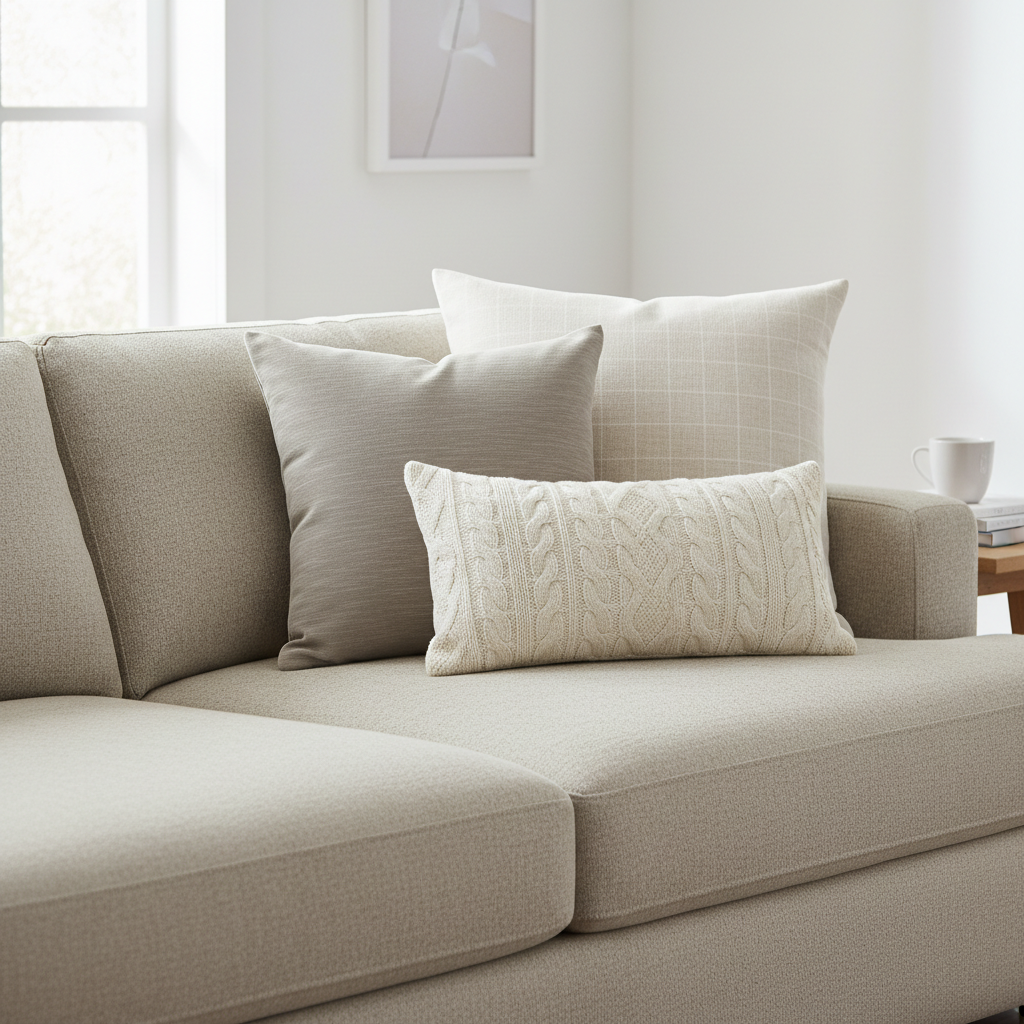
How many pillows is “normal”?
There is no universal number, but in many living rooms:
- Small sectional (2–3 seats + chaise): 3–5 pillows
- Standard L-shape: 5–7 pillows
- Large U-shape: 5–9 pillows, but concentrate them in corners
A helpful reality check: if the pillows regularly end up on the floor after guests arrive, you likely have one or two too many.
Insert quality matters more than people expect
If your pillows look limp, it is often the insert, not the cover. Many decorators size inserts up by about 2 inches (for example, a 22x22 insert inside a 20x20 cover) to get a fuller look, but firmness preference varies and some covers cannot handle it.
3 proven layouts (with steps) for an L-shaped sectional
If you want a clean answer to how to arrange accent pillows on sectional sofa, start with one of these and adjust only after it feels comfortable.
Layout A: The “corner stack + chaise lumbar” (easy, lived-in)
- Inside corner: 22x22 + 20x20 layered on each side (4 pillows total)
- Chaise end: 1 lumbar (12x20) near the arm for back support
This layout keeps the chaise usable and gives the eye a clear anchor at the corner.
Layout B: The “two corners balanced” (neat and symmetrical)
- Inside corner: 22x22 + 20x20 (2 pillows)
- Outer corner (opposite end): 22x22 + 20x20 (2 pillows)
- Optional: 1 lumbar in a contrasting texture
This works well when the sectional sits straight across from a focal point, and the room already has strong symmetry.
Layout C: The “three-pillow cluster” (minimal, modern)
- Inside corner: 22x22 + 20x20 + lumbar
- Leave the rest open
If your sectional is big and your space is visually busy, this often looks more expensive than adding more pillows.
What changes for a U-shaped sectional (and why less is often more)
U-shaped sectionals invite over-styling because there are so many corners. The problem is that pillows can block the middle seats and make the whole sofa feel “reserved.”
- Prioritize the two outer corners: build two matching stacks or two similar stacks.
- Keep the inner corner lighter: one lumbar or one 20x20 is usually enough.
- Don’t mirror every seat: repetition looks great in photos, but can kill comfort fast in real life.
In many homes, the best U-shape arrangement is 2 stacks (2 pillows each) plus 1–2 lumbars total.
Color and pattern: a simple formula that doesn’t feel “designed”
Color is where people either play it too safe or go too wild. A middle path: choose a tight palette and vary texture more than hue.
A practical mix that works in most rooms
- 60% solids or near-solids (linen look, bouclé, subtle weave)
- 30% one main pattern (stripe, small geometric, soft floral)
- 10% “pop” pillow (bold color or high-contrast pattern)
If your sectional is already patterned or heavily textured, flip it: mostly solids, one small pattern at most.
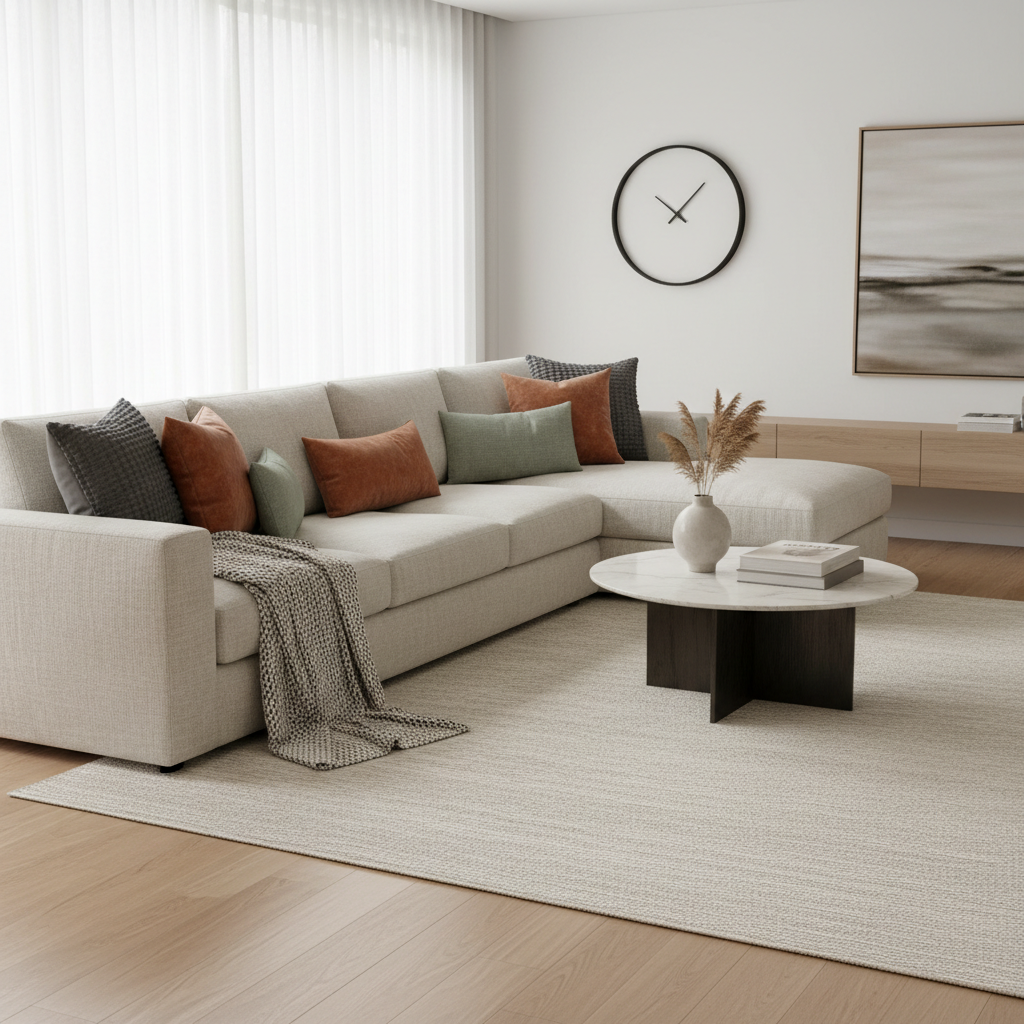
Use the room to pick the accent color (not the other way around)
A reliable trick: pull one color from art, a rug, curtains, or even a plant pot. It looks coordinated without trying too hard.
Quick reference table: layouts, pillow counts, and best use cases
| Sectional Type | Layout | Typical Pillow Count | Best For |
|---|---|---|---|
| L-shape + chaise | Corner stack + chaise lumbar | 5 | Everyday comfort, casual look |
| L-shape (balanced) | Two corners balanced | 4–5 | Clean, pulled-together rooms |
| Large sectional | Three-pillow cluster | 3 | Minimal, modern styling |
| U-shape | Outer corners focused | 5–7 | Entertaining without blocking seats |
Common mistakes (and the small fixes that actually help)
- Mistake: Every pillow is centered
Fix: slide one pillow slightly off-center, then layer a lumbar in front to create a “casual” break. - Mistake: Matching sets from the store
Fix: keep one or two, then add a different texture in the same color family. - Mistake: Pillows cover the arms
Fix: move the biggest pillows into corners, keep arms clearer so the sofa reads larger. - Mistake: Too much contrast on a huge sofa
Fix: reduce high-contrast patterns, let texture do the interest. - Mistake: Looks great, feels stiff
Fix: remove one pillow from the main sitting zone, comfort usually improves immediately.
Key takeaways you can apply in 10 minutes
- Anchor the inside corner with at least one larger base pillow, it “organizes” the whole sectional.
- Limit sizes to 2 squares plus 1 lumbar for a layered look without chaos.
- Pick one repeatable layout, then tweak color and texture rather than reinventing the placement.
- Stop at comfortable, if sitting down requires rearranging, you went too far.
Conclusion: make it intentional, then make it livable
The best-looking sectionals are not the ones with the most pillows, they are the ones where the pillows follow a simple plan. Choose a layout that fits your sectional shape, anchor the corners, then edit until the sofa feels easy to use.
If you want one action step: pick two 22x22s for the corner, add two 20x20s in front, then decide whether you still need a lumbar for comfort, that single move fixes most “something looks off” situations.
FAQ
How many accent pillows should I put on a sectional sofa?
Many homes land between 5 and 7 for a standard L-shape, but comfort is the real test. If you routinely remove pillows to sit, scale back by one or two.
How to arrange accent pillows on sectional sofa with a chaise?
Start with a layered stack at the inside corner, then add a single lumbar on the chaise for back support. It keeps the chaise functional and still looks styled.
Should pillows match on both sides of an L-shaped sectional?
They can, but they do not have to. Symmetry reads more formal, while a slightly uneven setup often feels more relaxed and works better for everyday lounging.
What pillow size looks best on a large sectional?
Large sectionals usually need at least one larger square (often 22x22) to avoid the “tiny pillows on a giant sofa” look. Then layer a 20x20 or a lumbar in front.
How do I mix patterns without making it look busy?
Keep most pillows solid or subtly textured, pick one main pattern, and repeat at least one color across all covers. If the sofa or rug already has strong pattern, go quieter on pillows.
Where do I put the accent color pillows?
Put the boldest color near the anchor corner or at one outer end so the eye has a destination. Scattering bright pillows evenly can make the sofa feel “striped.”
What if my sectional is in a small room?
Use fewer pillows and lighter colors, and keep arms and middle seats clearer. A three-pillow cluster in the corner often makes a small room feel less crowded.
If you are trying to make a sectional look put-together without losing comfort, it can help to choose a small set of covers and inserts that already match in scale and palette, then you just plug them into one of the layouts above and adjust from there.