
Best memory foam lumbar pillow for office chair usually means one thing in real life: a pillow that fills the gap in your lower back without pushing you forward or sliding down after 20 minutes.
If you sit for long stretches, the “wrong” lumbar pillow can feel supportive at first, then turn into a constant annoyance, too thick, too soft, too hot, or always drifting off-center. The right one is quieter: you stop thinking about it, and your back stops negotiating with your chair all day.
This guide breaks down what matters (and what’s mostly marketing), shows a quick self-check to match pillow shape to your body and chair, then gives practical setup steps so you get the benefit you expected when you clicked “add to cart.”
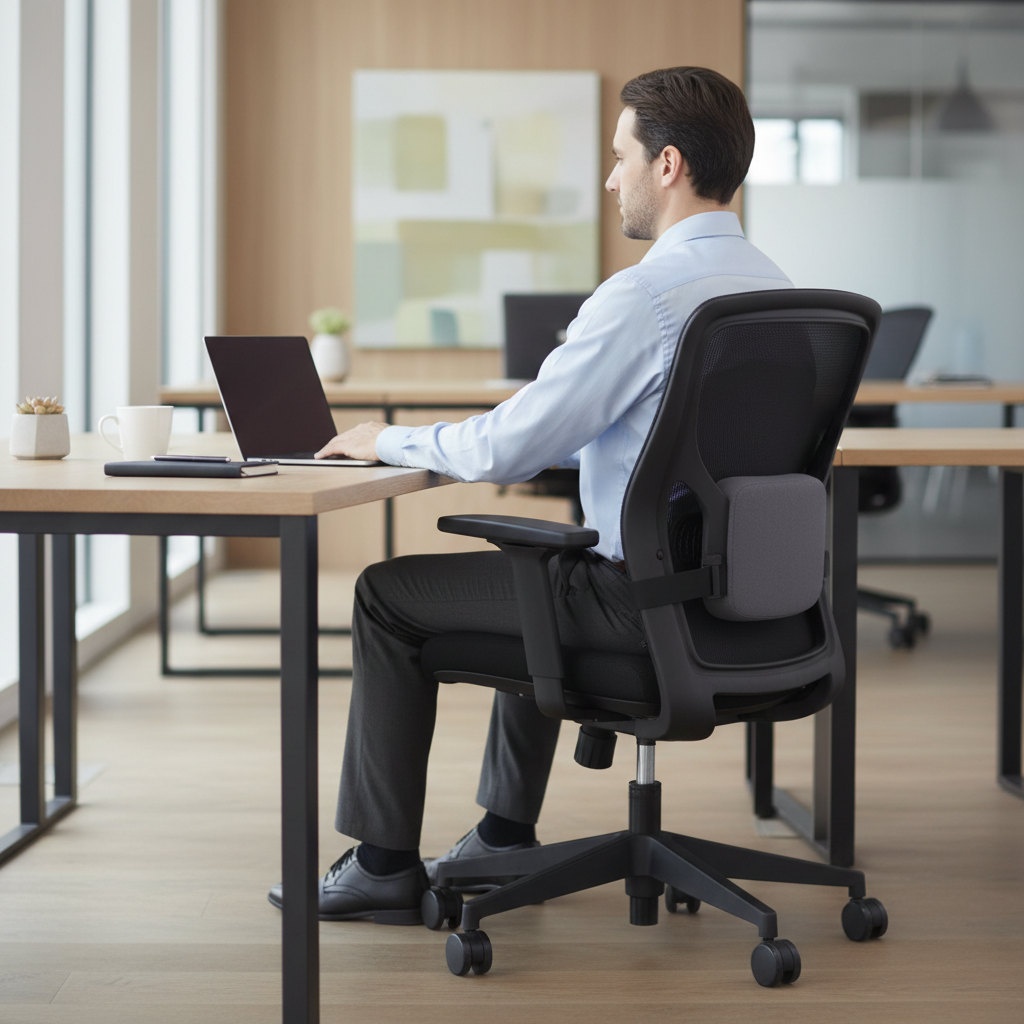
What a good lumbar pillow actually does (and what it can’t)
A lumbar pillow is there to support the natural inward curve of your lower spine. In many office chairs, the built-in lumbar either sits in the wrong spot, feels too aggressive, or doesn’t exist at all, so a separate cushion becomes the workaround.
What it can do: make your sitting posture feel more “stacked,” reduce end-of-day low-back fatigue for many people, and help you stay back in the chair rather than perching at the edge.
What it can’t do: fix a chair that’s the wrong size, replace movement breaks, or solve persistent pain that has a medical cause. According to NIOSH (CDC), a neutral posture and proper workstation setup are key parts of reducing musculoskeletal strain, so treat the pillow as one piece of the system, not the whole system.
Why memory foam is popular for office chairs
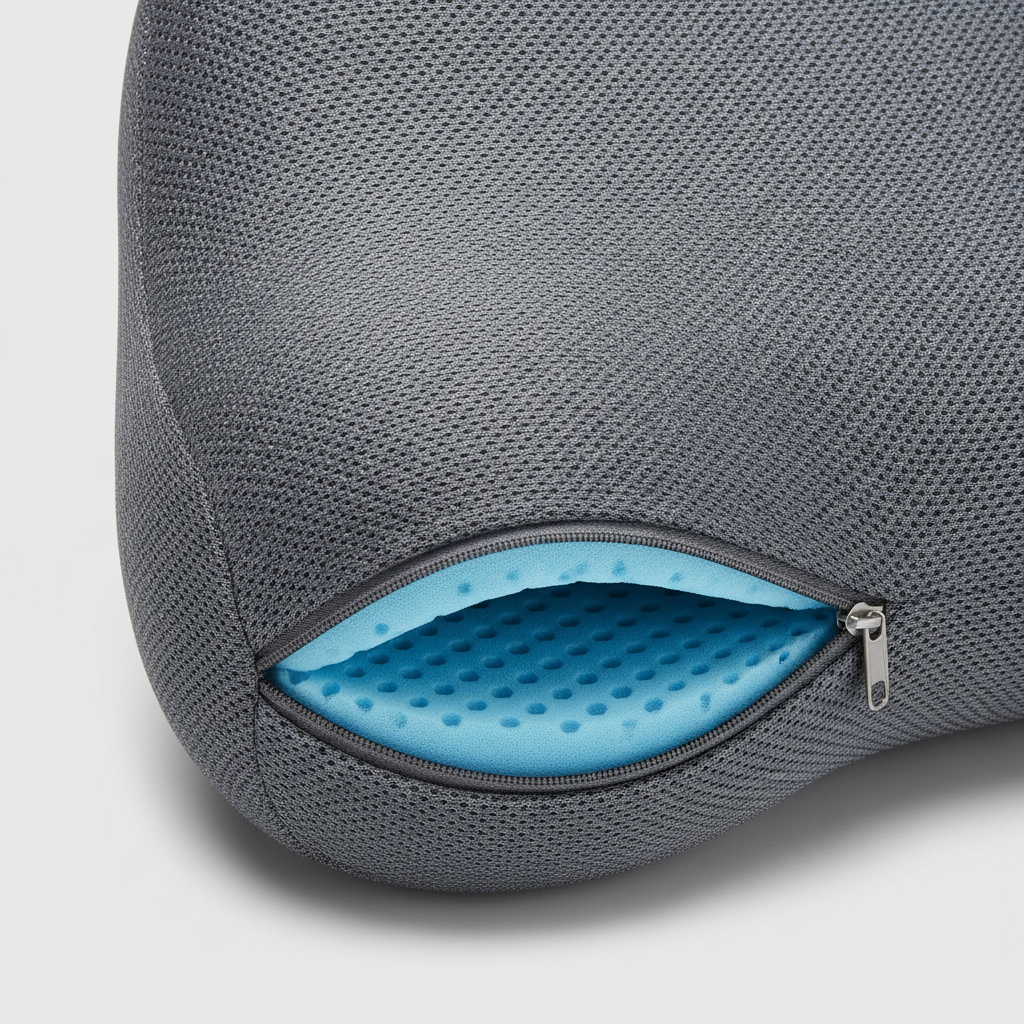
Memory foam tends to work well for desk work because it compresses under your body heat and pressure, then “holds” a custom contour. That usually feels more stable than a generic polyfill cushion that flattens over time.
- Better shape retention: helps the pillow keep a consistent curve during the workday.
- More even pressure: can feel less pokey than hard lumbar pads.
- Predictable feel: once you find the right thickness, it stays close to that feel.
Two trade-offs come up often: heat and softness. If you run warm or your office is hot, look for breathable covers and ventilated foam. If you sink too much, higher-density foam (or a thinner profile) usually behaves better.
Quick self-check: which lumbar pillow profile fits you?
Before you compare brands, decide what profile you need. Most “best memory foam lumbar pillow for office chair” lists skip this part, and that’s why people end up returning pillows that were never a match.
1) Your chair back shape
- Flat backrest: you often need a more pronounced contour or thicker center support.
- Curved/ergonomic backrest: a thinner pillow or flatter contour usually integrates better.
- Mesh chair: straps matter more, mesh can let pillows slide if the strap placement is weak.
2) Where you feel the “gap”
- Right above the belt line: classic lumbar support zone, a medium contour often fits.
- Higher mid-back fatigue: you may be placing the pillow too high, or you might need a taller design that supports both lumbar and lower thoracic area.
- Tailbone pressure: you might be using a pillow that sits too low or is too thick, pushing your pelvis forward.
3) Your sitting habits
- You sit upright for long blocks: medium-firm foam with stable straps tends to hold up.
- You lean/recline a lot: flatter pillows reduce the “shove” feeling when you recline.
- You perch on the chair edge: lumbar pillow alone won’t help much until you adjust seat depth and desk distance.
What to look for: a practical comparison table
Use the table below to translate product pages into real-world choices. Specs vary by brand, so treat these as decision cues, not rules.
| Feature | Why it matters at a desk | Good sign | Watch-outs |
|---|---|---|---|
| Contour shape | Determines where support lands on your spine | Curved center with side “wings” that don’t jab | Overly aggressive hump can push you forward |
| Thickness | Too thick changes your sitting geometry | Moderate profile that fills the gap, not the whole back | Thick pillows often shorten seat depth and crowd knees |
| Foam density/firmness | Affects sink-in and stability | Medium-firm feel that rebounds slowly | Very soft foam “bottoms out” and feels useless |
| Breathability | Heat makes long sitting worse | Mesh cover, ventilated channels or perforated foam | Solid foam + plush cover can trap heat |
| Straps and adjustability | Sliding ruins support placement | Two adjustable straps or wide strap with strong buckle | One thin strap can ride up/down on mesh chairs |
| Cover and cleaning | Office use adds sweat, dust, spills | Removable, washable cover with durable zipper | Non-removable covers get gross fast |
How to set it up so it works (most people skip this)
The same pillow can feel amazing or awful depending on placement. Here’s the setup that tends to get you closest to “neutral” posture without overthinking it.
Step-by-step placement
- Start low: place the pillow so its thickest point sits just above your belt line, not mid-back.
- Sit back fully: scoot hips all the way to the back of the seat, then tighten straps so the pillow stays put.
- Check your ribs: if you feel your ribs flare up or your chest pops forward, the pillow may be too thick or too high.
- Re-check after 30 minutes: memory foam changes as it warms, so do a second adjustment.
Pair it with two chair tweaks
- Seat depth: keep a small gap behind the knees; if the pillow pushes you forward so far you lose that gap, go thinner.
- Recline tension: a slight recline often reduces low-back load for many people, but avoid collapsing into a slouch.
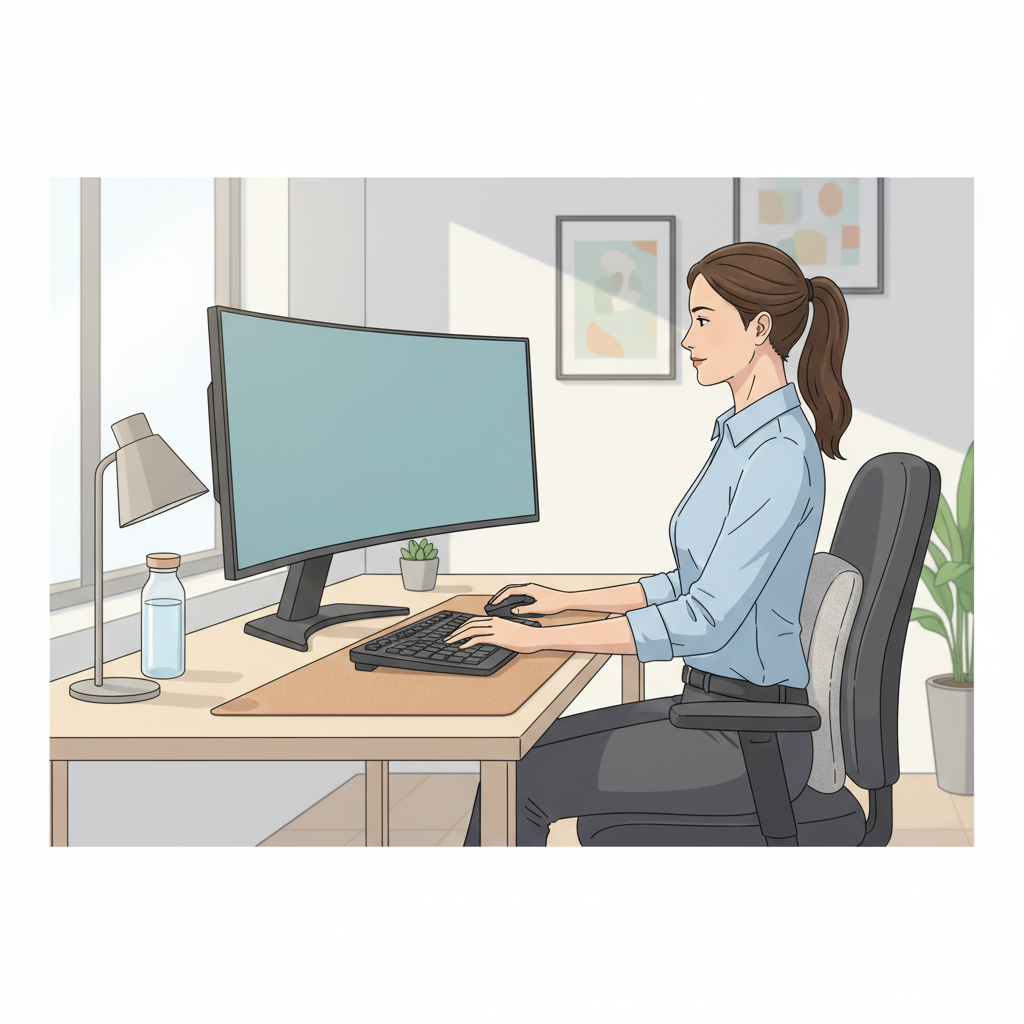
According to OSHA, ergonomics is about fitting the task to the worker, including posture and workstation adjustments. A lumbar pillow works best when it’s part of a bigger fit check: monitor height, keyboard distance, and where your elbows land.
Common mistakes that make a “good” pillow feel bad
A lot of frustration comes from small mismatches rather than “this product is garbage.” Here are the patterns that show up again and again.
- Placing it too high: then it acts like a mid-back bump, not lumbar support.
- Buying the thickest option: thicker isn’t more supportive if it shifts your pelvis forward.
- Ignoring the seat pan: if your chair seat tilts you backward or is too deep, the pillow ends up compensating for the wrong issue.
- Expecting pain relief overnight: if you’ve been sitting in a flexed posture for years, your body may need time and movement breaks.
- Using it with a slouched workstation: if your keyboard is too far away, you’ll reach and round your back no matter what’s behind you.
If you’re torn between two options, most people do better choosing the smaller/less aggressive profile first. It’s easier to add a tiny towel roll for extra support than it is to “subtract” thickness from a bulky pillow.
When you should consider professional input
If you have numbness, tingling, weakness, pain radiating down the leg, or pain that keeps getting worse, a pillow choice is no longer the main problem to solve. In those cases, it’s smart to check with a licensed clinician (often a physical therapist) who can assess what’s driving symptoms.
Also consider professional guidance if you’re recovering from an injury, you have a diagnosed spine condition, or you’re not sure whether lumbar support makes you feel better or more “pinched.” The right answer can vary by person, and being cautious is reasonable.
Key takeaways (so you can choose faster)
- Fit beats hype: match pillow thickness and contour to your chair and where your back lacks support.
- Placement matters: most pillows work best just above the belt line, strapped tight enough to stop sliding.
- Medium-firm usually wins: too soft bottoms out, too firm can feel pushy over long sessions.
- Heat and straps are not small details: breathable covers and stable straps matter in daily office use.
Conclusion: choosing the right pillow without overbuying
The best memory foam lumbar pillow for office chair is the one that disappears into your setup: stable placement, the right amount of fill, and a feel that supports your lower back without changing your whole sitting position.
If you want a simple next step, do this today: measure roughly how much “gap” you feel at your low back, then choose a medium-profile memory foam pillow with a washable cover and strong adjustable straps, set it just above the belt line, and re-adjust after 30 minutes of sitting.
FAQ
What is the best memory foam lumbar pillow for office chair use if my chair already has lumbar support?
If your chair’s lumbar feels too low, too high, or too hard, a thin memory foam pillow can “soften” the contact and fine-tune the spot. If the built-in support is adjustable and already comfortable, adding more can make things worse by over-arching your back.
How do I know if my lumbar pillow is too thick?
If you feel pushed forward, your ribs flare up, or you lose the ability to sit back against the chair without your hips sliding forward, it’s likely too thick. Another tell is new tailbone pressure or feeling like you’re constantly readjusting to get comfortable.
Should a lumbar pillow sit at my waist or higher?
In many cases, it works best just above the belt line, where the lumbar curve naturally sits. Higher placement can turn it into mid-back pressure, which may feel supportive for a minute but often becomes annoying over a full workday.
Is memory foam better than a mesh or inflatable lumbar cushion?
Memory foam often feels more “set and forget,” while inflatable cushions can be great if you like precise adjustability. Mesh-only supports usually breathe well but may not fill the gap enough on flatter chair backs, so it depends on your chair and sensitivity.
Why does my lumbar pillow keep sliding down?
Usually it’s strap design, chair material, or placement. Tighten straps higher on the backrest, look for a wider strap or dual-strap system, and avoid placing it on a very slick fabric surface without enough tension.
Can a lumbar pillow help sciatica?
It might reduce discomfort for some people by improving posture, but sciatica-like symptoms can have different causes. If pain radiates down the leg or you notice numbness or weakness, it’s safer to consult a qualified healthcare professional.
How long does it take to get used to a new lumbar pillow?
Many people know within a few days if the support feels generally right, but small adjustments can take a week or two as you fine-tune height and your body adapts. If it feels sharply uncomfortable from day one, it’s usually a fit issue, not an “adjustment period.”
If you’re trying to build a more comfortable desk setup and want a more straightforward path, focus on a lumbar pillow with the right profile for your chair, then treat placement and workstation fit as part of the purchase, you’ll get more value than chasing the most hyped option.