
Small space craft table with storage drawers sounds like a niche want, but for most people it’s the difference between crafting weekly and never setting up at all. When your supplies live in random bins, you spend your time hunting, not making.
If you’re working in an apartment, a shared room, or a corner of a home office, the table has to do two jobs at once, give you a real work surface, and keep the mess contained. The drawer part matters more than most listings admit, because drawer size, slide quality, and layout decide whether storage feels helpful or annoying.
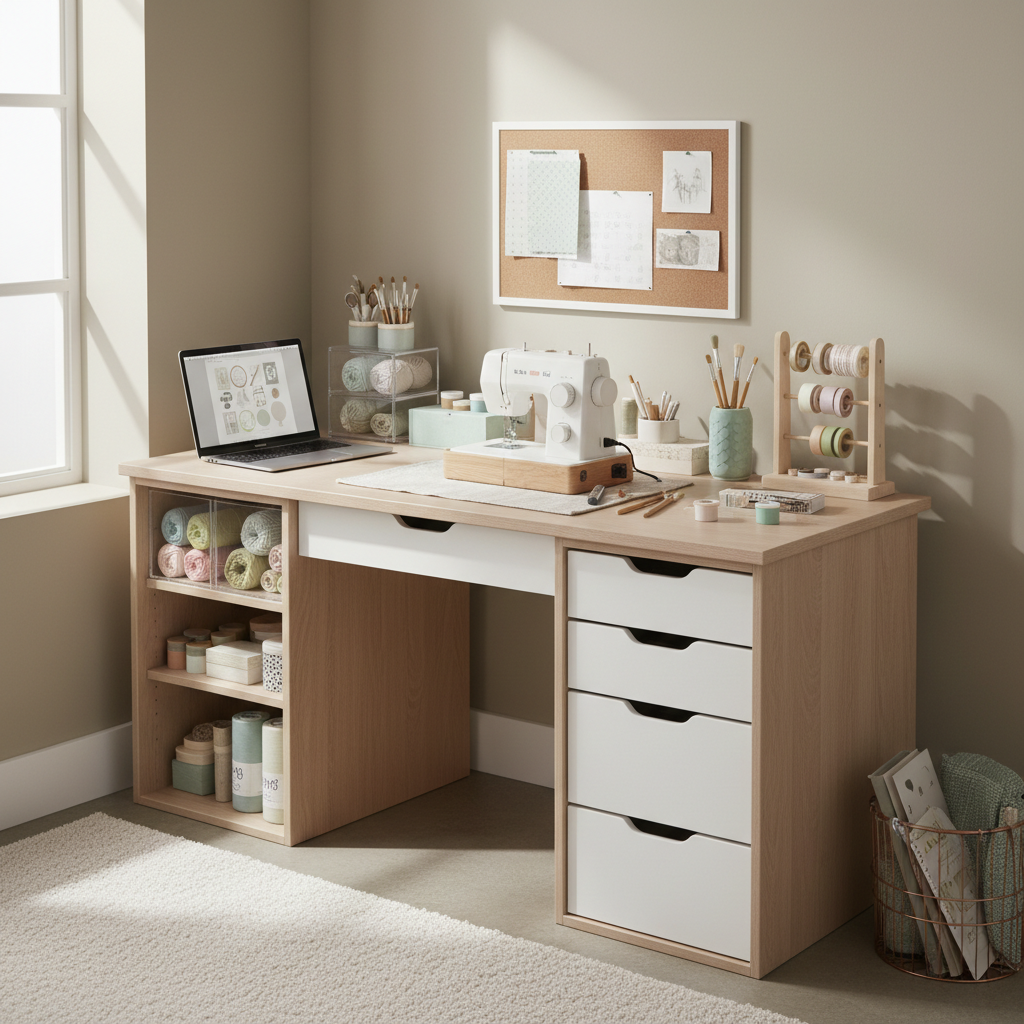
This guide helps you choose a table that fits your room and your craft, then set it up so the drawers actually stay organized. I’ll also call out the common “sounds good online” features that can waste money in small spaces.
What makes a craft table work in a small space
A small room usually fails you in three predictable ways, the surface is too tiny, the storage is awkward, or the setup forces you to pack everything away every time. A good table solves all three with a few boring but important details.
- Depth that matches your craft, 18–24 inches often works for light crafting, while cutting mats and sewing often feel better at 24+ inches.
- Stable base, wobble is what turns “quick project” into “I’ll do it later.”
- Drawer access without pulling the table out, especially if the table sits against a wall or beside a bed.
- Surface that cleans easily, paint, glue, and vinyl scraps punish porous tops.
One more practical point, look at where your knees go. Drawer stacks and center supports can make a table technically “small” but functionally uncomfortable.
Why storage drawers beat bins (most of the time)
Bins are flexible, but in tight rooms they often become floor clutter. Drawers keep the footprint fixed, so your craft zone doesn’t slowly expand across the room.
Drawer storage also supports “reset speed,” meaning how fast you can get from closed table to crafting. If you can open two drawers and start, you’ll use the space more. If you need to pull out a tote, find a lid, and clear the couch first, the hobby drifts.
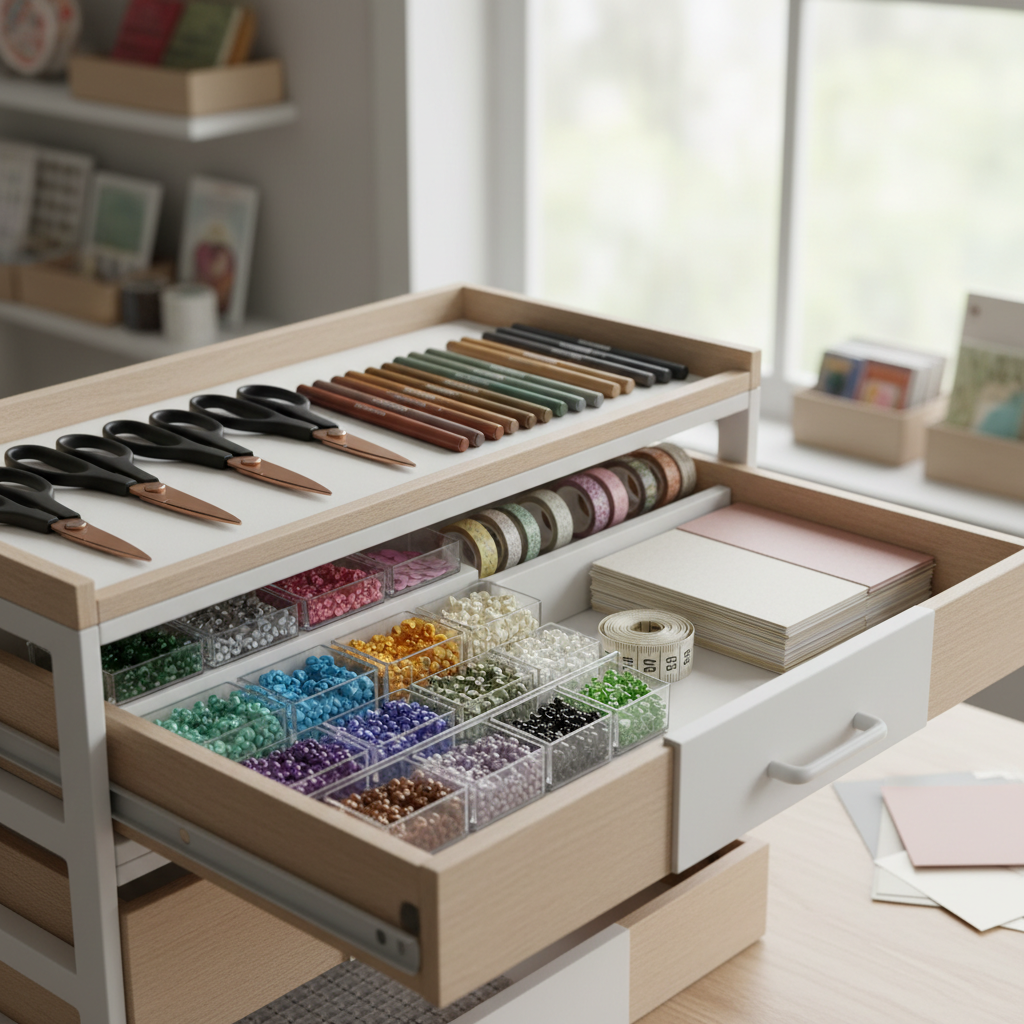
That said, drawers only win when they’re sized for your stuff. Shallow drawers are great for tools and small parts, but frustrating for vinyl rolls, yarn skeins, or taller paint bottles.
Quick self-check: which table style fits your room?
Before shopping, pin down your constraints. Most “wrong table” stories come from skipping this and buying based on looks.
- If your space is a bedroom corner, prioritize quiet slides, no wobble, and drawers that open without hitting nightstands or closet doors.
- If you share a home office, look for a cleaner silhouette, cable management, and drawers that can hold a laptop stand, headset, or chargers.
- If you craft in short bursts, pick a small space craft table with storage drawers that stays set up, even if it’s compact, you want “open and go.”
- If you sew or cut fabric, you may need folding wings or an add-on cutting surface, drawers alone won’t create enough lay-flat area.
- If kids use it too, rounded edges and a finish that resists marker and glue clean-up matter more than trendy colors.
Also measure “clearance space,” not just the table width. In many apartments, the walk path is the real limit.
Dimensions and features to compare (with a simple table)
Product pages love buzzwords, but these are the specs that tend to decide satisfaction in small rooms.
| What to compare | What to look for | Why it matters in small spaces |
|---|---|---|
| Overall size | Width 30–48 in, depth 18–24 in (typical) | Too small feels cramped, too large blocks movement |
| Work height | Desk-height around 29–30 in, or adjustable | Wrong height causes shoulder and neck fatigue |
| Drawer layout | Mix of shallow + one deeper drawer if possible | Prevents “everything becomes a junk drawer” |
| Drawer slides | Smooth, sturdy slides; soft-close is a nice bonus | Jerky drawers spill small parts and feel cheap fast |
| Finish | Sealed laminate, coated wood, or easy-clean top | Glue and paint wipe off instead of soaking in |
| Legroom | No center support where your knees sit | Comfort decides whether you stay at the table |
Key takeaway: in a small room, a table that’s slightly smaller but more comfortable and easier to reset usually wins over a bigger table that’s annoying to use.
Setup plan: make the drawers stay organized (not “stuffed”)
Buying the right small space craft table with storage drawers is step one. Step two is making the drawers behave, because loose supplies migrate and mix.
1) Assign drawers by “task,” not by “item type”
Instead of “tape drawer” and “paper drawer,” try “card making,” “vinyl cutting,” “painting.” It reduces decision fatigue, and you stop moving the same tools between projects.
2) Use shallow dividers and small containers
Drawer organizers do not need to be fancy. The goal is to stop tiny items from becoming a pile. When you can grab a tool with one hand, you stay in flow.
3) Keep the tabletop mostly empty
It’s tempting to display supplies, but the surface is your working area. If you want visual inspiration, keep one small tray or caddy only.
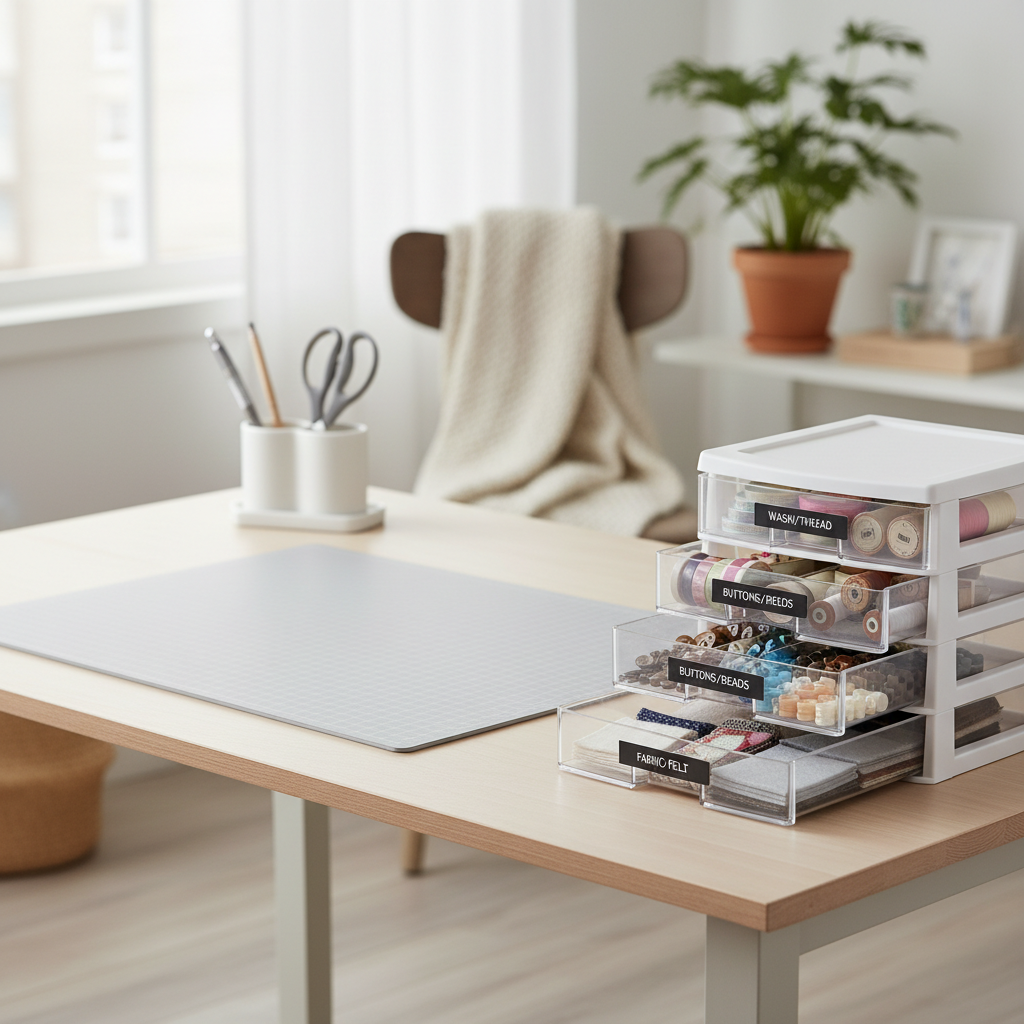
4) Label the inside edge, not the drawer front
Front labels can look cluttered in a shared room. Inside-edge labels stay invisible unless you open the drawer, and still help you reset quickly.
According to OSHA, good housekeeping reduces trip hazards and makes a work area safer. You’re not running an industrial shop, but the principle translates, fewer loose items on the floor, fewer “why did I step on that?” moments.
Common mistakes that waste money (and space)
- Overvaluing folding features: folding can help, but hinges and seams sometimes create an uneven work surface for cutting and writing.
- Ignoring chair fit: a thick dining chair can push you too far from the table, which makes even a good desk feel awkward.
- Choosing drawers that are too deep: deep drawers become piles unless you add bins, and then you lose the convenience you paid for.
- Not planning for power: if you use a Cricut, sewing machine, or lamp, confirm you can route cords without pinching them.
- Thinking “more storage” is always better: in small spaces, too much storage can encourage keeping clutter you don’t use.
If a product listing doesn’t show drawers open with real objects inside, assume you’ll need to verify dimensions carefully.
When it’s worth getting help or upgrading the plan
If you’re dealing with chronic back or wrist pain, a table choice can help, but it may not solve the root issue. You might consider an adjustable chair, a footrest, better lighting, or an ergonomics check. According to CDC, ergonomics and workstation setup can affect musculoskeletal strain, and if pain persists, it’s sensible to consult a qualified healthcare professional.
Also consider help if you’re renting and need wall-mounted storage, or if the only workable layout blocks an exit path. In those cases, a quick consult with a local organizer or contractor can prevent expensive trial-and-error.
Conclusion: pick for daily use, not the product photos
A small space craft table with storage drawers works best when it supports your real routine, how often you craft, how fast you need to reset, and what tools you reach for every time. If you remember one thing, buy for legroom and drawer layout first, then worry about style.
Action steps that usually pay off, measure your clearance space tonight, then write a short “drawer plan” for your top two projects before you shop. It keeps you honest when a cute table tries to win you over.
FAQ
What size small craft table works for an apartment?
Many people do fine with 30–48 inches wide and 18–24 inches deep, but the better question is how much clearance you have for the chair and drawers. If you can’t open drawers comfortably, the storage won’t get used.
Are storage drawers better than shelves for crafting?
In tight spaces, drawers often feel calmer because they hide visual clutter and keep a fixed footprint. Shelves can work well if you use matching bins and you truly have wall space, not just wishful thinking.
How do I keep drawers from turning into junk drawers?
Use smaller organizers and assign drawers by project type. If you only sort by item type, you tend to toss things wherever there’s room, and the system breaks.
Can a craft table with drawers hold a sewing machine?
Often yes, but stability and depth matter more than drawer count. Check weight limits if provided, and consider vibration, a wobbly table makes sewing frustrating.
What’s the best tabletop material for glue and paint?
Sealed or coated surfaces are usually easier to clean than raw wood. If you’re unsure, plan to use a cutting mat or a silicone craft mat to protect the finish.
Do I need soft-close drawers?
Not required, but they can reduce noise in shared spaces and prevent slamming that shifts small parts. If the budget is tight, prioritize smooth slides and solid construction over soft-close.
Where should I place the table in a small room?
A wall can work well, but make sure drawers open fully and you still have a comfortable chair position. If you use natural light for color work, placing it near a window often helps, but avoid glare on glossy surfaces.
If you’re trying to build a craft corner that stays tidy without killing your living space, it can help to start with your top two crafts and shop around that workflow, if you want, share your room measurements and what you make most, and I can suggest a short checklist of dimensions and drawer layouts to target.