
Industrial style shelving units for garage storage work best when you treat them like a small “system,” not just a random rack you found on sale. If your garage keeps sliding back into clutter, it’s usually because the shelves don’t match what you actually store, or they aren’t anchored, leveled, and spaced for real daily use.
Done right, industrial shelving gives you clear zones for bins, tools, car-care items, lawn gear, and the awkward stuff you hate dealing with. It also helps with safety, fewer tip hazards, less tripping, and fewer crushed boxes.
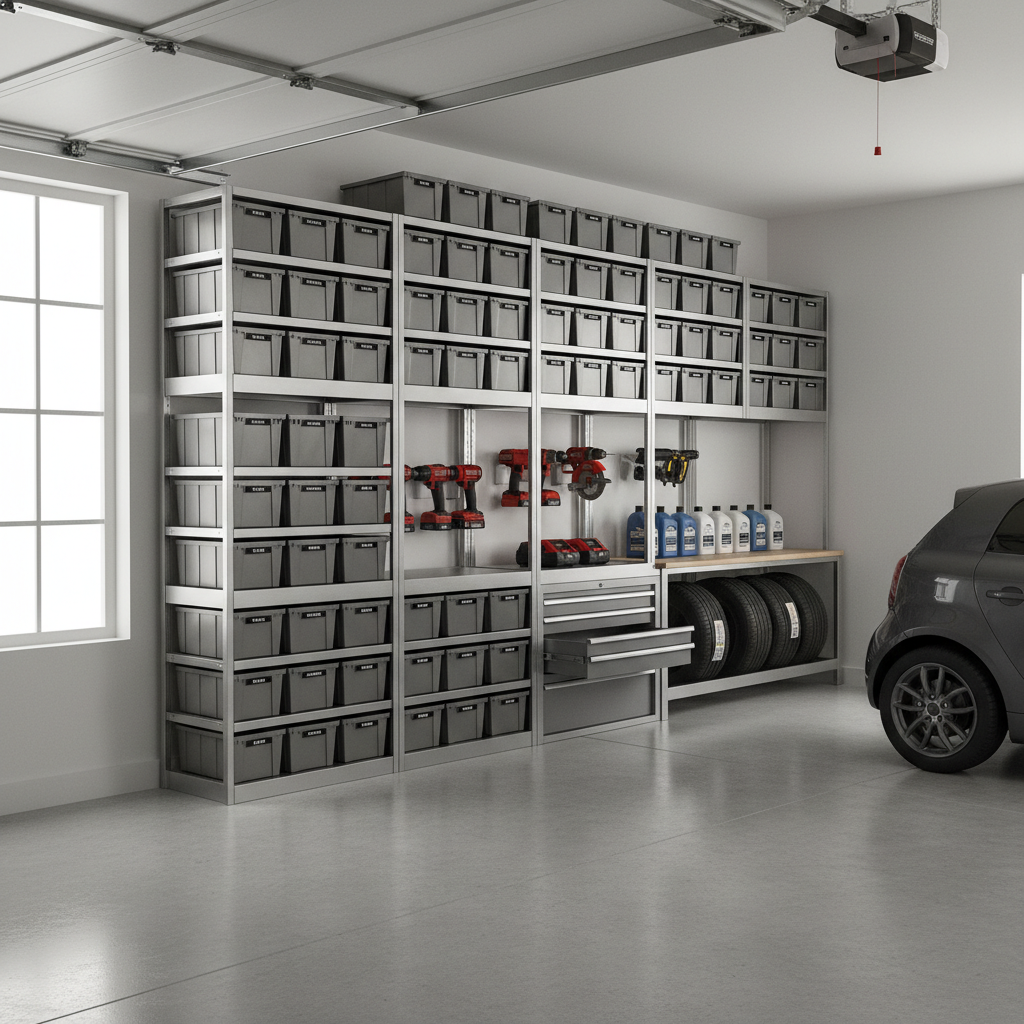
One quick expectation check, “industrial style” often means heavy-gauge steel, open shelving, adjustable beams, and a more rugged look. But not every “industrial” rack is truly heavy-duty, so a little spec-reading matters more than the aesthetic.
Why garages get messy (and how shelving usually fails)
Most garage storage problems aren’t caused by lack of space, they’re caused by mismatched storage. Here are the common failure points I see people run into.
- Wrong depth and spacing: 18-inch shelves for bulky totes, or 24-inch shelves crammed so tightly you can’t pull anything out.
- Load rating confusion: People assume “industrial” means any shelf can hold paint buckets, free weights, or shop equipment, then shelves bow over time.
- No zones: Everything lands on the nearest open surface, so the “one shelf” becomes the “junk shelf.”
- Ignoring wall shape: Water heater, garage door tracks, steps, outlets, and windows force compromises, the rack needs to fit the room you have.
According to OSHA, proper storage practices help reduce hazards like falling objects and blocked walkways, which is relevant even in a home workshop where heavy items sit overhead.
Choose the right industrial shelving: what to look at first
If you’re comparing industrial style shelving units for garage use, start with the three specs that actually decide performance: size, material, and capacity. Everything else is secondary.
Dimensions that fit how you store
- Width: 48 inches is common, but if you store long items (folding tables, ramps), 72 inches can reduce wasted gaps.
- Depth: 18 inches suits paint, detailing supplies, small bins; 24 inches suits large totes and bulkier gear.
- Height: Taller racks add capacity, but only if you can safely access upper shelves, consider a step stool and keep heavy items low.
Material and shelf surface
- Steel frames usually handle impacts better than resin, and feel more stable when anchored.
- Wire shelves shed dust and improve airflow, but small items may need bins.
- Solid decks (steel or particleboard) are nicer for small parts, but watch for moisture and swelling if humidity runs high.
Load rating (and what it really means)
Look for a stated per-shelf rating and whether it’s evenly distributed. The “headline” number often assumes perfect leveling and uniform weight. If you store dense items (ammo cans, weights, tile, multiple full paint buckets), build margin into your plan.
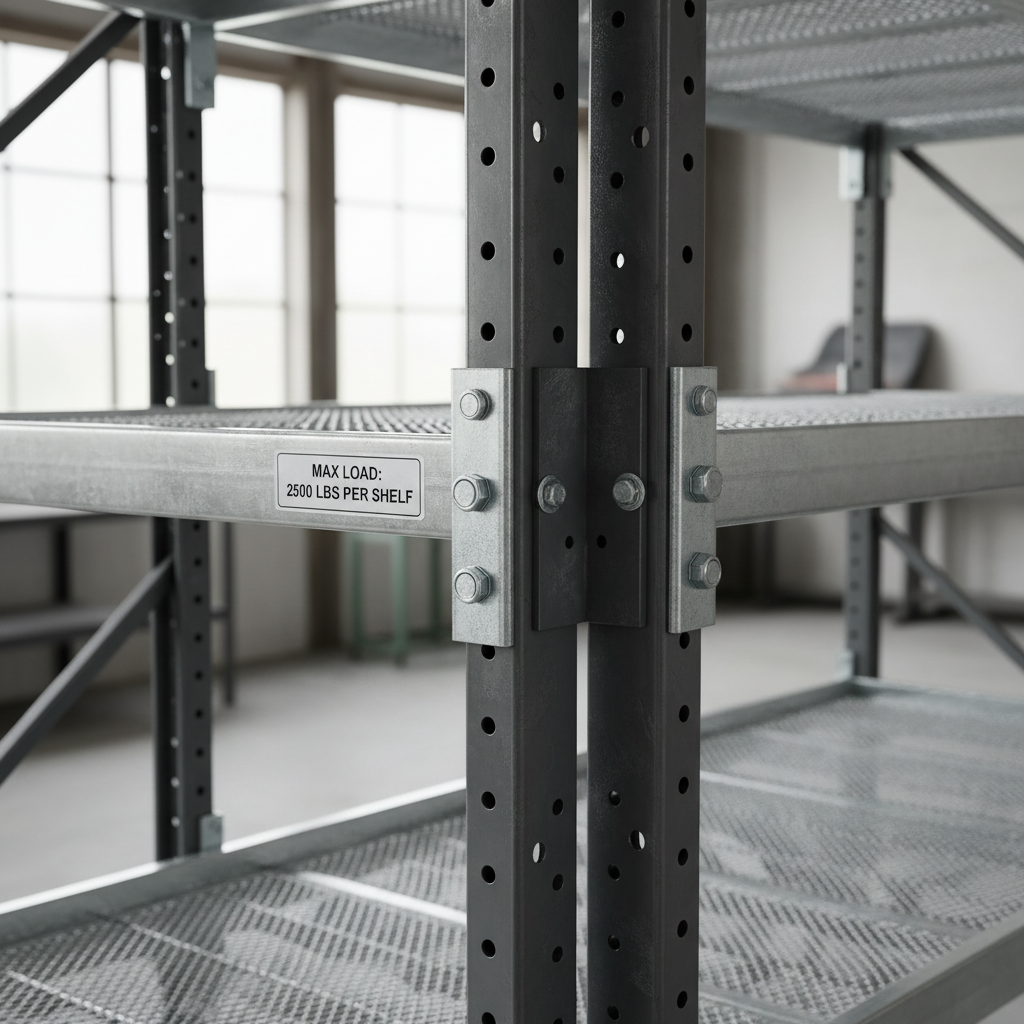
If you’re unsure about safe loading or anchoring in your specific wall type, it can be worth asking a contractor or qualified handyman, garages vary a lot by framing and wall finish.
Fast self-check: which setup matches your garage?
Before you buy anything, run this quick checklist and you’ll avoid most “returns and regret” situations.
- What are your top 10 items by weight? If the list includes dense items, plan heavier-duty racks and keep those items at knee-to-waist height.
- What are your top 10 items by volume? Bulky camping gear and holiday decor push you toward deeper shelves and standardized totes.
- Do you park inside? If yes, prioritize wall-hugging racks and leave door-swing and walking clearance.
- Do you need quick access? If you use it weekly, it should live between shoulder and hip height, not up top.
- Any moisture issues? If the garage gets damp, choose rust-resistant finishes and avoid shelf decks that can swell.
A simple rule that holds up in real garages: if you can’t name what will live on each shelf before you assemble it, you’re likely buying “space,” not solving storage.
Layout options that actually work (with a practical comparison table)
There’s no single perfect layout, but most garages end up fitting one of these patterns. Pick the one that matches how you move through the space.
| Layout | Best for | Trade-offs |
|---|---|---|
| One long wall run | Garages where you park inside and want clear floor lanes | Less capacity than wrapping corners, but feels cleaner |
| L-shape corner setup | Maximizing storage without blocking door tracks | Corner access can get awkward if shelves are too deep |
| Two-zone (heavy + light) | People with tools/weights plus seasonal bins | Requires honest sorting, otherwise the “light” zone becomes overflow |
| Freestanding island rack | Large garages, workshop use, frequent grabbing from both sides | Can interfere with parking and creates a dust-collecting “back side” |
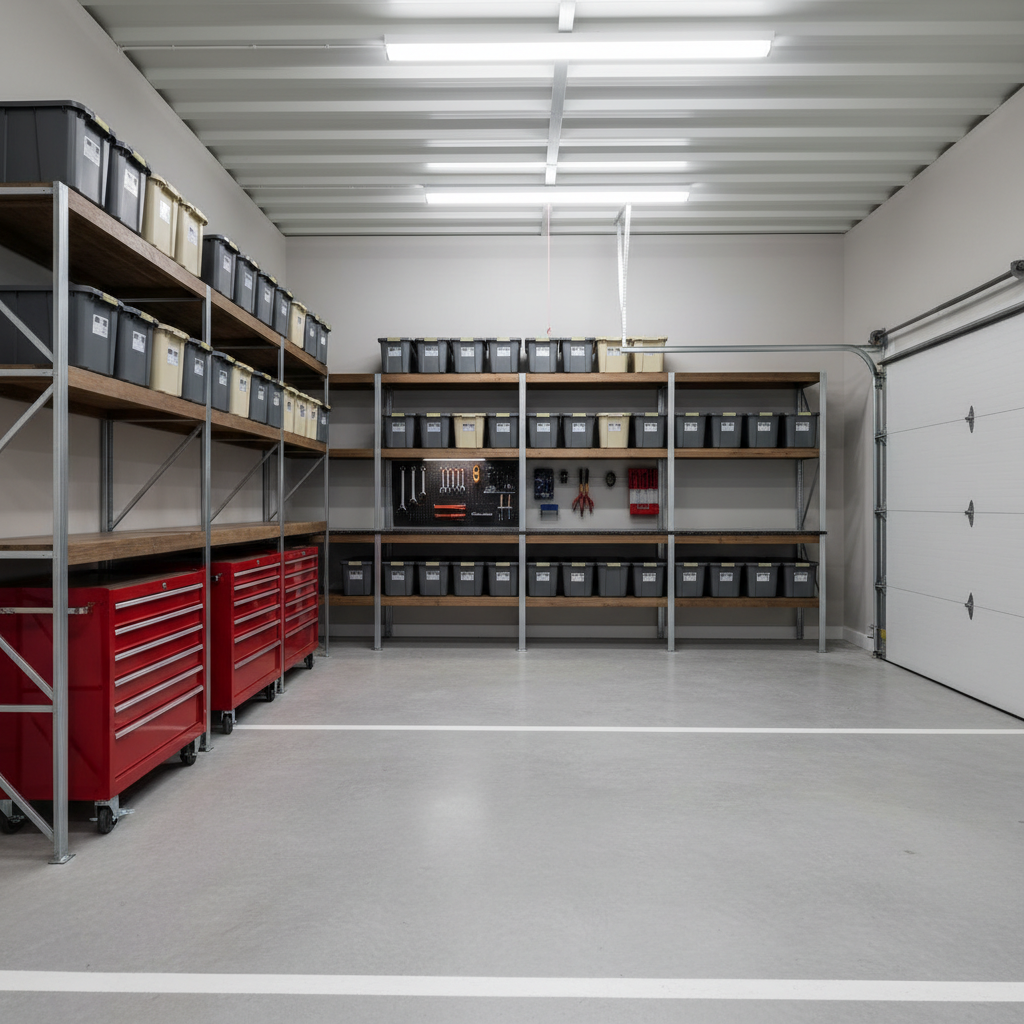
Industrial style shelving units for garage spaces often look best and function best when you leave a little “breathing room,” a narrow gap for cords, outlets, and wall imperfections prevents constant scuffing and snagging.
Installation and setup: a realistic step-by-step
This is the part people rush, then wonder why the rack wobbles. Take it slowly, especially if you’re loading heavy gear.
- Measure twice, but measure “real”: include baseboards, garage door rails, and any sloped floors.
- Level the feet: many garages have a slope toward the door, shims or adjustable feet matter for stability.
- Anchor when appropriate: if the unit is tall, holds heavy items, or sits where it could tip, anchoring to studs is often a smart safety move, follow the manufacturer’s guidance.
- Set shelf heights by frequency: daily items in the middle, seasonal items higher, dense items low.
- Add bin standards: choose 2–3 tote sizes and stick with them, it reduces “air gaps” that create clutter.
According to CPSC, tip-over incidents are a real safety concern for home storage furniture, so if children access the garage or the unit is top-heavy, anchoring becomes even more relevant.
Common mistakes to avoid (these waste money fast)
- Buying based on max capacity alone: you’ll hate the rack if the shelf spacing doesn’t match your bins and tools.
- Storing liquids overhead: many people put paint, chemicals, or automotive fluids up high, spills become a bigger problem, keep them lower and contained.
- Creating a “misc shelf”: if you allow one, label it and cap it, once it fills, something must leave.
- Ignoring corrosion: near coastal areas or damp garages, watch finishes and consider protective liners, rust often starts where items scrape the coating.
- Over-tightening or under-tightening: both can cause issues depending on the design, follow the assembly torque guidance if provided.
Industrial style shelving units for garage use are supposed to feel boringly stable. If you can shake the rack and feel sway, pause and fix it before loading the top shelves.
When you should consider professional help
Most homeowners can assemble and place shelving, but a few scenarios deserve extra caution.
- You need to anchor into masonry, uneven block walls, or questionable drywall sections, a pro can choose the right fasteners.
- You’re storing very heavy equipment (compressors, large tool chests, gym plates) and want a verified load plan.
- Your garage has electrical panels, gas appliances, or plumbing nearby, placement and clearances may matter, and local codes can vary.
If any of that sounds like your situation, a quick consult with a licensed contractor or qualified installer is usually cheaper than repairing wall damage or replacing a collapsed unit.
Conclusion: a simple way to get this right
Industrial style shelving units for garage organization pay off when you match shelf depth to your bins, keep heavy items low, and commit to a layout with real zones. Pick one wall or one corner, set the first rack up properly, then expand only after you like how you use it for a week or two.
Two actions that move the needle: write down what will live on each shelf before you buy, then anchor and level the unit so it stays stable as your storage grows.
FAQ
What size industrial shelving works best for a standard two-car garage?
Many people start with 48-inch-wide units along one side wall, then add a second unit if the “zones” stay clean. The best size depends on parking needs and what you store, measure around door tracks and the path you walk most.
Are wire shelves okay for small tools and hardware?
They can be, but small items usually need bins or organizer trays so they don’t tip or snag. Wire is great for airflow and dust, just plan containers as part of the system.
Do I need to anchor industrial style shelving units for garage use?
Often, yes for tall units, uneven floors, or heavy loads, especially if kids can access the area. Follow the manufacturer’s instructions, and if your wall construction is unclear, ask a professional to avoid improper fastening.
How do I prevent shelves from rusting in a humid garage?
Choose powder-coated or rust-resistant finishes, avoid leaving wet items directly on the shelf surface, and consider plastic liners. If humidity stays high, a dehumidifier or improved ventilation may help, depending on your setup.
What should never go on the top shelf?
Dense, heavy items and spill-prone liquids are the big ones. Keep anything that could injure you if it fell, or cause a mess if it leaked, lower and in a contained bin.
Is particleboard decking a bad idea in garages?
Not always, it’s common in many racks, but it can swell if it gets wet or sits in high humidity. If your garage sees water, consider metal decking or seal/line the surface.
How can I make my shelves look less “warehouse” and more finished?
Use matching bins, label consistently, and keep one shelf as a clean “buffer” for items in transition. The rack can stay industrial, the visual calm comes from uniform containers and fewer odd-shaped piles.
If you’re trying to pick industrial style shelving units for garage storage and want a more “set it up once, use it for years” approach, it can help to map your zones and bin sizes first, then shop by dimensions and load rating instead of vibes, the buying decision becomes much simpler.