
Modern scandinavian dining room decor ideas work best when they balance clean lines with real comfort, because a dining room that looks perfect but feels cold rarely gets used. If your space feels bland, echo-y, or “showroom minimal,” you usually don’t need more stuff, you need better choices in a few high-impact categories.
This style is popular in the U.S. for a reason: it plays nicely with open-plan layouts, small dining nooks, and the way many households actually eat, work, and host in the same room. The trick is making it look intentional instead of like you stopped decorating halfway.
Below you’ll find practical ways to set the foundation, then layer in lighting, seating, and styling. I’ll also call out the common mistakes that make Scandinavian spaces read sterile, plus a quick checklist to help you decide what to change first.
Start with the Scandinavian “base layer”: light, calm, and functional
Most modern Scandinavian rooms feel effortless because the base layer does the heavy lifting: walls, floors, and the biggest furniture pieces stay visually quiet. That calm backdrop lets wood grain, textiles, and a few sculptural items stand out without clutter.
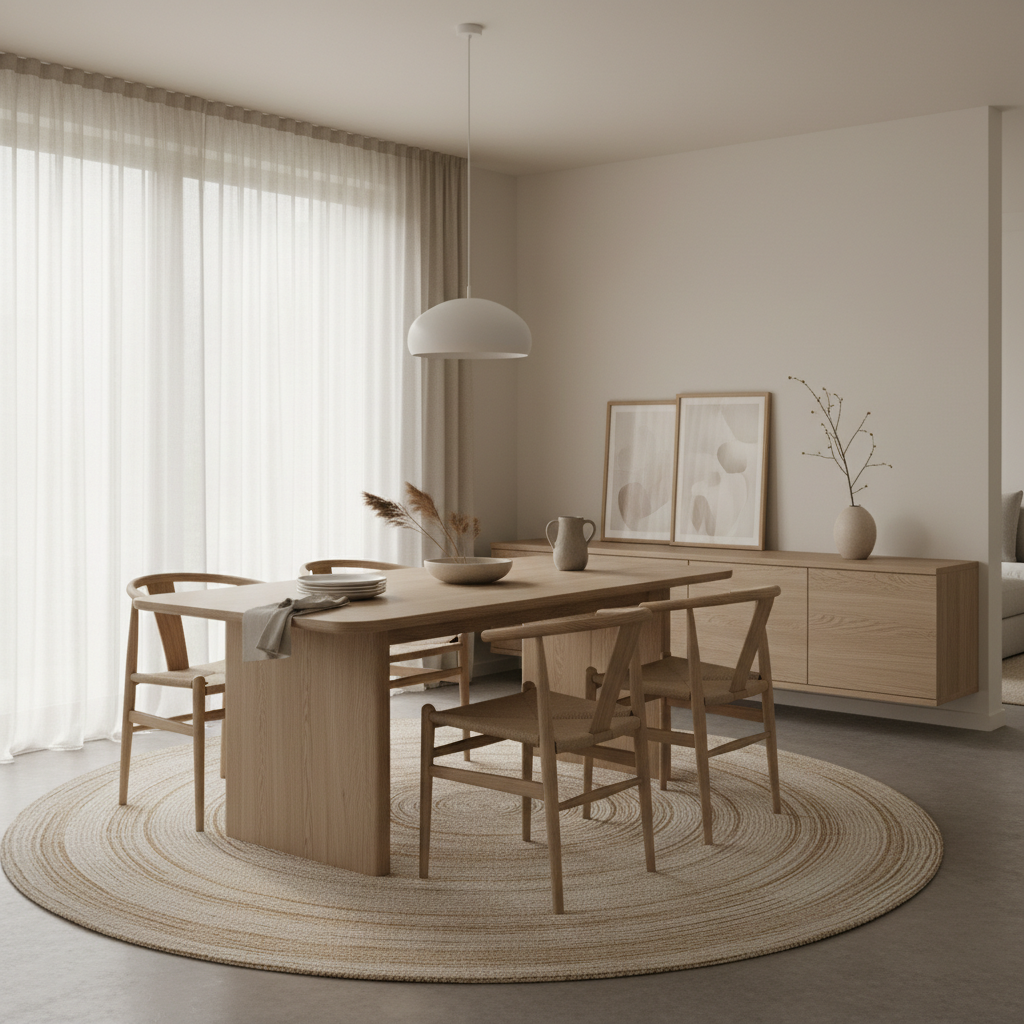
What to prioritize if you want the look without remodeling:
- Wall color: soft white, warm off-white, or light greige tends to flatter wood and keeps the room from feeling icy.
- Main wood tone: pick one dominant wood family (light oak, ash, birch) and repeat it at least twice (table + shelves, or chairs + frame).
- Negative space: leave breathing room around the table and along at least one wall, it’s part of the style, not “empty.”
According to IKEA, Scandinavian interiors typically emphasize function, simplicity, and light, which is why the basic palette and practical layout matter more than decorative objects.
Pick a palette that reads “warm minimal,” not stark
People often assume Scandinavian means pure white and black, but in real homes that can look harsh, especially with U.S. overhead lighting. A more believable approach is a warm neutral base with one muted accent.
Try one of these easy combinations:
- Warm white + light oak + soft black accents (hardware, frames, one chair)
- Greige + oak + clay/terracotta (textiles, art, a vase)
- Off-white + ash + muted sage (bench cushion, bowl, linen runner)
Quick rule: if your room already has cool gray floors, lean into warmer textiles and warmer bulbs, otherwise the space can feel “blue.”
Choose the right dining table and chairs (comfort is the style)
A modern Scandinavian dining setup usually looks simple, but the pieces are rarely fussy. The table feels honest: clean edges, visible grain, solid legs. Chairs look light but sit comfortably, because this style assumes people linger.
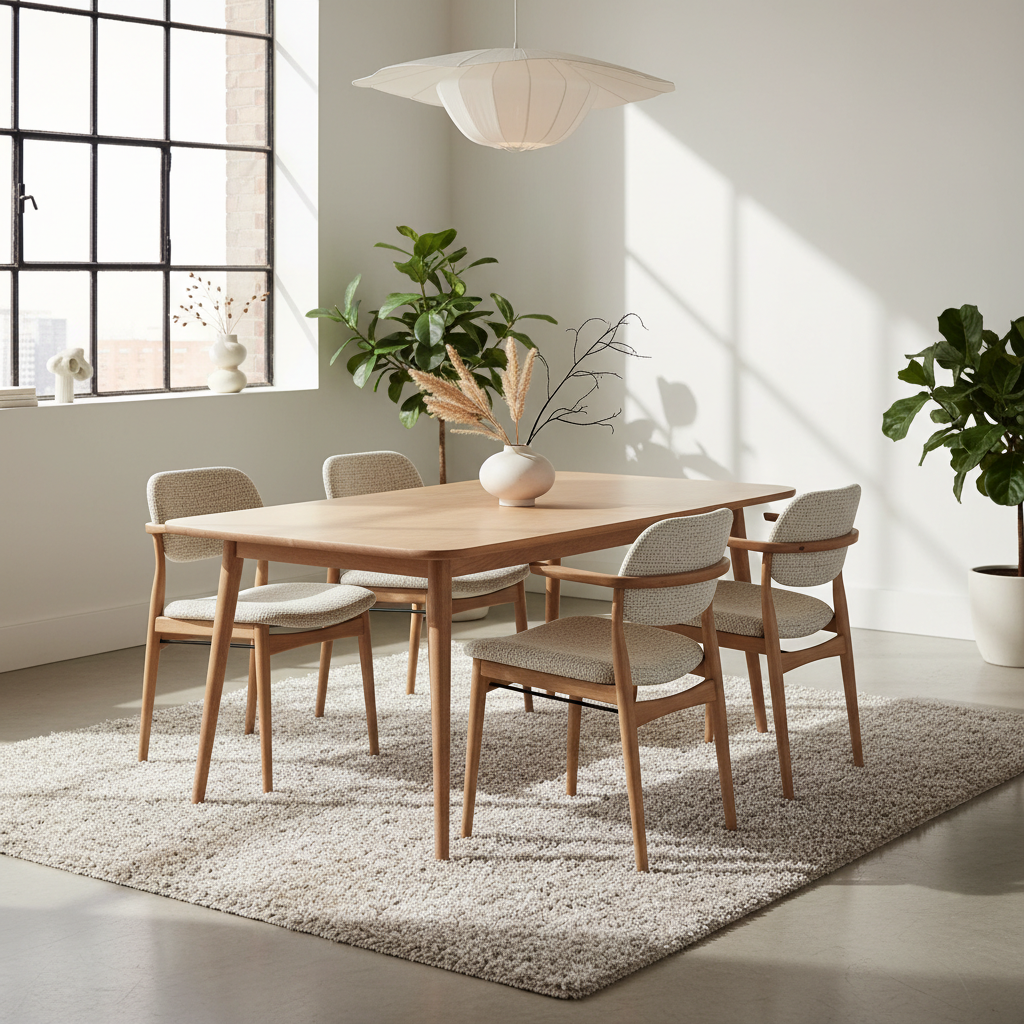
Table sizing that avoids the “cramped” look
- Allow about 36 inches of clearance behind chairs when possible, more if it’s a main walkway.
- For tight rooms, consider a round table (it softens the layout and helps traffic flow).
- If you host often, an extendable table fits the Scandinavian “functional” mindset without buying a second table.
Chairs: match, mix, or bench?
- Matching chairs feel calm and modern, and they photograph well.
- Mixed chairs can still look Scandinavian if you keep one unifying element (all wood tone, or all black frames).
- A bench adds warmth and flexibility, but only if you add a cushion or nearby textile so it doesn’t feel hard and formal.
Lighting is the fastest upgrade (and the easiest to get wrong)
Modern Scandinavian rooms love daylight, but at night the vibe comes from layered, warm lighting. A single overhead fixture can make the room feel flat, even if everything else is right.
What tends to work well:
- One statement pendant centered over the table, sized to the table rather than the room.
- Warm bulbs (many homes prefer 2700K–3000K for dining areas, though preferences vary).
- A secondary light nearby: a floor lamp in the corner or a small table lamp on a sideboard.
According to the U.S. Department of Energy, LEDs are an efficient lighting option, and choosing the right color temperature helps you shape how warm or cool a room feels.
Add texture the Scandinavian way: fewer items, better materials
If you copy the “minimal” part without adding texture, the room can feel unfinished. The fix usually isn’t more decor, it’s one or two tactile upgrades that make the space feel lived-in.
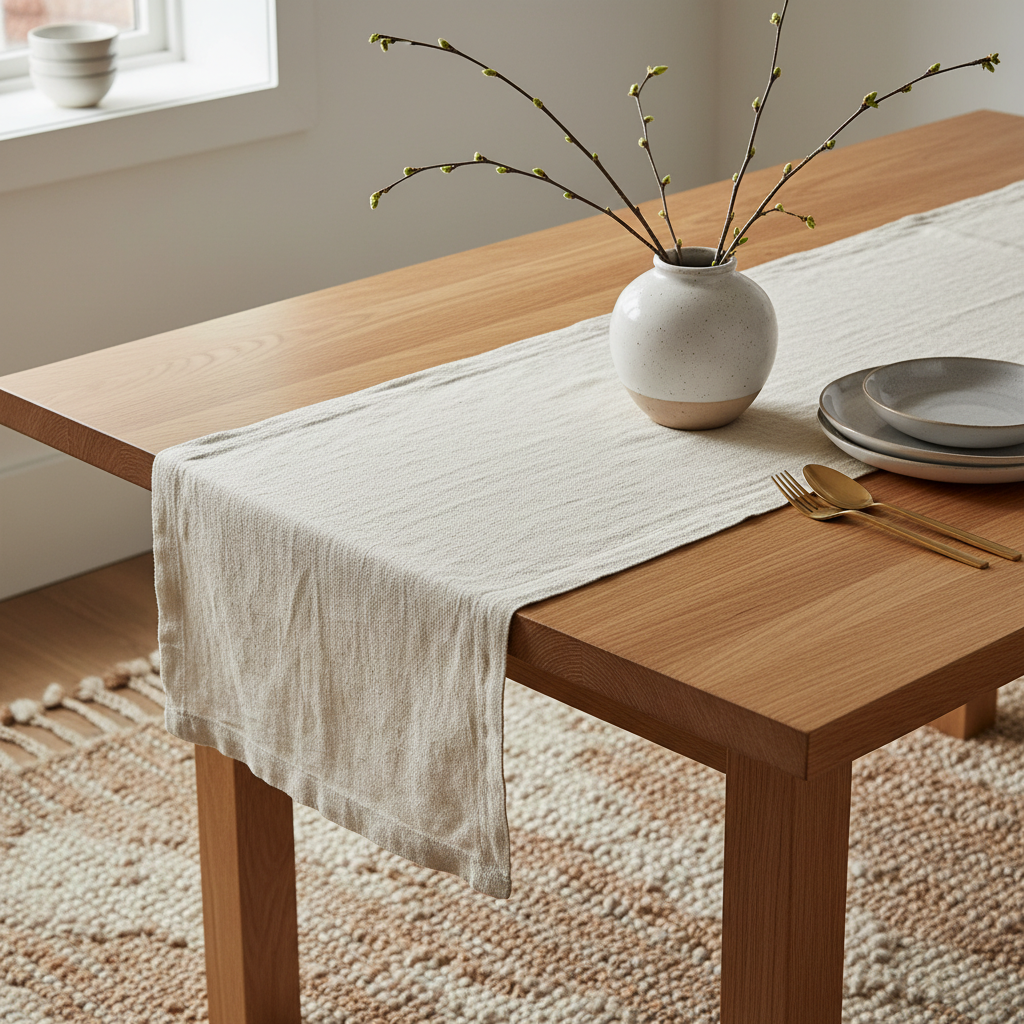
- Rug: flatweave wool, jute, or a low-pile neutral rug to reduce echo and visually anchor the table.
- Textiles: linen runner, cotton napkins, a throw on a nearby bench, keep it simple and touchable.
- Ceramics and glass: matte ceramics, tinted glass, or stoneware bowls read “Nordic” without shouting.
- Wood + black accents: a little black (frames, pendant, chair legs) adds definition to light woods.
A simple styling formula that doesn’t look cluttered
Centerpieces and wall decor are where many people overdo it. Scandinavian styling is usually small-scale and intentional, with a bit of asymmetry so it doesn’t feel staged.
Use this 3-part tabletop formula
- One low anchor: a tray, shallow bowl, or runner.
- One vertical element: branches, dried stems, or simple greenery (not a huge bouquet).
- One practical item: a carafe, candle, or salt cellar, something you’ll actually use.
Walls: keep it quiet, but not empty
- One larger art piece often looks more modern than a cluster of small frames.
- A floating shelf can work if you commit to editing it, think 3–5 objects total.
- If your dining area is part of an open plan, repeat one element from nearby rooms (frame color, wood tone) for continuity.
Quick self-check: what’s actually holding your room back?
If you’re scrolling modern scandinavian dining room decor ideas and nothing looks right in your space, it’s usually one of these issues. This checklist helps you diagnose before you shop.
- Feels cold: bulbs too cool, not enough textiles, too much white-on-white with no wood contrast.
- Feels busy: too many small decor items, mixed wood tones with no “lead” tone, high-contrast patterns fighting each other.
- Feels cheap: shiny finishes, flimsy-looking chairs, decor that looks mass-produced without any texture.
- Feels cramped: table too big, chairs too bulky, rug too small or missing.
Practical upgrade plans (choose your scenario)
Here are realistic paths depending on budget and effort. The goal is progress, not perfection.
1-hour refresh (no new furniture)
- Clear the table and reset with the 3-part styling formula.
- Swap to warmer bulbs if your room looks blue or harsh at night.
- Add one textile: a linen runner or set of cloth napkins.
Weekend upgrade (most common)
- Add a properly sized rug under the dining set.
- Replace the pendant or add a second light source near the dining area.
- Introduce one “hero” piece: a simple sideboard, bar cart, or slim console for storage.
Bigger reset (when the layout is the problem)
- Switch to a round or extendable table if circulation is tight.
- Choose chairs with slimmer profiles, or do a bench on the wall side.
- Edit decor hard, then rebuild with consistent wood and metal finishes.
Common mistakes that fight the Scandinavian look
- Going all-white without texture: it photographs, but in daily life it often feels sterile.
- Too many competing woods: mixing is fine, but you still need one dominant tone.
- High-gloss everything: Scandinavian spaces usually lean matte or satin for a calmer feel.
- Tiny art spread out: it can read cluttered; one larger piece often looks cleaner.
- Ignoring acoustics: hard surfaces amplify noise, a rug and textiles can help, and if echo is severe you may want to ask a local interior pro about additional softening options.
Quick reference table: what to buy (and why)
| Element | Scandinavian-friendly choice | Why it works |
|---|---|---|
| Table | Light oak/ash, simple legs, rounded edges | Keeps the room airy, emphasizes natural material |
| Chairs | Curved back, slim profile, wood or matte black frame | Comfort + visual lightness |
| Lighting | Pendant + warm LED bulbs + secondary lamp | Creates cozy evenings, reduces harsh shadows |
| Rug | Wool flatweave or jute, neutral, large enough | Anchors the table and softens noise |
| Decor | One tray, one vase, one practical item | Intentional styling without clutter |
Key takeaways to keep you on track
- Build the base first: calm walls, consistent wood tone, clear negative space.
- Warmth is non-negotiable: lighting temperature and textiles matter as much as furniture.
- Edit harder than you think: fewer, better materials reads more Scandinavian than many small accessories.
- Comfort counts: chairs, rug, and lighting determine whether people want to stay at the table.
Conclusion: a Scandinavian dining room should feel easy to live with
When modern Scandinavian dining rooms look “right,” it’s usually because the room feels calm and practical, not because it’s empty. Pick a warm neutral palette, commit to one main wood tone, and invest in lighting and texture before buying more decor, those moves change the whole mood.
If you want a simple next step, start tonight with the lighting and tabletop reset, then decide whether your biggest win comes from a rug or a seating change. Small shifts add up fast in this style.
FAQ
What colors work best for modern Scandinavian dining rooms?
Warm whites, soft off-whites, and light greiges tend to look more inviting than stark white, then add a muted accent like sage, clay, or soft black for definition.
How do I make Scandinavian decor feel cozy instead of cold?
Use warmer bulbs, add one rug, and bring in linen or wool textures. Many rooms feel cold mainly because everything is hard and bright, not because the decor is “minimal.”
Can I mix wood tones and still keep the Scandinavian look?
Yes, but keep one dominant wood tone and let the others be supporting. If you mix several strong tones evenly, the room can start to look busy.
What kind of dining room light fixture is most Scandinavian?
A simple pendant with clean lines is common, especially in matte finishes. The more important part is how it lights the table and whether the bulb color feels warm in your home.
Do Scandinavian dining rooms need a rug under the table?
Not always, but a rug often helps define the dining zone and reduce echo. If you have kids or heavy entertaining, choose a low-pile option that’s easier to maintain.
How should I decorate a Scandinavian dining table every day?
Keep it functional: one shallow bowl or tray, a simple vase with branches, and one item you use. If you need the whole surface for work or homework, go even simpler.
What if my dining area is part of an open-concept living room?
Repeat one or two finishes across both zones, like black metal accents or the same wood tone, and use lighting or a rug to make the dining area feel like its own “room.”
If you’re gathering modern scandinavian dining room decor ideas but keep getting stuck on what to buy first, it may help to map your room’s measurements, lighting type, and existing finishes, then build a short shopping list that supports those constraints instead of fighting them.