
Small space home library with floating shelves is one of the few setups that can add real storage without eating up floor space, but it only works when the layout, weight support, and styling are planned together.
If you have books piling on nightstands or stacked on the floor, you already know the usual pain points, not enough linear shelf space, awkward corners, and a room that starts to feel busy instead of cozy.
This guide walks through where floating shelves work best, how to size and place them, what hardware actually matters, and a few styling rules that keep a small room calm while still looking like a “library.”
Plan the library around your real constraints (not Pinterest)
Before you buy anything, decide what the shelves must do. A small space can’t afford “pretty but useless.” Measure first, then design around the daily friction points: clearance, door swings, and where you naturally sit and reach.
Try thinking in zones, even if the room is tiny:
- Reading zone: chair/bench + light + a small landing spot for a mug.
- Storage zone: the densest run of shelves for heavy hardcovers.
- Display zone: a shorter run for art, plants, or favorite spines.
According to the International Code Council (ICC), building practices and safety expectations commonly reference proper fastening and load support for wall-mounted elements, so treat shelf mounting like a structural task, not decor.
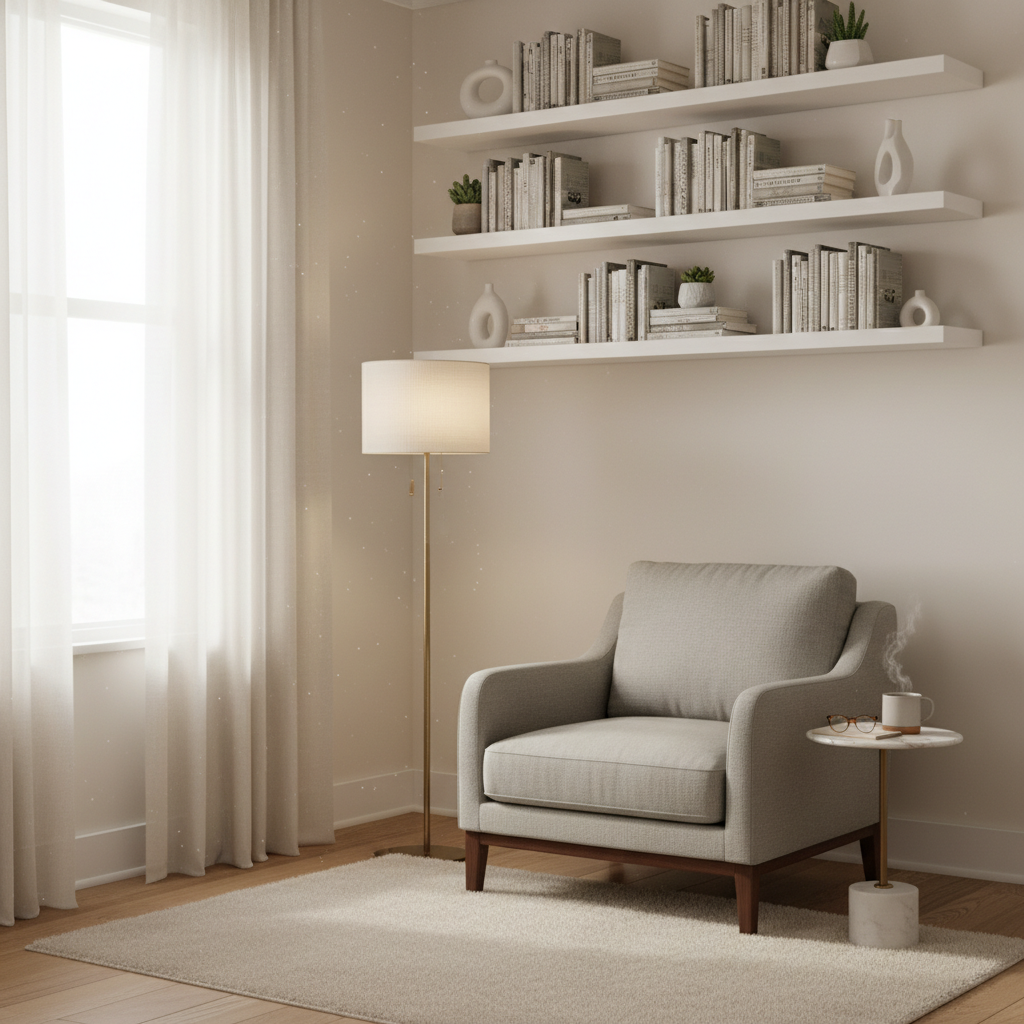
Where floating shelves work best in small homes
The best locations are the ones you overlook because they don’t fit furniture. For a small space home library with floating shelves, these spots usually deliver the most linear inches with the least visual clutter.
- Above a sofa or loveseat: keep the lowest shelf high enough to avoid head bumps, and visually “cap” the seating area.
- Over a desk: perfect for a work-and-read setup, but plan cable management so it doesn’t look chaotic.
- Hallways: narrow halls can take shallow shelves for paperbacks, cookbooks may be too deep/heavy here.
- Bed wall (not over the pillow): use side-wall shelves near a headboard instead of directly above where you sleep, for comfort and perceived safety.
- Between windows or beside a door: a classic “dead strip” that becomes storage with minimal impact.
One callout: if your walls are plaster, brick, or you’re in an older building with unpredictable studs, you may want to choose lighter shelf loads or ask a handyman to verify the fastening plan.
Sizing and spacing: the part most people guess wrong
Floating shelves look simple, but proportion is what makes them feel intentional. A few practical sizing rules keep things from feeling cramped.
Recommended shelf depth by use
Depth is the make-or-break variable in small rooms, too deep and the wall feels like it’s leaning toward you.
| Primary use | Typical shelf depth | Why it works |
|---|---|---|
| Paperbacks, novels | 6–8 in | Fits most spines, stays visually light |
| Mixed books + small decor | 8–10 in | Room for frames, small planters |
| Cookbooks, art books | 10–12 in | Accommodates larger formats, heavier load |
Vertical spacing (clearance between shelves)
- Standard books: roughly 10–12 in of clear height per shelf bay works for most.
- Tall art books: plan a dedicated bay with 13–15 in of clearance.
- Mixing stacks: add one “loose” shelf with extra height so you’re not playing Tetris forever.
Also, don’t ignore the negative space. In a tight room, leaving one small section open can make the whole wall feel calmer.
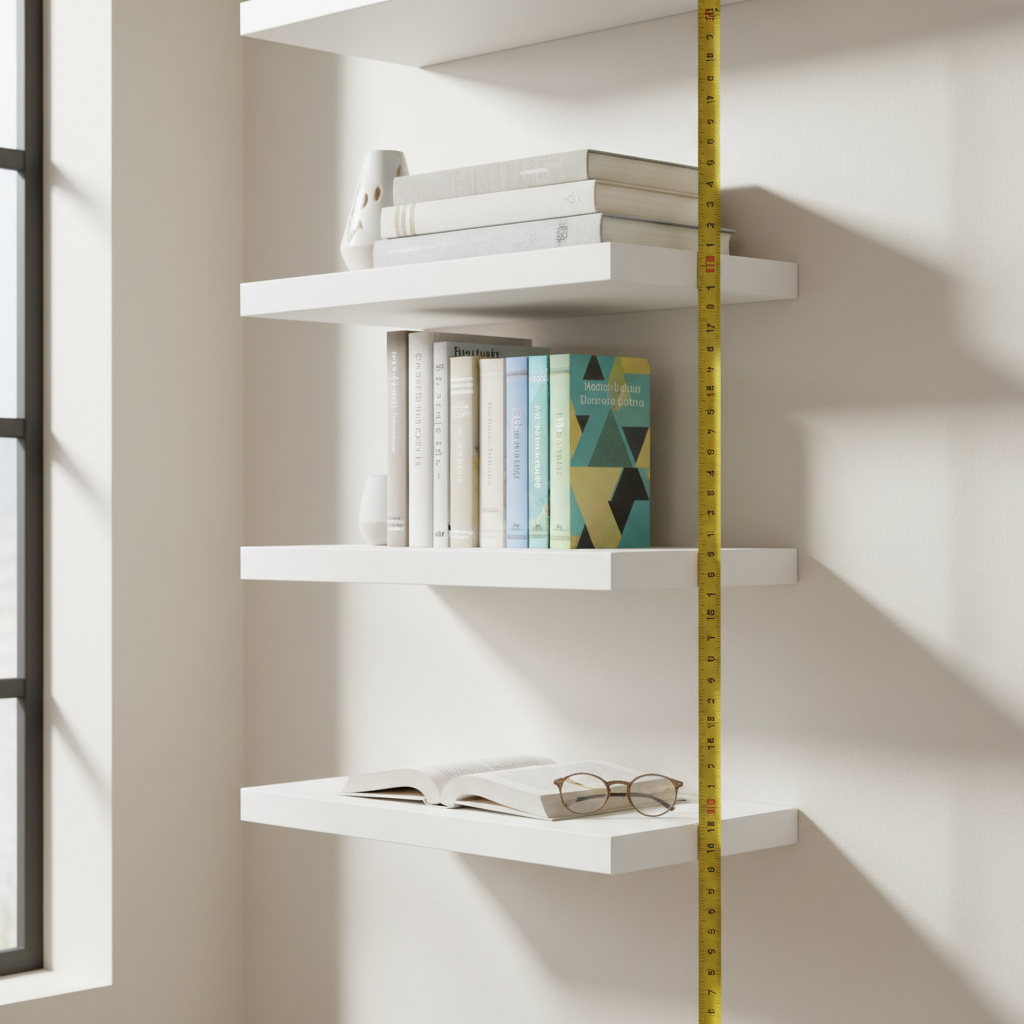
Weight, anchors, and wall types: keep it safe and drama-free
Books are heavy, and “floating” often means the bracket is hidden, not that physics stopped applying. If you want a small space home library with floating shelves that lasts, treat mounting as the core of the project.
According to the U.S. Consumer Product Safety Commission (CPSC), tip-over and falling-object hazards are a real concern in the home, so follow manufacturer instructions and choose hardware rated for your wall type and load.
Quick wall checklist
- Drywall with studs: best-case scenario, hit studs when possible for heavy book runs.
- Drywall without studs where you need them: use high-quality anchors rated for the expected load, and limit heavy hardcovers.
- Plaster: can be brittle, pre-drilling and the right anchors matter, consider professional help if you’re unsure.
- Masonry (brick/concrete): requires masonry bits and anchors, strong but more technical.
Common mounting mistakes to avoid
- Choosing shelves based on looks, then discovering the bracket can’t handle books.
- Overloading one “statement” shelf instead of distributing weight across multiple shorter shelves.
- Skipping a level, small tilts get more obvious once books line up.
If you rent, check your lease rules on drilling. Some renters choose fewer, shorter shelves placed where studs already exist to reduce patching later.
Layout ideas that store more books in less visual space
In tight rooms, the trick is to store more while showing less “mess.” These layouts are practical because they reduce the number of competing lines on the wall.
- One long run: a continuous shelf line (or two) above furniture reads cleaner than many short segments.
- “Column” stacks: 2–3 shelves aligned vertically can turn a narrow strip into a mini book tower.
- Corner wrap: shelves that turn a corner can make the room feel larger by carrying the eye.
- Desk + shelf wall: keep the densest books closest to the desk, lighter decor toward the outer edges.
If your goal is a library vibe, pick one wall as the “book wall” and let the others breathe. Spreading shelves everywhere usually makes small rooms feel chopped up.
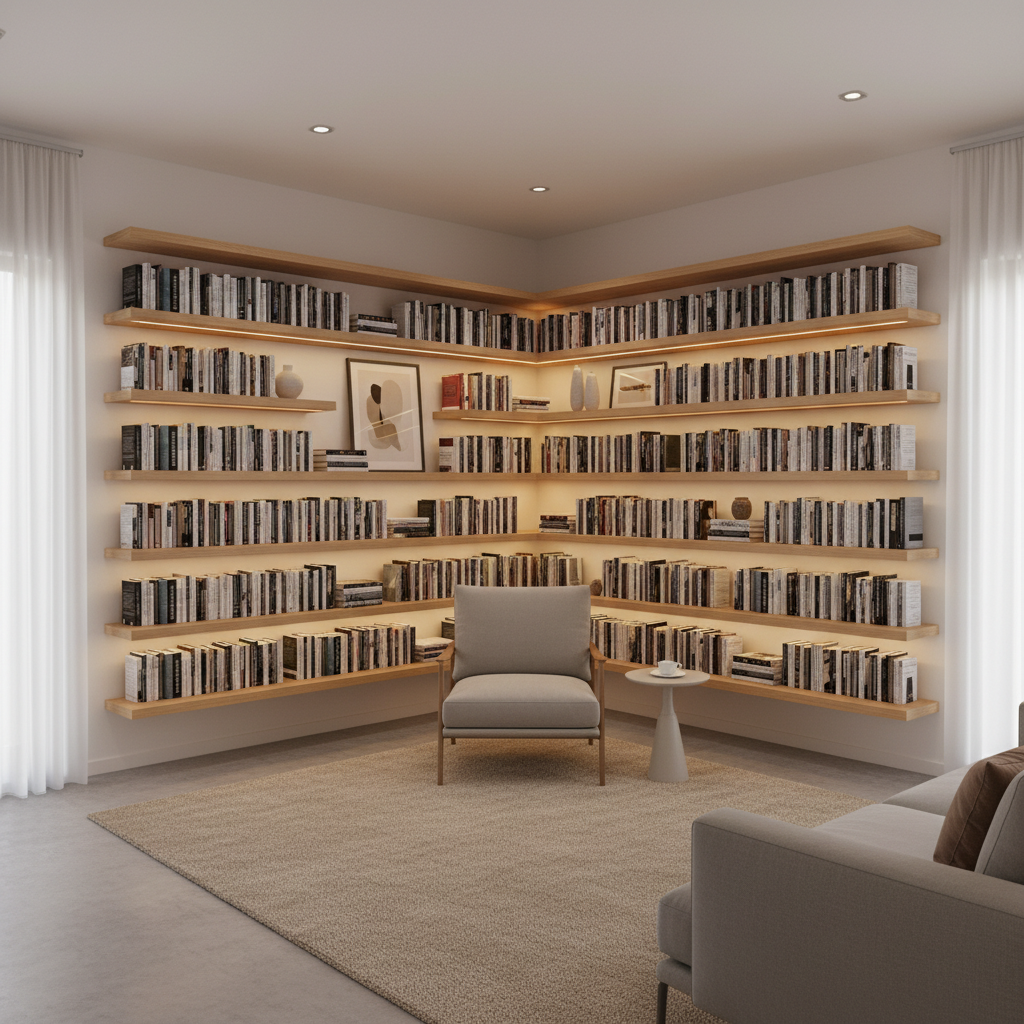
Styling that keeps a small room from feeling crowded
A tiny library looks best when it’s edited. You’re not hiding your books, you’re controlling visual noise so the shelves read as design, not overflow storage.
Key points that usually work
- Use book “blocks”: group by height or color in 2–4 clusters, then break it with one decor object.
- Leave 10–20% breathing room: a fully packed shelf can feel tense, even if it’s organized.
- Limit decor: one framed piece or a small plant per shelf is often enough in a small room.
- Try a consistent shelf finish: mixed finishes can work, but it’s harder in cramped spaces.
Lighting helps more than people expect. A small sconce, a plug-in picture light, or a warm desk lamp can turn shelves into a feature, not just storage.
Practical step-by-step: build your floating-shelf library in a weekend
This is the part you can actually follow without overthinking it. Keep the plan simple, then refine once the shelves are up.
- Step 1: Inventory your books and decide what must live on the wall versus in a closet or under-bed bin.
- Step 2: Pick one wall and map shelf lengths on painter’s tape, stand back, adjust until it looks quiet.
- Step 3: Choose shelf depth based on the biggest book category you own.
- Step 4: Find studs, mark them clearly, and plan bracket placement around them where possible.
- Step 5: Mount slowly, level each bracket, then add the shelf and test for wobble before loading books.
- Step 6: Load from the center out, put heavier books near bracket points, lighter items toward ends.
If you’re not confident about wall anchors, heavy loads, or drilling near electrical lines, it’s reasonable to consult a licensed contractor or experienced handyman. It’s usually cheaper than repairing a torn-out section of drywall.
Conclusion: a small library can feel intentional, not improvised
A small space home library with floating shelves works when you treat it like a system, choose the right wall, respect weight limits, and style with restraint. If you do those three things, the room tends to feel bigger, not smaller.
Your next move: pick the one wall you want to “own,” measure it tonight, and decide whether your books are mostly paperbacks or big hardcovers, that single choice will guide depth, spacing, and hardware.
FAQ
- How many floating shelves do I need for a small home library?
It depends on your book count and shelf length, but many setups feel balanced with two to five shelves on a single wall. It’s often smarter to add length before adding lots of separate rows. - Can floating shelves really hold hardcover books?
Many can, but only when brackets and anchors are rated for the load and installed correctly. If you can’t hit studs, consider lighter loads or shorter shelves to reduce leverage. - What’s the best shelf depth for a tight hallway library?
Shallower tends to win, often around 6–8 inches, so you don’t create a shoulder-bump zone. Save deeper shelves for rooms where you can step back. - How do I keep floating shelves from looking cluttered?
Edit harder than you think you need to. Leave a little open space, group books into a few “blocks,” and limit decor to a couple of repeating items. - Is it safe to put floating shelves above a bed or couch?
Many people do, but comfort levels vary. If you install above seating, mount securely into studs when possible, keep loads reasonable, and avoid placing heavy objects near the edge. - What if I’m renting and can’t drill much?
Use fewer shelves, aim for stud-friendly placement, and keep the load light. You can also create a “library corner” with one short run above a desk and rely on a small rolling cart for overflow. - Should I arrange books by color or by genre in a small space?
Genre is usually more livable day-to-day, color is more visual. A nice compromise is genre by section, then tidy each section by height so it still reads clean.
If you’re trying to design a small space home library with floating shelves and want a more “done” look without trial-and-error, it can help to start from a shelf layout plan and a curated size list, then shop to that plan instead of buying shelves first and hoping they fit.