
How to remove soap scum from glass shower doors comes down to two things: breaking down the waxy film that soap leaves behind and dealing with the minerals in your water that “lock” that film onto the glass.
If you’ve tried spraying random bathroom cleaner and wiping until your arms hurt, you already know the frustrating part, glass can look clean when it’s wet, then dry into streaks and cloudy patches.
This guide walks you through what soap scum really is, how to choose a method that matches your door type and water hardness, and a simple maintenance routine so you’re not deep-cleaning every weekend.
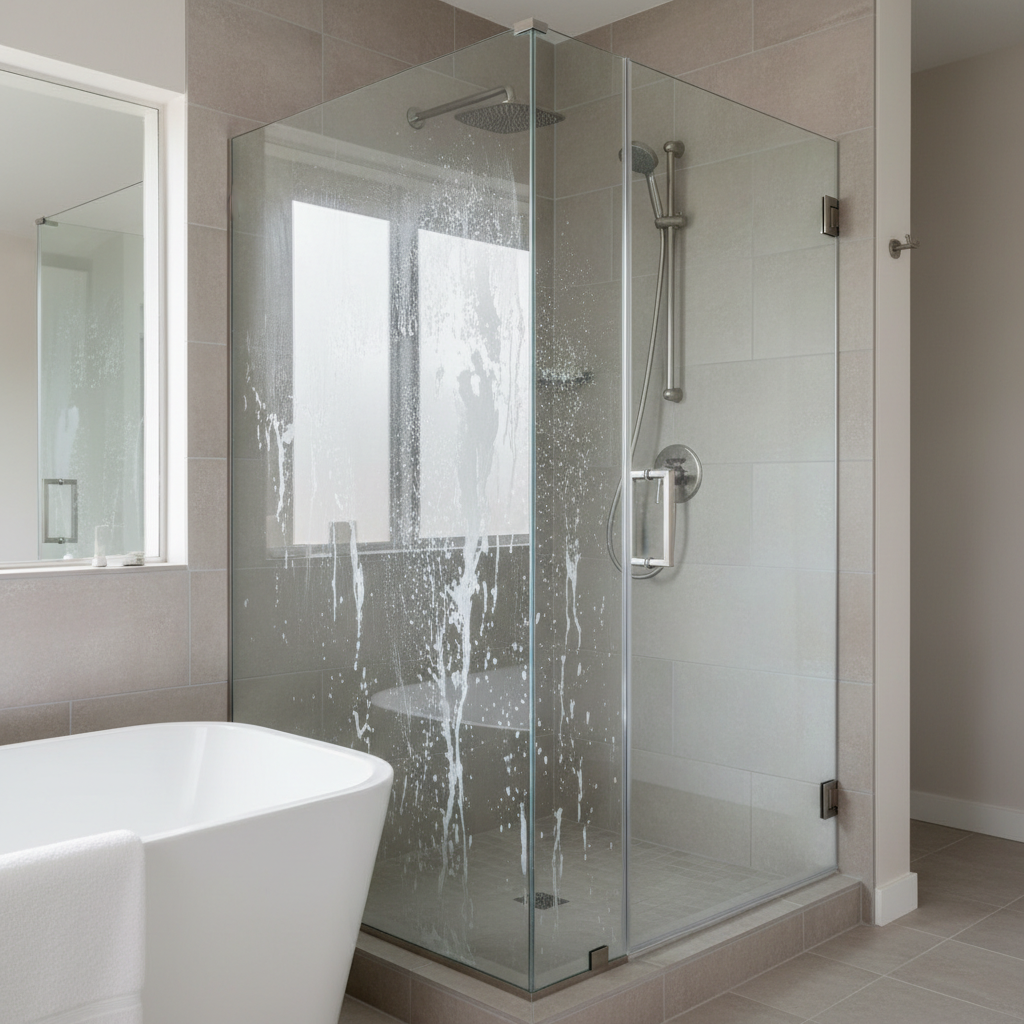
Why soap scum sticks to glass (and why it keeps coming back)
Soap scum isn’t just “dirt.” It’s usually a mix of fatty acids from bar soap or body wash, skin oils, and hard-water minerals like calcium and magnesium. That combo dries into a dull film that regular glass cleaner often can’t lift.
Two real-world reasons it keeps returning:
- Hard water leaves mineral deposits that bond with soap residue, especially at the bottom track and corners.
- Infrequent drying lets droplets evaporate in place, leaving minerals behind and thickening the haze each day.
According to the U.S. Geological Survey (USGS), water “hardness” varies widely by region in the U.S., which helps explain why one household struggles with constant buildup while another barely notices it.
Quick self-check: what kind of buildup are you dealing with?
Before you pick a cleaner, take 30 seconds to identify the main culprit. It saves time and prevents using an overly harsh approach.
- Cloudy film that feels slightly waxy: soap/oil heavy, usually responds well to degreasers and mild abrasives.
- White crusty spots or lines: mineral scale heavy, often needs an acid-based approach (like vinegar or a descaler).
- Orange/pink tint near edges: could be microbial growth in damp areas; cleaning plus better drying matters.
- Scratches you can feel with a fingernail: not scum, cleaning won’t “fix” it, focus on improving appearance with polish or replacement decisions.
Also check your shower door specs: some glass has a factory-applied protective coating. If you’re unsure, treat the first clean as a “test spot” and avoid aggressive abrasives.
Tools and cleaners: what works, what to skip
You don’t need a garage full of products, but the right tool makes a bigger difference than people expect.
Go-to tools
- Non-scratch sponge or microfiber cloth (for daily/weekly wiping)
- Plastic scraper (helps lift thick film without gouging)
- Soft-bristle detail brush or old toothbrush (for corners, hinges, bottom track)
- Squeegee (your best “prevention tool”)
Cleaner options (choose based on your self-check)
- White vinegar + warm water: good for mineral haze, can be slow on oily film
- Dawn-style dish soap: strong on oils, often needs help on hard-water spots
- Baking soda paste: mild abrasive for stubborn film, use gently and rinse well
- Commercial limescale remover: effective for heavy scale, follow label instructions and ventilation guidance
What to be cautious with: steel wool (can scratch), magic erasers (micro-abrasive, may dull coatings), and mixing household chemicals. If you use any strong product, ventilation and gloves are usually a smart call, and if you have sensitivities, it may be worth asking a professional cleaner what they use in similar bathrooms.
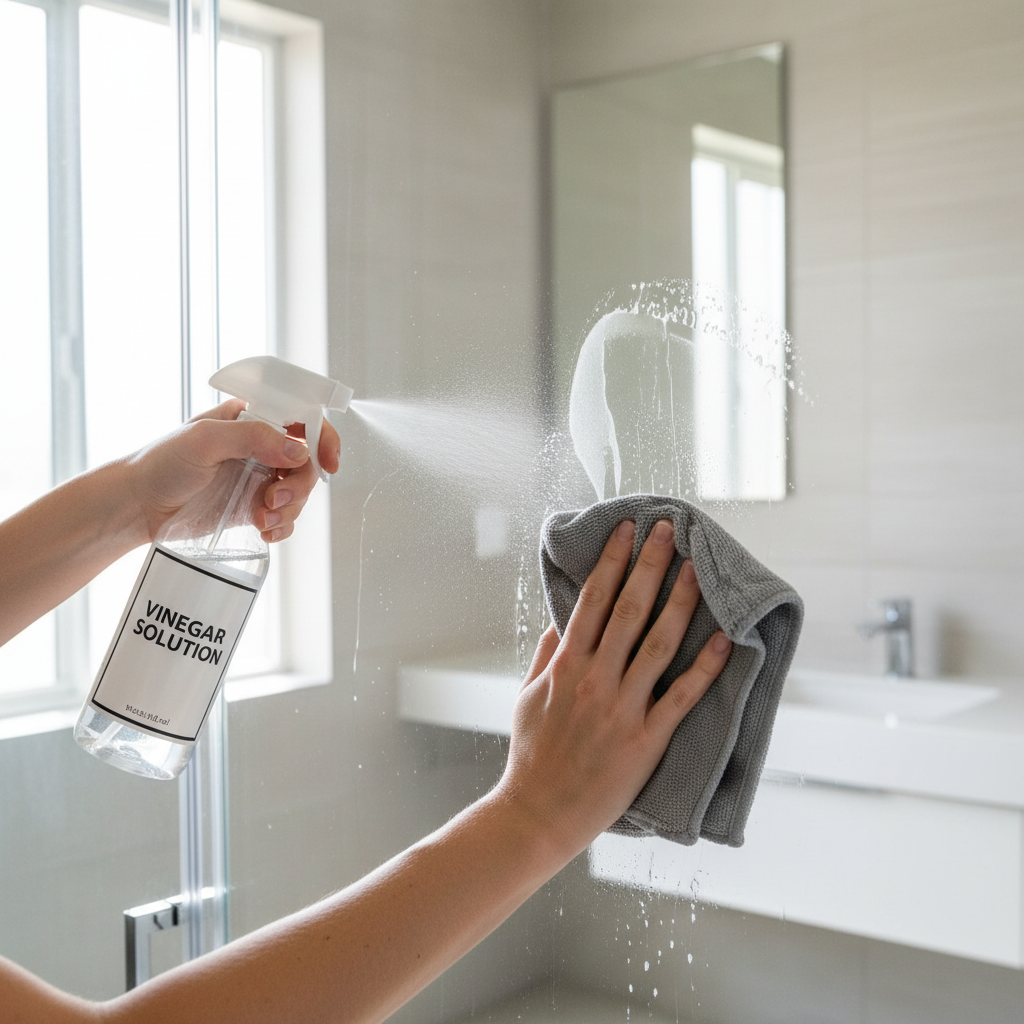
Method 1: The “everyday” clean for light soap scum (10 minutes)
If the glass looks slightly cloudy but you’re not dealing with thick crust, start here. This is the routine most people can keep up with.
- Rinse the door with warm water to soften the film.
- Mix a bowl of warm water with a few drops of dish soap.
- Wipe glass with a non-scratch sponge, focusing on the lower half and edges.
- Rinse thoroughly, then dry with a microfiber cloth to prevent streaking.
- Finish with a quick squeegee pass, top to bottom.
If you’re still seeing haze after drying, that’s often mineral residue. Move to the vinegar or descaling method below rather than scrubbing harder.
Method 2: Vinegar compress for hard-water haze (best for white spots)
Vinegar works because it’s mildly acidic, which helps dissolve mineral deposits. The trick is contact time, not elbow grease.
- Warm white vinegar (not boiling, just warm).
- Soak paper towels or a thin cloth in vinegar and “stick” them to the glass where buildup shows.
- Leave it for 10–20 minutes, keep it damp.
- Remove towels, wipe with a soft sponge, then rinse well.
- Dry with microfiber to check your result.
Heads-up: vinegar can be irritating in small bathrooms and may not play nicely with some natural stone nearby if it splashes. If your shower surround is marble or another sensitive stone, be careful with runoff and consider a stone-safe descaler instead.
Method 3: Heavy buildup reset (when the bottom third looks frosted)
When soap residue and minerals stack up, you usually need a two-step approach: degrease first, descale second. This is the version of how to remove soap scum from glass shower doors that tends to work when “one product” keeps failing.
Step-by-step
- Degrease: Use a dish-soap solution or a bathroom degreaser, scrub lightly, rinse.
- Descale: Apply vinegar compress or a commercial limescale remover, wait per directions, wipe, rinse.
- Detail: Use a soft brush around hinges, handles, and the bottom track where residue hides.
- Dry and inspect: Dry fully; if you see patchy dull areas, repeat only on those spots.
If the door has a protective coating, keep abrasives minimal and lean on dwell time. That “let it sit” part feels slow, but it’s usually safer than aggressive scrubbing.

What to use when: a simple decision table
If you’re staring at the door thinking “which one do I try,” this is the shortcut.
| What you see | Likely cause | Best first move | Avoid |
|---|---|---|---|
| Thin cloudy film | Soap/oils | Warm water + dish soap, microfiber dry | Over-scrubbing dry glass |
| White spots/lines | Hard-water minerals | Vinegar compress (10–20 min) | Glass cleaner only (usually too weak) |
| Frosted bottom third | Layered scum + scale | Degrease then descale, spot repeat | Steel wool, harsh abrasives |
| Stains in corners/track | Residue + moisture | Detail brush + targeted cleaner, rinse well | Letting cleaner pool in track |
How to keep it from returning (without a complicated routine)
The most effective prevention is boring: reduce water drying on glass, and reduce soap residue. Do less, more often.
- Squeegee after the last shower in the household, 30 seconds.
- Run the exhaust fan long enough to clear humidity, or crack a window if possible.
- Switch products if needed: some body washes leave heavier film; if you notice it, that’s a valid experiment.
- Weekly wipe-down: a quick dish-soap wipe and dry prevents the “reset clean” scenario.
Some people add a glass protectant or hydrophobic spray. It can help, but it’s not magic, and it works best on a truly clean, residue-free surface. If you apply it over existing film, you often get streaks that look worse than the original haze.
Common mistakes that waste time (or damage the glass)
- Cleaning without fully rinsing, leftover cleaner can dry into new streaks.
- Using abrasive pads “just once” on coated glass, you may not notice damage until light hits it.
- Only treating the glass while ignoring the bottom track and seals, residue migrates back.
- Expecting one pass to fix months of buildup, heavy scum usually needs two rounds.
If you have respiratory conditions or sensitivities, strong cleaners and even vinegar fumes might be irritating. In that case, better ventilation and a milder approach with longer dwell time may be safer, and if symptoms are a concern, consider asking a healthcare professional for guidance on exposure.
When it’s time to call a pro or consider an upgrade
Sometimes the issue isn’t “dirt,” it’s surface damage or a door that’s hard to maintain by design.
- Persistent cloudiness after multiple cleans can point to etching or worn coating.
- Leaking seals and grimy tracks may need replacement parts more than cleaning.
- Very hard water might justify a water-softening solution; a plumber can help you evaluate options.
- Mold concerns inside wall cavities or persistent odors deserve professional assessment rather than repeated surface cleaning.
Key takeaways and a realistic next step
How to remove soap scum from glass shower doors is rarely about one “secret ingredient.” It’s matching the cleaner to the buildup, giving it time to work, then drying the glass so the problem slows down.
Pick one action today: do a vinegar compress on the worst spots, or commit to a 30-second squeegee routine for a week. Either one usually changes what you see pretty fast.
FAQ
- What is the fastest way to remove soap scum from glass shower doors?
For light film, warm water with dish soap plus a microfiber dry is often the quickest. If you see white spotting, a vinegar compress may work faster than scrubbing. - Can I use vinegar every day on shower glass?
Many households use diluted vinegar regularly, but daily use can be annoying in small bathrooms due to smell, and splashing near natural stone can be risky. A squeegee routine usually prevents the need for frequent acid cleaning. - Why does my shower door look clean until it dries?
Water hides haze. Once it evaporates, minerals and leftover cleaner show up as streaks or cloudy patches. Drying with microfiber reveals what’s really left. - Does baking soda scratch glass shower doors?
Baking soda is considered a mild abrasive, but scratching risk depends on pressure, pad type, and coatings. If your door has a protective layer, test a small corner and scrub gently. - How do I remove soap scum from textured or frosted glass?
Textured surfaces hold residue, so dwell time matters more. Use a soft brush and a cleaner suited to your buildup, rinse longer than you think, then towel dry what you can reach. - Are commercial soap scum removers better than DIY?
They can be, especially for heavy hard-water scale, but results vary by formula and your water. If DIY methods stall after two attempts, a limescale remover used as directed is a reasonable next step. - How often should I deep-clean glass shower doors?
Many people can avoid deep cleans with a weekly wipe and regular squeegee use. In hard-water areas, a deeper descaling session might still be needed monthly or every couple of months.
If you’re trying to keep glass doors clear with minimal effort, it may help to set up a simple kit under the sink, microfiber cloths, a squeegee, and one descaling option you trust, so the fix stays easy instead of turning into a weekend project.