
How to clean a microwave naturally with lemon is mostly a steam-and-wipe job: you loosen dried splatters with hot lemony vapor, then wipe everything out while it’s still soft. If you’ve been scrubbing at mystery spots with paper towels until your patience runs out, this approach usually feels like a reset.
It’s worth doing right because microwave mess tends to “bake on” over time, and old food residue can keep reactivating odors. The lemon method also helps you avoid harsh cleaners in a small enclosed space where fumes can linger, even if you keep the door open after.
One quick expectation check: lemon steam removes most fresh-to-medium grime fast, but it won’t magically erase years of burnt sugar on a neglected ceiling in one pass. You can still get there, it just takes a second round and a little patience.
What you’ll need (and what to skip)
You don’t need a special microwave cleaner to get good results. What matters more is using a microwave-safe container and giving the steam time to work.
- 1 lemon (fresh is ideal, bottled lemon juice can work in a pinch)
- Water (about 1 cup)
- Microwave-safe bowl (glass or ceramic, wide enough to vent steam)
- Soft sponge or microfiber cloth
- Optional: baking soda, dish soap, rubber gloves
Skip abrasive scrub pads on painted interiors, and be cautious with strong bleach or ammonia-based products in an enclosed appliance. According to the U.S. Environmental Protection Agency (EPA), you should never mix bleach with ammonia because it can create toxic gases.
Why lemon works (and what it doesn’t do)
Lemon helps in two practical ways: the hot steam softens dried-on food, and the mild acidity can help cut through some greasy residue. It also leaves a cleaner smell than many fragranced sprays, which matters because microwaves hold onto scents.
What it usually doesn’t do on its own: sanitize to a medical-grade standard, remove melted plastic, or fix a microwave that smells like burnt electronics. If you suspect electrical or component issues, cleaning isn’t the next step—unplug and consider professional evaluation.
Quick self-check: which mess are you dealing with?
Before you start, take 15 seconds and categorize the problem. It changes how aggressive you need to be.
- Light splatter + mild odor: one steam cycle and wipe usually handles it
- Greasy film (often near vents): steam + a tiny bit of dish soap on the cloth helps
- Crusty spots: two steam rounds, then gentle dwell time before wiping
- Burnt-on syrupy spills: steam, scrape gently with a plastic spatula, repeat
- Persistent “fish” or popcorn smell: steam + follow-up deodorizing step
Step-by-step: the lemon steam method (the core routine)
If you only follow one section, make it this one. This is the standard “works in most homes” routine for how to clean a microwave naturally with lemon.
1) Prep the bowl
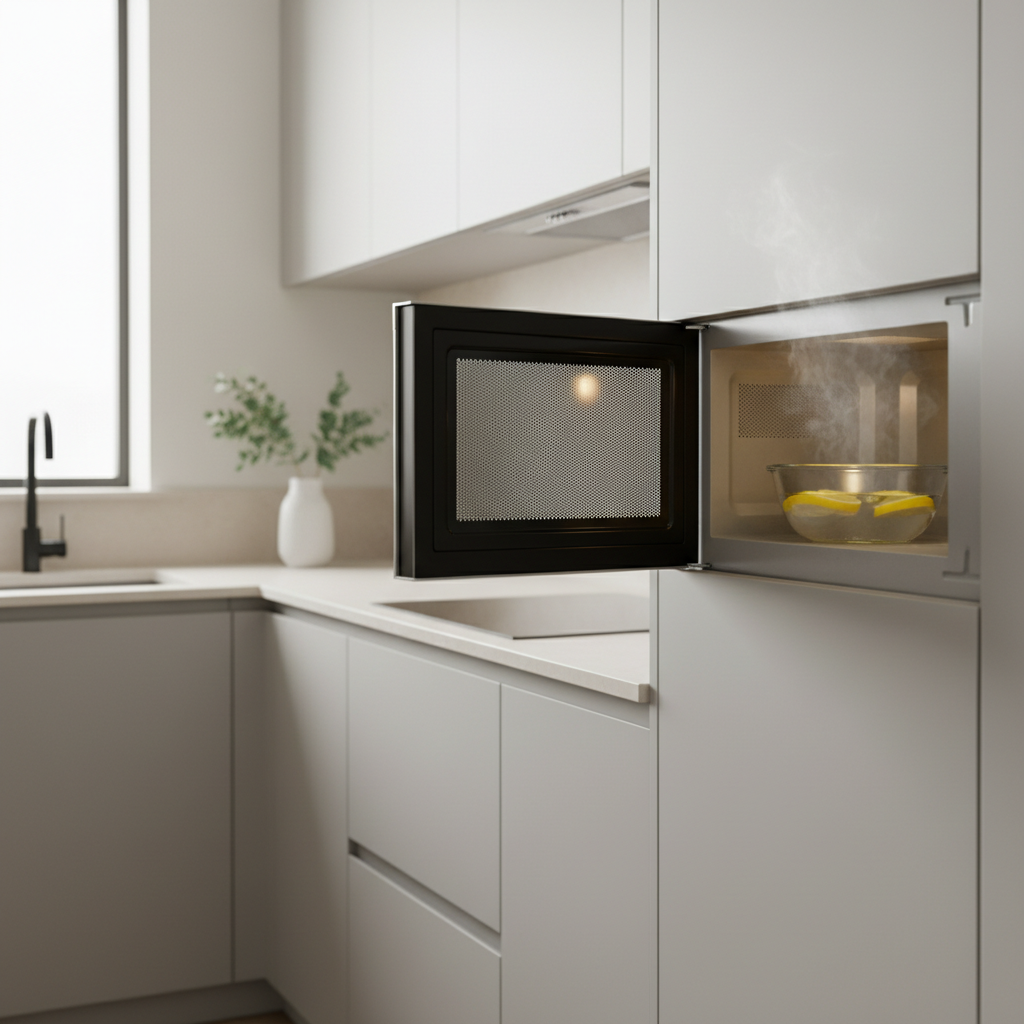
Fill a microwave-safe bowl with about 1 cup of water. Slice a lemon in half, squeeze the juice into the water, then drop both lemon halves (and a few slices, if you want) into the bowl.
2) Heat until steamy
Microwave on high for 3–5 minutes, depending on wattage and how dirty the interior looks. You want visible steam on the door and walls, not a rolling boil that splashes.
3) Let it sit (this is where people rush)
Keep the door closed for 5 minutes after the timer ends. This “rest” time is what softens the mess so you wipe instead of scrub.
4) Wipe top to bottom
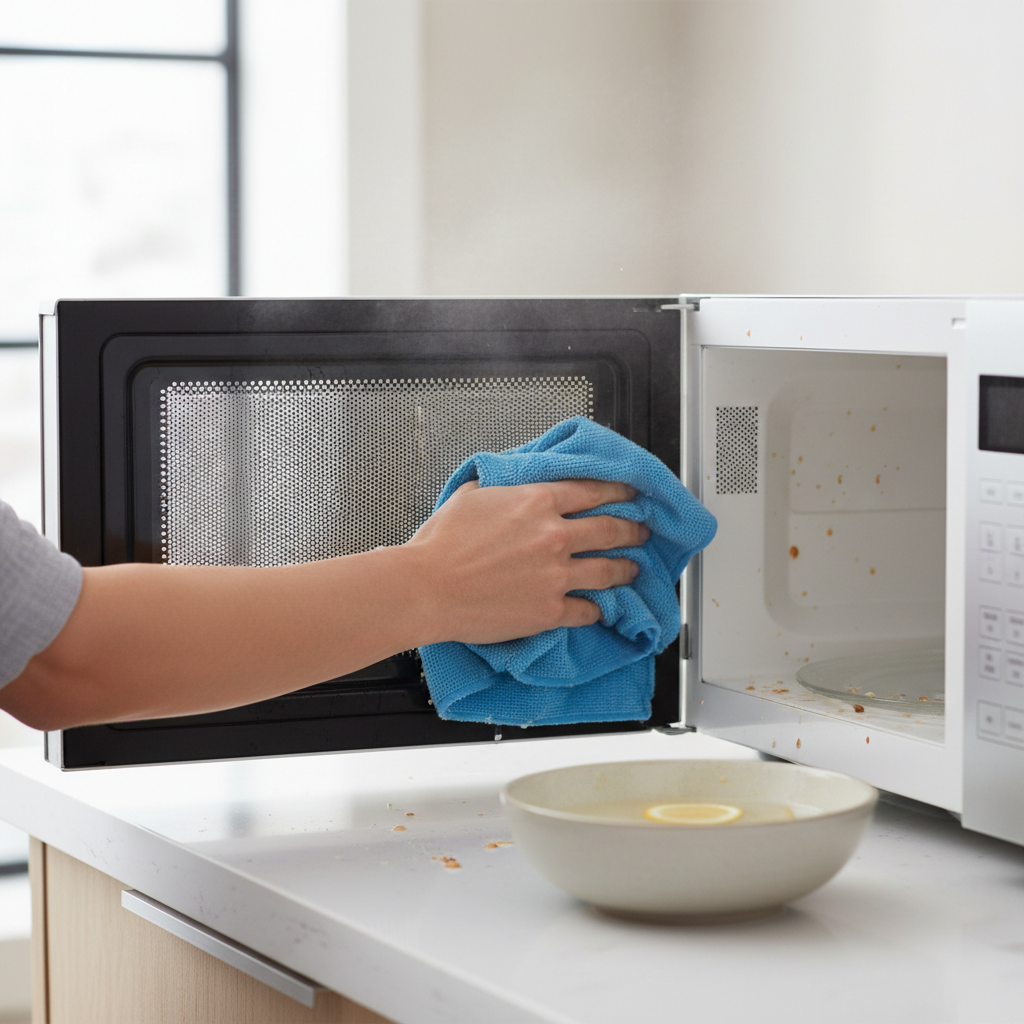
Carefully remove the hot bowl, then wipe the ceiling, sides, back panel, and door interior. Finish with the floor of the microwave. Rinse your cloth once or twice so you’re not smearing loosened grime around.
5) Clean the turntable and ring
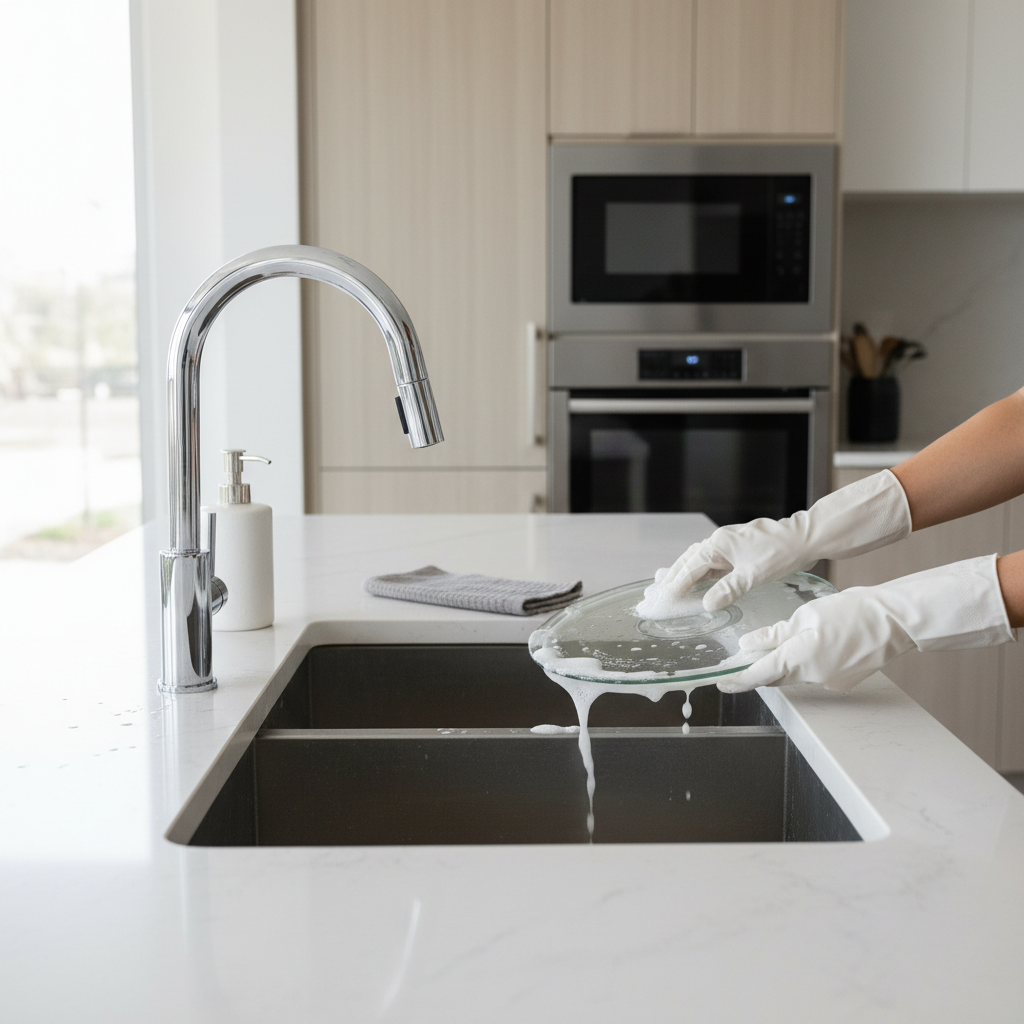
Remove the glass tray and roller ring. Wash in warm, soapy water, dry fully, and put everything back aligned correctly so it rotates smoothly.
Key points to keep in mind
- Steam loosens, wiping removes. If you skip either step, results feel disappointing.
- Closed-door rest time matters, especially for crusty spots.
- Gentle tools win in most cases; scratches can make future cleaning harder.
Troubleshooting: odors, grease, and stubborn spots
Even when you know how to clean a microwave naturally with lemon, the last 10% can be annoying. These are the fixes that typically save time.
For greasy film that feels “slippery”
- After steaming, add one drop of dish soap to a damp cloth and wipe the greasy areas.
- Follow with a plain-water wipe so no soap taste or scent lingers.
For crusty, stuck-on bits
- Do a second steam cycle (2–3 minutes), then rest another 3–5 minutes.
- Use a plastic scraper or old credit card edge very gently, especially on the ceiling.
For lingering odors
- Leave the door open for 30–60 minutes to vent.
- Set a small bowl of baking soda inside overnight (no heating).
- If odor seems tied to burnt residue, re-check the vent area and the door seams for splatter.
If the smell resembles burning plastic or an electrical odor, stop using the appliance and consider a technician. Cleaning won’t address that kind of issue, and guessing can add risk.
Timing guide: choose the right method fast (table)
This table helps you decide how long to heat and what follow-up step makes sense. Treat it as a starting point—microwaves vary a lot by wattage and interior coating.
| Mess level | Steam time | Rest time (door closed) | Best follow-up |
|---|---|---|---|
| Light splatter | 3 min | 3–5 min | Wipe with microfiber |
| Moderate grime + odor | 4–5 min | 5 min | Wipe, rinse cloth once |
| Greasy film | 4–5 min | 5 min | One drop dish soap, then water wipe |
| Stubborn crust | 5 min (or 2 rounds) | 5 min each round | Gentle plastic scrape, then wipe |
Safety notes and common mistakes
Most lemon-cleaning mishaps come from overheating, using the wrong container, or getting impatient and scrubbing too hard.
- Don’t superheat the water. If your microwave runs hot, start with shorter bursts and watch for aggressive boiling.
- Use microwave-safe containers only. If the bowl gets too hot to handle, use oven mitts.
- Avoid abrasive pads on interior coatings, especially if the surface is painted.
- Don’t spray cleaners directly inside if you’re not sure how the coating reacts; apply to a cloth instead.
- Vent after cleaning so moisture doesn’t sit in seams and corners.
One more thing: if you’ve had a spill that dripped under the turntable, take the ring out and wipe the floor carefully. That hidden area is a common source of “I cleaned it but it still smells weird.”
Keep it clean longer: small habits that actually help
The easiest microwave to clean is the one that never gets the chance to crust over. You don’t need perfection, just a few low-effort habits.
- Cover food with a vented lid or paper towel when reheating saucy meals.
- Wipe weekly with a damp cloth even if it looks “fine.”
- Handle spills immediately when safe, because fresh splatter lifts in seconds.
- Deodorize monthly with a short lemon steam if your microwave is used heavily.
Conclusion: a simple routine you’ll actually repeat
Once you know how to clean a microwave naturally with lemon, the job becomes less about scrubbing and more about letting steam do the heavy lifting, then wiping while everything stays soft. If your microwave has been neglected, plan on two rounds and treat the turntable like part of the interior, not an afterthought.
Action plan: do one lemon steam cycle today, then set a 5-minute weekly wipe on your calendar, future-you will thank you when reheating doesn’t come with a side of burnt smell.