
How to clean a dishwasher filter and seal is one of those chores that feels optional, right up until your glasses look cloudy, the machine smells off, or you notice a little water pooling near the door.
The good news, this is usually a low-effort fix with a pretty high payoff, better wash performance, fewer mystery odors, and less strain on the pump and drain path. The not-so-good news, a lot of people “clean” the dishwasher by running a tablet and calling it done, while the gunk that causes most problems sits in the filter and the door gasket.
This guide walks through the practical stuff: what causes buildup, how to tell what kind of filter you have, a step-by-step clean for both the filter and the seal, plus a simple schedule so you do not end up back here next month.
Why filters and door seals get gross (and what it does to cleaning)
Dishwashers are designed to handle food particles, but not unlimited amounts, and not forever without maintenance. The filter and the seal are basically the two “collection points” where problems like to start.
- Food debris buildup: rice, pasta, seeds, and labels from jars can collect and restrict water flow.
- Grease film: fats and oils cool down and cling to plastic parts, creating that slick layer that traps more debris.
- Hard water minerals: many U.S. households deal with calcium deposits, which can trap odor and reduce spray efficiency.
- Mold and mildew on the gasket: the door seal stays damp, and small folds can hold residue.
When the filter clogs, wash water may not circulate the way it should, and draining can slow down. When the seal is dirty, you may see black specks, smell a sour odor, or even get small leaks if the gasket cannot seat cleanly.
According to the U.S. Environmental Protection Agency (EPA), using dishwashers efficiently helps save water and energy compared with handwashing in many cases, but efficiency depends on proper operation and maintenance, and a clean filter is part of that basic upkeep.
Before you start: identify your filter type and gather tools
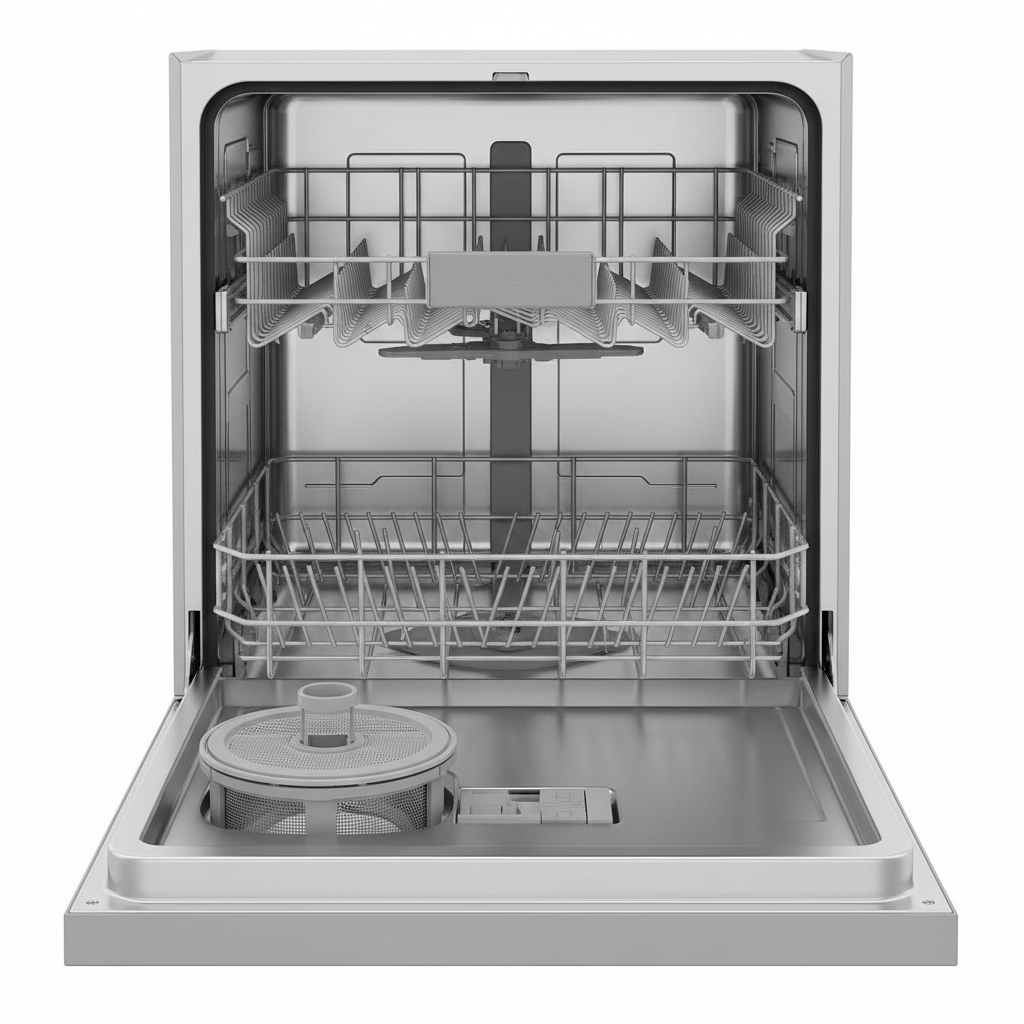
Most modern dishwashers have a removable filter near the bottom center, under the lower spray arm. Some older models use a self-cleaning filter system with a grinder, and you might not have a twist-out filter at all.
Quick filter check
- Pull out the bottom rack and look for a round or oval filter assembly that twists and lifts out.
- If you only see a fixed grate and no obvious twist-lock piece, your model may be non-removable/self-cleaning, check the manual before forcing anything.
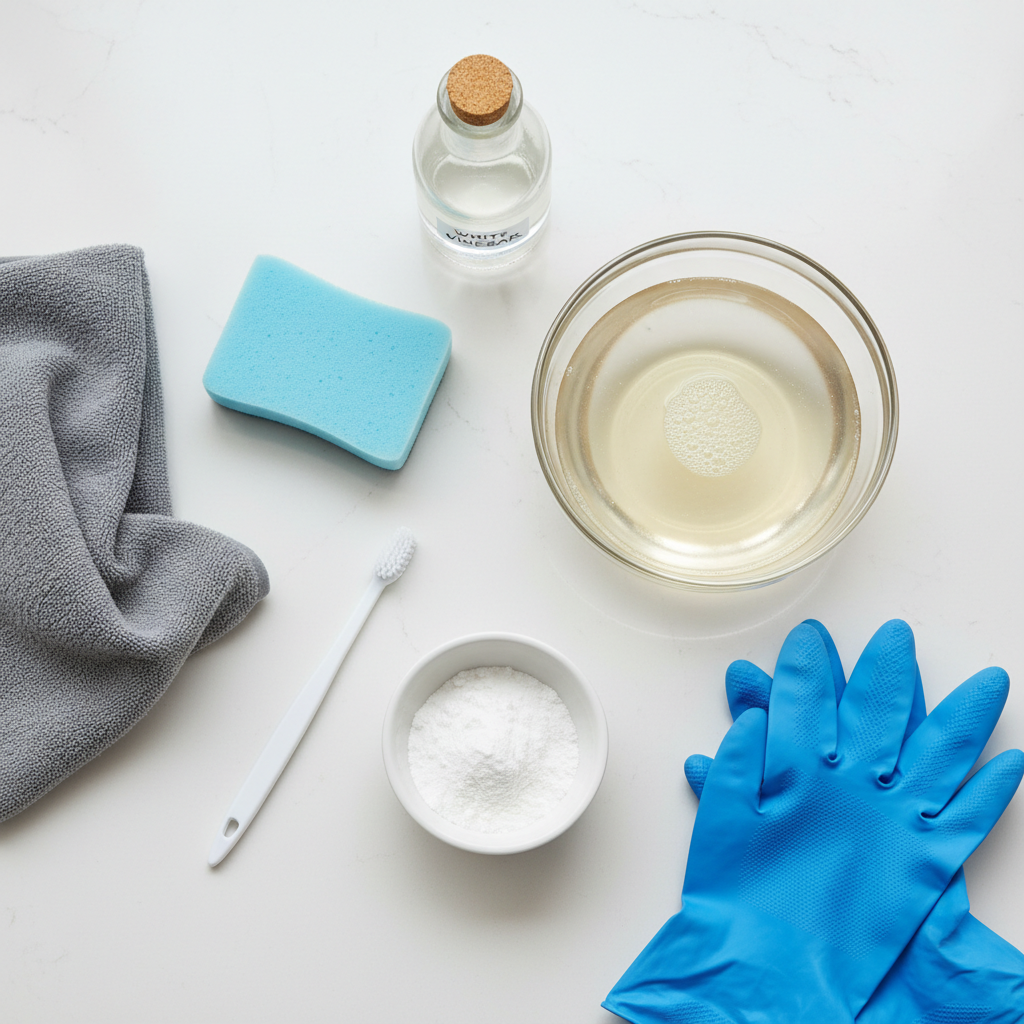
Tools that usually work (no special kit required)
- Dish gloves (optional)
- Old toothbrush or small nylon brush
- Microfiber cloth or soft sponge
- Warm water + a few drops of dish soap
- White vinegar (optional for mineral film)
- Baking soda (optional for odor)
- Flashlight (helps you spot debris in the sump area)
Safety note: you usually can do this without cutting power, but if you will reach deep near wiring or you see standing water and want to inspect more than the filter, it is reasonable to switch off the unit at the breaker. If your dishwasher has a sharp metal edge or you suspect a broken glass shard, gloves are a smart call.
How to clean a dishwasher filter (step-by-step)
How to clean a dishwasher filter and seal starts with the filter because it is the main “catch.” Plan on 10–20 minutes the first time, and much less after that.
1) Remove the bottom rack and locate the filter
Slide out the lower rack, then look at the bottom center. Many filters have a cylindrical inner filter and a flat mesh screen around it.
2) Twist, lift, and separate pieces
- Turn the filter assembly (often counterclockwise) until it unlocks, then lift.
- If there is a flat screen, lift it out too.
- Take a quick photo before disassembly if you want a “put it back” reference.
3) Rinse first, then wash with soap
Run warm water through the mesh from the clean side out, this pushes debris away instead of deeper into the screen. Then wash with warm soapy water.
- Use a soft brush for the mesh and crevices.
- Avoid steel wool or anything abrasive, it can damage the mesh and plastic.
4) Treat mineral scale or grease if needed
- If you see white chalky buildup, soak the filter in 1:1 warm water and white vinegar for 10–15 minutes, then brush gently.
- If the filter feels oily, add a bit more dish soap and use warmer water, grease responds better to heat.
5) Clean the sump area (carefully)
With the filter out, look into the sump. Remove visible debris by hand, but do not dig aggressively. If you see broken glass or a hard object wedged near the pump intake, stop and consult your manual, forcing it can cause damage.
6) Reinstall correctly
Put the screen and filter back the same way they came out, lock the filter until it stops. A loose filter can let debris reach the pump.
How to clean the dishwasher door seal (gasket) without damaging it
The door seal is where odors and black grime like to hang out. This part is easy to overdo: harsh chemicals and aggressive scrubbing can dry or deform rubber over time.
1) Wipe loose residue first
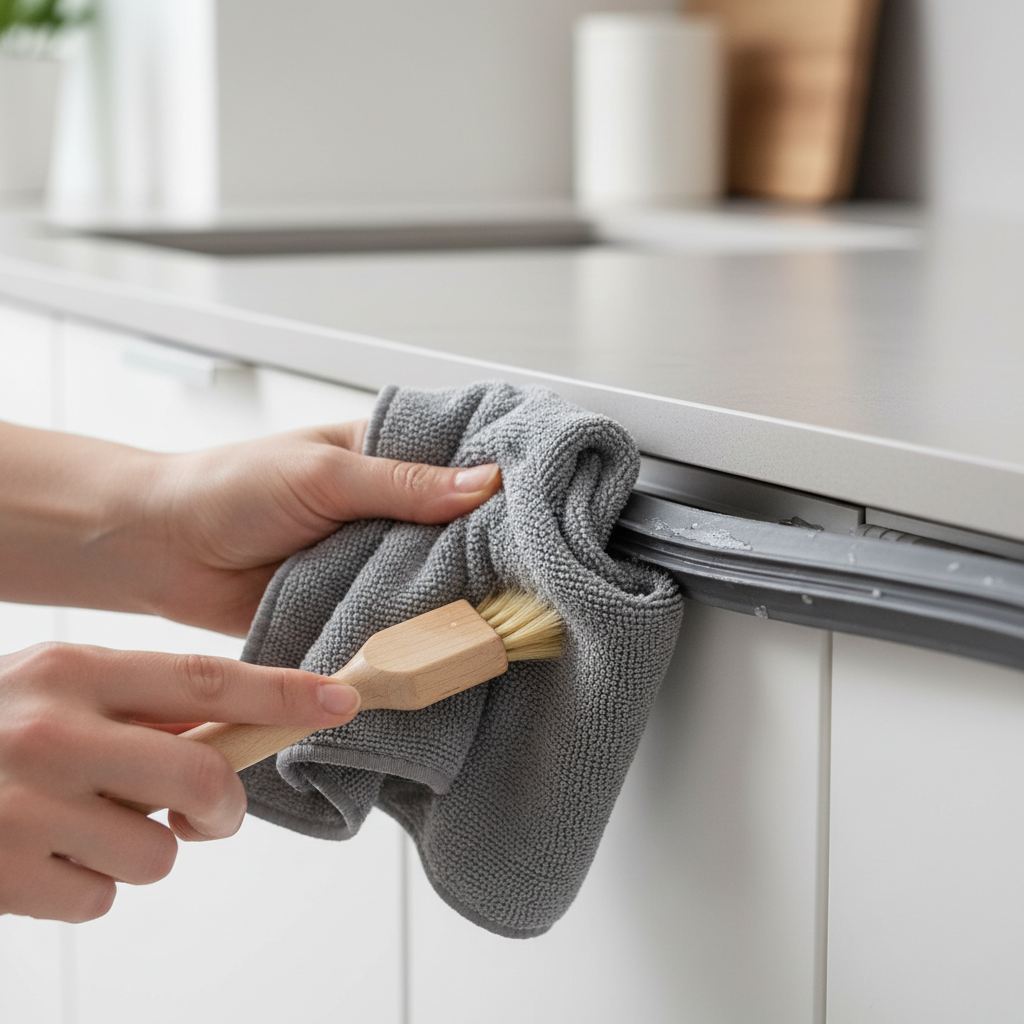
Use a damp microfiber cloth to remove surface grime around the door frame, especially the bottom corners.
2) Use mild soap for the folds
- Dip a cloth or soft brush in warm soapy water.
- Gently open the folds of the gasket and wipe inside them.
- Work in small sections so you do not miss the corners.
3) Spot-treat mildew carefully
If you see mildew, you might be tempted to reach for bleach. Many manufacturers caution against harsh cleaners on rubber components, so check your manual first. If you prefer a gentler approach, a vinegar-dampened cloth can help with light buildup, then follow with a plain-water wipe.
Important: avoid soaking the gasket, you want it clean, not waterlogged.
4) Dry the seal
Finish with a dry cloth so moisture does not sit in the folds. This small step often helps reduce recurring odor.
Quick self-check: do you need a simple clean, or something deeper?
Not every dishwasher problem is “just the filter,” but many are. Use this checklist to decide how far to go today.
| What you notice | Most likely cause | What to do next |
|---|---|---|
| Cloudy glasses, gritty feel | Filter debris or hard-water scale | Clean filter, consider vinegar soak, check rinse aid |
| Sour or swampy smell | Food buildup in filter/sump, dirty seal | Clean filter and gasket, run a hot cycle empty |
| Standing water at bottom | Drain restriction, filter not seated, hose issue | Check filter seating, clear visible debris, consider drain inspection |
| Black specks near door | Mildew on gasket | Clean folds gently, dry after use, improve ventilation |
| Leaking at the door | Dirty or warped gasket, loading issue | Clean seal, inspect for cracks, verify racks do not block closure |
If your dishes still come out dirty after you do how to clean a dishwasher filter and seal, the next suspects are usually spray arms (clogged holes), water temperature, detergent choice, or loading patterns.
Practical routine: how often to clean, and what keeps it cleaner longer
Frequency depends on how you cook and how you load, a household that runs the dishwasher daily and does lots of starches will need more attention than someone who runs it twice a week.
- Filter: often every 2–4 weeks, sooner if you see debris or smell odor.
- Door seal: a quick wipe weekly, deeper clean monthly.
- Deep refresh cycle: monthly, run hot with a dishwasher cleaner or a vinegar bowl on the top rack if your manufacturer allows it.
Small habits that actually help
- Scrape plates, but do not pre-rinse heavily unless your detergent or model calls for it.
- Run hot water at the sink until it is warm before starting a cycle, many machines fill early with whatever temperature is in the line.
- Do not block the detergent door with big cutting boards or tall pans.
- Leave the door cracked open for 20–30 minutes after the cycle when possible, it helps the gasket dry.
According to Consumer Reports, many dishwashers perform best when you scrape rather than fully rinse, because modern detergents are designed to work with some soil present. That said, chunky debris still belongs in the trash, not the filter.
Common mistakes that make things worse
- Forcing parts: if the filter does not twist out easily, check the manual, some designs lock differently.
- Using abrasive tools: scratched plastic and mesh hold onto grime faster.
- Bleach everywhere: it can be harsh on rubber and may not be compatible with some stainless interiors, manufacturer guidance matters.
- Ignoring the “why”: if the filter clogs every few days, you may be overloading, skipping scraping, or dealing with a drain problem.
- Reinstalling loosely: a filter not seated can cause poor cleaning and let debris circulate.
If you are chasing persistent odor, remember the seal is only one part. A dirty spray arm, a clogged air gap, or a drain hose with backflow can also contribute, and those issues may need a broader check.
When it makes sense to call a pro (or at least check the manual)
How to clean a dishwasher filter and seal covers a lot, but there are times where cleaning is not the right “next step.” Consider professional help if you run into any of these.
- Repeated standing water after you confirm the filter is clean and seated
- Grinding noises, burning smells, or the unit trips the breaker
- Visible cracks in the gasket or the seal no longer sits flush
- Leaks that persist after cleaning and verifying the dishwasher is level
- You find hard objects lodged where you cannot safely reach
In many cases a technician can quickly confirm whether the drain pump, hose routing, or door seal needs replacement. If your dishwasher is under warranty, it is usually smarter to follow the manufacturer’s service path rather than experimenting.
Key takeaways and a simple next step
The fastest win is cleaning the filter and wiping the gasket folds, those two spots cause a lot of the “my dishwasher feels dirty” complaints. Keep it simple: warm water, mild soap, gentle brushing, then dry the seal so it stays less funky between cycles.
If you want an easy action today, pull the bottom rack, remove the filter, and rinse it, then wipe the door gasket with a soapy cloth and dry it. Put a reminder on your phone for a monthly check, future-you will appreciate it.