
how to clean stainless steel appliances comes down to two things most people skip, cleaning with the grain and using the right amount of moisture, because too much product often causes the streaks you are trying to remove.
If your fridge or dishwasher looks dull even after you wipe it, you are not alone, stainless steel shows fingerprints, water spots, and oily haze faster than most finishes, especially in busy kitchens.
This guide walks through a realistic routine you can repeat every week, how to spot what kind of “stain” you actually have, and which cleaners to avoid so you do not accidentally haze the protective finish.

Why stainless steel gets streaky (and why “more cleaner” backfires)
Most streak problems are not about the steel, they are about residue, either oils that did not fully lift, or cleaner that never fully buffed off.
- Fingerprints and cooking oils: oils smear when a cloth is too damp or when you move against the grain.
- Hard-water minerals: water spots look like cloudy dots or rings, and they keep coming back if you wipe with tap water and stop there.
- Product buildup: polishes and sprays can leave a film, great for a day, annoying a week later when dust clings.
- Micro-scratches: abrasive pads can create a dull “gray” look that reads like dirt but is actually surface damage.
According to the American Cleaning Institute, you generally get better results with the mildest effective cleaner and good technique, instead of reaching for harsh chemicals early.
Quick self-check: what are you actually seeing?
Before you grab a product, take 30 seconds to diagnose, it saves time and prevents unnecessary scrubbing.
- Greasy haze: looks like smeared shine, feels slightly slick, common near handles and stove-adjacent panels.
- White spots or rings: usually hard-water deposits, often around ice dispensers and sink-side dishwashers.
- Rainbow or heat tint: more common on stainless ranges, may need a specialized stainless cleaner.
- Thin lines that do not wipe away: likely scratches, cleaning can improve appearance but will not “remove” them.
Find the grain by looking closely under light, it usually runs vertically on fridges and horizontally on dishwashers, and you want every wipe to follow that direction.

What to use (and what to avoid): a practical product table
You do not need a cabinet full of sprays, but you do need the right cloth, that is the quiet difference between shiny and streaky.
| Goal | Use | Why it works | Avoid |
|---|---|---|---|
| Everyday fingerprints | Warm water + a drop of mild dish soap, microfiber cloth | Lifts oils without leaving heavy residue | Glass cleaner on coated stainless, heavy sprays |
| Streak-free finish | Dry microfiber cloth (buffing) | Removes leftover moisture and soap film | Air-drying, paper towels that shed |
| Hard-water spots | Diluted white vinegar on cloth, then rinse-wipe | Acid helps dissolve mineral deposits | Vinegar left sitting too long on edges or seams |
| Added shine | Small amount of mineral oil or stainless polish on cloth | Even sheen, reduces fingerprints for a while | Cooking oils that turn sticky over time |
| Stuck-on grime | Baking soda paste (gentle), spot test first | Mild abrasion can help in limited areas | Steel wool, abrasive powders, scouring pads |
According to the U.S. Environmental Protection Agency (EPA), following label directions and ventilating your space matters when using any cleaning product, even “simple” ones, so crack a window if you are using sprays.
Step-by-step: how to clean stainless steel appliances for a real shine
This is the repeatable routine that works in many kitchens, it is fast, and it keeps you from chasing streaks for 20 minutes.
1) Dry dust and grit first
Use a dry microfiber cloth to remove dust, crumbs, and gritty particles, this reduces the chance of tiny scratches when you switch to a damp wipe.
2) Wash with a lightly damp, soapy cloth
Mix warm water with a small drop of dish soap, dampen the cloth, wring it well, then wipe with the grain. If you wonder whether it is “enough soap,” it usually is, stainless does not need foam.
3) Rinse-wipe (yes, even if it looks clean)
Use a second cloth dampened with plain water to remove soap, skipping this step is a classic reason people keep searching how to clean stainless steel appliances because the haze never quite disappears.
4) Buff completely dry
Buff with a dry microfiber cloth, still with the grain, and keep buffing until the surface feels squeaky-clean rather than tacky.
5) Optional, polish sparingly
If you want extra shine, put a small amount of mineral oil or stainless polish on a cloth, not directly on the appliance, then spread thinly and buff again. If you can see oily streaks, you used too much.
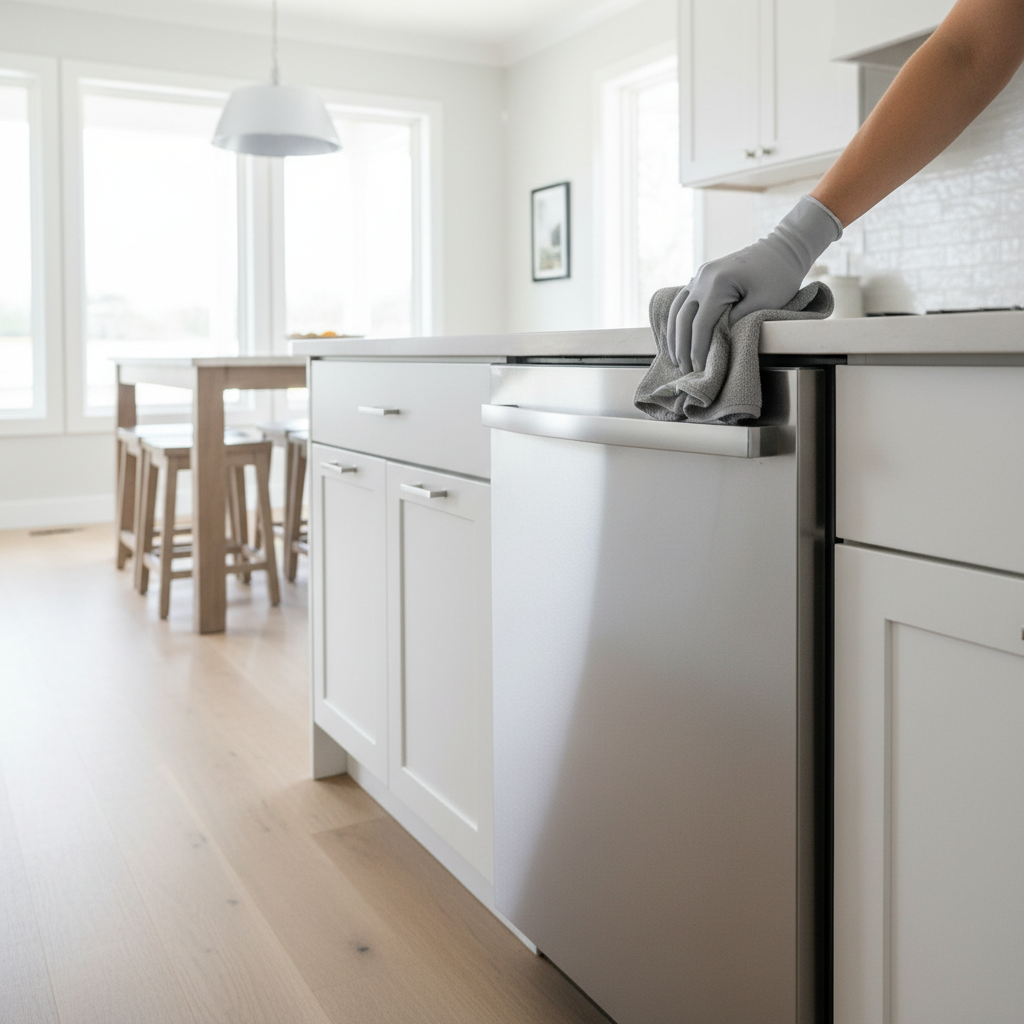
Targeted fixes for common problems (fingerprints, water spots, “cloudy” film)
Fingerprints that come back the next day
- Switch to a cleaner microfiber cloth, fabric softener residue can smear.
- Use less product, then buff longer, streaks often equal leftovers.
- If your appliance has a protective coating, stick to mild soap and water unless the manufacturer says otherwise.
Hard-water spots near dispensers
- Dampen a cloth with a 1:1 mix of vinegar and water, wipe the spots with the grain.
- Follow with a water-only wipe, then dry-buff.
- If you have a lot of scale, you may need to repeat a couple times rather than scrub harder.
Cloudy film after using stainless spray
- “Reset” the surface with warm soapy water, rinse-wipe, dry-buff.
- Pause polishing for a week, many surfaces look better with less product.
Sticky residue (labels, tape marks)
- Try warm soapy water first, then a small amount of isopropyl alcohol on a cloth if needed, spot test in a hidden area.
- Avoid metal scrapers, even if you are tempted.
Key do’s and don’ts to avoid scratches and dullness
- Do keep two cloths in rotation, one for washing, one for buffing, it is the easiest upgrade you can make.
- Do work in small sections on large fridge doors, so cleaner does not dry unevenly.
- Do not use steel wool or rough green scrub pads, even “light” pressure can leave permanent lines.
- Do not spray cleaner directly into seams, moisture can seep into edges or controls, especially on dishwashers.
- Do not mix chemicals, if you are using vinegar, keep it separate from bleach-based products, and when in doubt, check the label.
According to the Centers for Disease Control and Prevention (CDC), you should never mix household cleaners such as bleach and ammonia because dangerous gases can form, and while stainless cleaning rarely needs either product, it is a good safety baseline.
A simple maintenance plan that keeps stainless shiny
Most people do not need a deep clean every time, they need a rhythm that prevents buildup.
- Daily or as needed: dry microfiber wipe on handles and high-touch areas.
- Weekly: full wash, rinse-wipe, and dry-buff routine.
- Monthly: optional light polish, only if you like the look and your surface tolerates it well.
If you have kids, pets, or a lot of cooking, you might do the weekly routine more often, but the method stays the same, less product, more buffing.
When to check your manual or call in help
If your appliance is labeled “fingerprint resistant,” it may have a clear coat, and aggressive cleaners can haze it, so the safe move is to check the manufacturer care guidance before trying solvents or strong degreasers.
For deep scratches, rust spots, or discoloration that does not change after cleaning, a repair technician or a professional appliance refinisher can usually tell you whether it is cosmetic or a sign of damage, especially around seams where moisture may sit.
Conclusion: the shine is mostly technique, not a magic spray
The most reliable path to a streak-free finish is boring in the best way, wipe with the grain, rinse off soap, then buff dry until the surface feels clean. If you try one change today, use two microfiber cloths and commit to the final dry-buff, it solves a surprising number of “why does it still look dirty” moments.
If you want a quick win, clean one door panel using the routine above, then step back and compare it to the untouched section, once you see the difference, it gets easier to keep up.
FAQ
What is the best way how to clean stainless steel appliances without streaks?
Use a mild soap-and-water wipe, then do a separate rinse-wipe, and finish with a dry microfiber buff, most streaks come from leftover soap or polish film rather than “dirty steel.”
Can I use vinegar on stainless steel appliances?
Many people use diluted white vinegar for hard-water spots, but it is smart to keep it brief, avoid soaking seams, and follow with a water wipe and dry-buff, when in doubt, check your appliance manual.
Is Windex safe for stainless steel?
Some glass cleaners can leave streaks or affect certain coated finishes, so if you use one, spot test first, and do not treat it as a one-step solution, you often still need a dry buff.
Why does my stainless steel look cloudy after cleaning?
Cloudiness is often product buildup or minerals from hard water, reset with warm soapy water, rinse-wipe, then buff dry, if you used polish recently, try skipping it for a couple of weeks.
How do I remove scratches from stainless steel?
Cleaning will not remove true scratches, it can only remove grime that makes scratches more visible, for noticeable lines, a stainless scratch kit may help, but results vary and you should follow product instructions carefully.
Can I use olive oil to shine stainless steel?
It can add shine short term, but cooking oils may turn sticky and attract dust, mineral oil or a stainless polish is usually more predictable if you want that finished look.
How often should I clean stainless steel appliances?
A weekly clean works for many households, with quick daily touch-ups on handles, if you cook a lot or have hard water, you may need more frequent spot cleaning near problem areas.
If you are trying to keep a whole kitchen of stainless looking good with less effort, it can help to standardize a small “stainless kit” with two microfiber cloths and one gentle cleaner, so you are not improvising every time fingerprints show up.