
Bedroom lighting ideas cozy ambiance starts with one simple shift: stop trying to make one ceiling light do everything, and build a few small light sources that work together.
If your bedroom feels "fine" in the daytime but oddly cold at night, it’s usually not your furniture or wall color, it’s the lighting mix. Bedrooms need softer contrast, warmer tones, and control at the bedside, otherwise you get glare, shadows, and that hotel-lobby brightness nobody asked for.
This guide focuses on practical choices for 2026 homes and apartments in the US, including what to buy, where to place it, and how to avoid the common mistakes that waste money. You’ll also get a quick self-check, a shopping table, and a few setups that work in real rooms, not just staged photos.
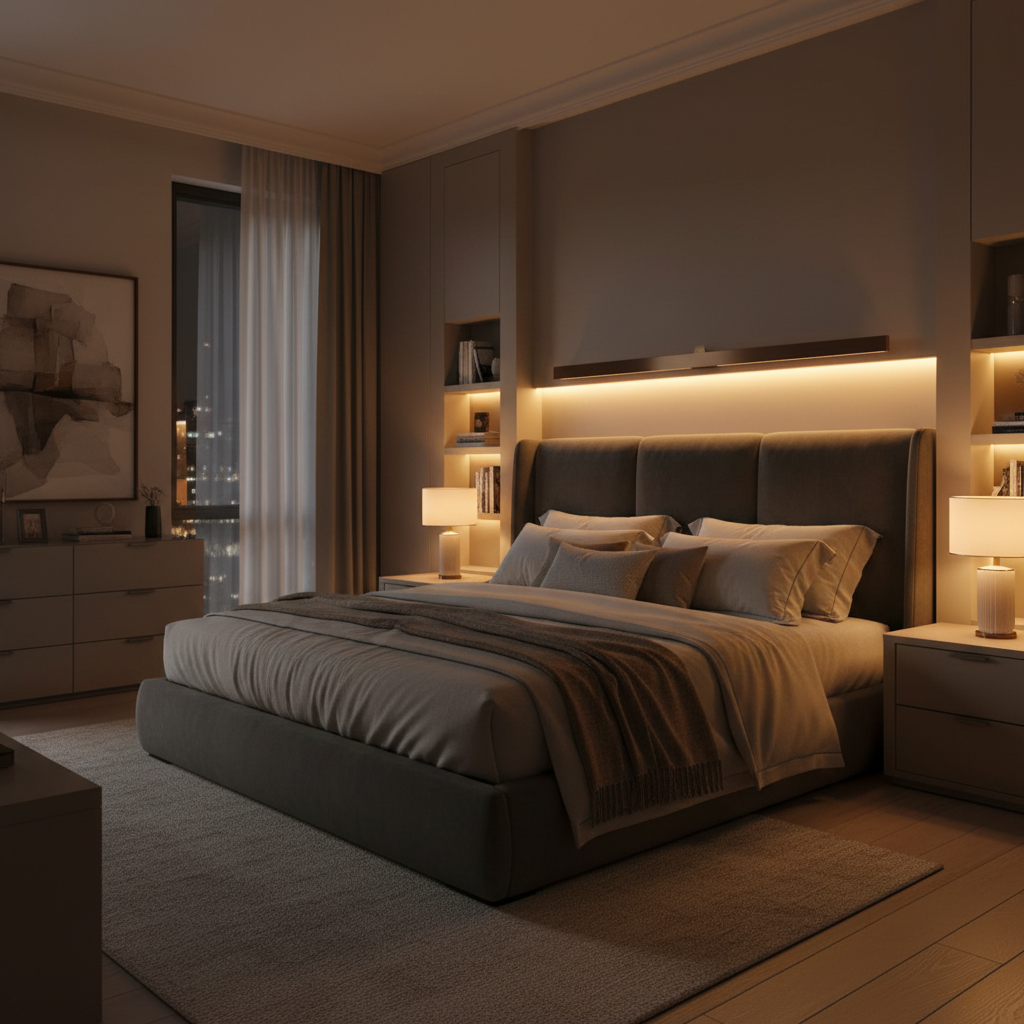
Why your bedroom feels less cozy at night (even if the decor is good)
Most “not cozy” bedrooms share a few lighting problems, and once you spot them, the fix becomes obvious.
- Single-source lighting: one overhead fixture creates flat light and harsh shadows around the bed.
- Too-cool bulbs: cooler white light can read as clinical, especially against whites and grays.
- Glare in your eyeline: bare bulbs, clear glass shades, or high-output LEDs aimed toward the bed.
- No zones: you need different light for reading, winding down, getting dressed, and nighttime navigation.
- Shiny surfaces: mirrors, glossy paint, and glass can bounce light and make the room feel “busy.”
According to the U.S. Department of Energy, LED lighting is typically the most energy-efficient option for residential use, which matters because cozy setups often use multiple lamps. Efficiency lets you add layers without feeling like you’re burning money every evening.
Fast self-check: what your room needs most
Before buying anything, take 2 minutes and answer these. Your “yes” answers tell you which upgrade brings the biggest payoff.
- Do you rely on one overhead light? If yes, add two lower light sources (bedside + corner or wall).
- Do you squint at night on your phone or Kindle? You likely need a dedicated reading beam that doesn’t light the whole room.
- Does the room feel yellow and dim, not cozy? That’s often low-quality bulbs or shades, not “warm ambiance.”
- Do you want “spa calm” but end up with “orange cave”? Use warm light, but keep good color quality and avoid over-dimming.
- Do you wake up fully when you get up at night? Add motion or toe-kick lighting at very low brightness.
If you’re stuck between options, prioritize control. Cozy is less about one perfect fixture and more about being able to choose the mood quickly.
Layering plan that works in most bedrooms (ambient + task + accent)
When people search bedroom lighting ideas cozy ambiance, they usually want that “soft but not dim” feel. Layering is how you get it.
1) Ambient light: the room’s baseline
This is your general glow. If you have overhead lighting, make it gentler with a diffuser shade, lower output bulbs, or a dimmer. If you don’t have ceiling wiring (common in rentals), a tall floor lamp with an uplight shade can stand in for ambient.
2) Task light: the “do stuff” beam
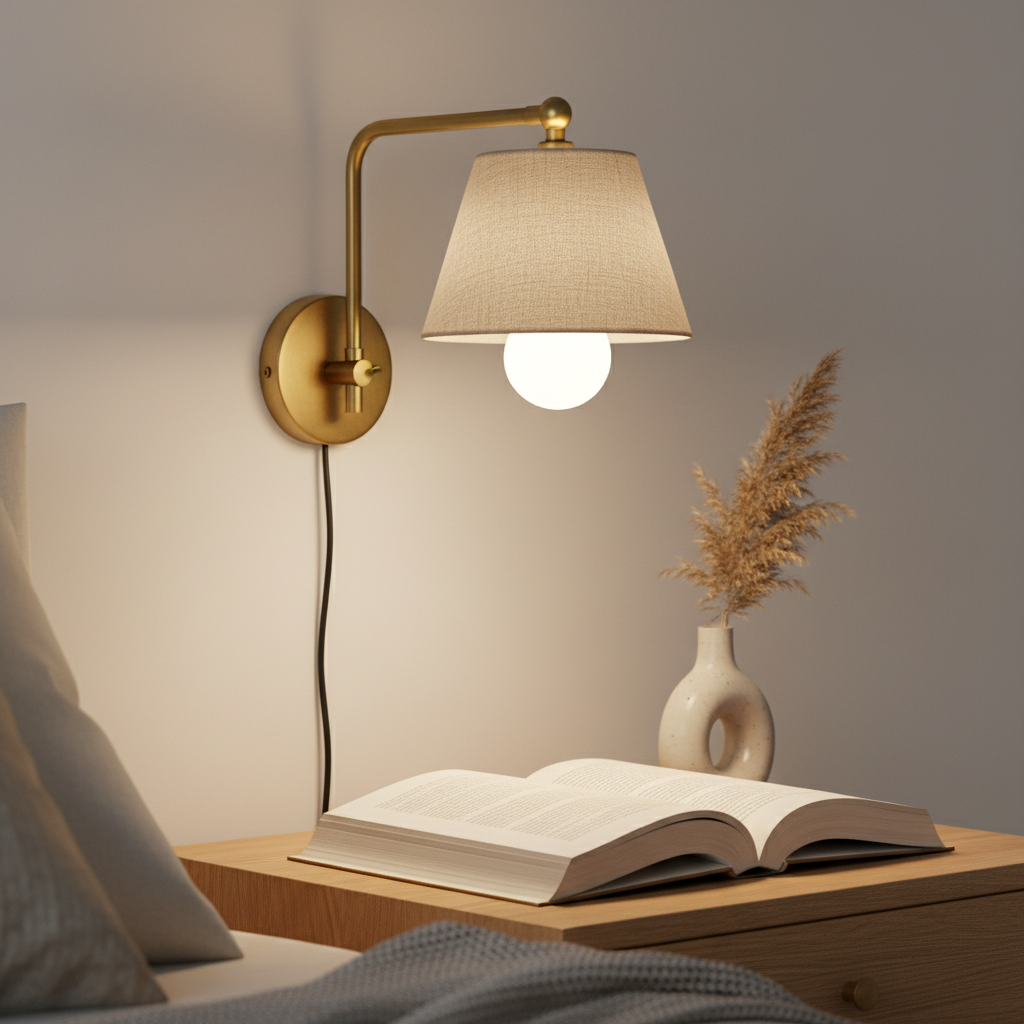
Reading in bed needs focused light aimed down at the page, not a bright room. Swing-arm sconces, directional table lamps, or clip lights (done neatly) work well. The trick is shielding the bulb so it doesn’t shine into your eyes.
3) Accent light: the cozy signal
Accent lighting adds depth: a small lamp in a corner, a soft LED strip behind a headboard, or a picture light over art. This is the layer that makes the room feel intentional, not like a spare bedroom.
Pick the right bulb settings (warmth, brightness, and color quality)
You can buy beautiful fixtures and still miss the vibe if the bulbs are wrong. Here’s the practical target range many bedrooms land in.
- Color temperature: usually 2700K for warm and relaxing; 3000K if you want a slightly cleaner look without going cool.
- Brightness: aim for multiple lower-lumen sources instead of one high-lumen blast. For bedside lamps, many people like something in the “soft to medium” range, then add dimming for flexibility.
- Color rendering (CRI): higher CRI typically makes fabrics, skin tones, and wood look more natural. If product specs list CRI, it can be worth paying attention.
According to ENERGY STAR, certified LED bulbs meet performance requirements for efficiency and quality, which can help you avoid flicker and inconsistent color when you dim, though results still vary by bulb and dimmer pairing.
A quick shopping table: what to buy for common goals
If you want a simple plan, match your goal to a small set of purchases. You don’t need all of these at once.
| Goal | What to add | Placement | Why it helps |
|---|---|---|---|
| Instant cozy, minimal effort | Two warm bedside lamps + dimmable bulbs | Both sides of bed | Creates symmetry and softer shadows |
| Better reading in bed | Adjustable sconce or swing-arm lamp | Above/next to headboard | Focused beam without lighting the whole room |
| Hotel-like mood | Floor lamp + small accent lamp | Corner + dresser | Adds depth and “layers” fast |
| Soft night navigation | Low-level motion night light or LED strip | Toe-kick, under-bed, hallway side | Reduces harsh wake-ups at 2 a.m. |
| Rental-friendly upgrade | Plug-in sconces + cord covers | Bedside wall | Looks built-in without hardwiring |
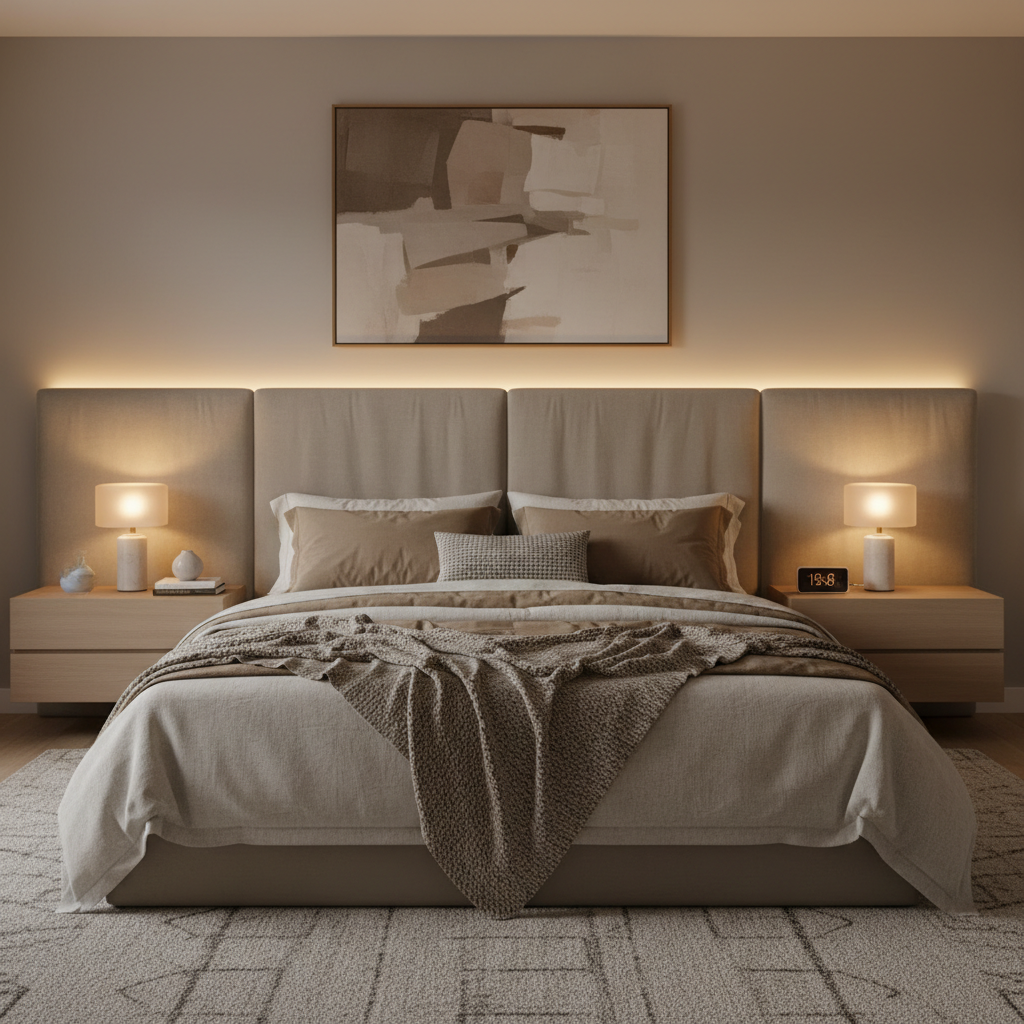
Room-by-room setups: small bedroom, shared bedroom, and renter-safe options
Small bedroom (limited surfaces)
Go vertical: wall sconces (hardwired or plug-in) free up nightstand space. If you only have one nightstand, balance the room with a slim floor lamp on the other side so the light doesn’t feel lopsided.
Shared bedroom (different schedules)
Split the lighting controls. A directional reading light on each side plus a separate ambient lamp across the room prevents one person’s routine from dominating. Many couples also like very low night lighting so nobody reaches for the overhead switch.
Renter-safe “big effect” kit
- Plug-in wall sconces with a warm bulb
- One floor lamp with a shade that hides the bulb
- Peel-and-stick or clip-managed cable routing so cords don’t look messy
In many rentals, the visual mess of cords is what kills the ambiance, not the lamp choice. Clean cable lines are an underrated upgrade.
Practical steps: set your cozy lighting in one evening
If you want results without overthinking, this order works in most homes.
- Step 1: Choose your “wind-down” scene: bedside lamps on, overhead off. Start there.
- Step 2: Add one accent light (dresser, corner, or behind headboard) at low brightness.
- Step 3: Fix reading comfort with an adjustable task light aimed at the book, not the room.
- Step 4: Put the cozy scene on a dimmer, smart plug, or a single switch routine, so you actually use it.
Small detail, big difference: use lampshades that diffuse light. Clear glass and exposed bulbs look stylish in photos, but in a bedroom they often feel harsher than you expect.
Common mistakes (and what to do instead)
- Mistake: Dimming everything too far. Do instead: keep ambient low, but let task lighting stay usable so the room feels calm, not gloomy.
- Mistake: Mixing bulb colors randomly. Do instead: keep most bulbs in the same temperature range so the room doesn’t look patchy.
- Mistake: Putting bright lights at eye level. Do instead: choose shaded fixtures or indirect light (bounce off wall/ceiling).
- Mistake: Ignoring switches and control. Do instead: add smart plugs or a bedside control so cozy lighting is one tap away.
For any electrical changes like hardwiring sconces, adding dimmers, or troubleshooting flicker, it’s usually safer to consult a licensed electrician, especially in older homes where wiring varies.
Key takeaways you can use right now
- Cozy comes from layers, not from a single “perfect” fixture.
- Warm bulbs plus good control (dimming or routines) beat chasing trendy lights.
- Reduce glare with shades, indirect light, and better placement.
- Start with two bedside sources, then add one accent light for depth.
Conclusion: a cozy bedroom is mostly a lighting plan
When you treat lighting like a small system, the room changes fast, usually without touching the furniture. If you take one action this week, make your bedside area the “default scene” and stop relying on the overhead light. If you take a second action, add one soft accent source across the room to create depth, that’s often what makes bedroom lighting ideas cozy ambiance feel real in your space.
FAQ
What are the best bedroom lighting ideas for cozy ambiance on a budget?
Two matching (or at least similar) bedside lamps with warm bulbs usually give the biggest return. Add a single accent lamp on a dresser or shelf if the room still feels flat.
Should I use 2700K or 3000K for a cozy bedroom?
Many bedrooms feel cozier at 2700K, while 3000K can look a bit cleaner and still warm. If your room has lots of warm wood, 2700K often blends better; with crisp whites, 3000K can feel balanced.
How do I make my overhead light less harsh without replacing the fixture?
Try a dimmable bulb and a diffuser-style shade if your fixture allows it, or use the overhead less and rely on floor and table lamps. In practice, switching the “default” to lamps is the simplest fix.
Are LED strip lights a good idea for cozy ambiance?
They can be, if you keep them indirect and warm, like behind a headboard or under a bed frame. The “cozy” effect usually disappears when the strip is visible or too bright.
What’s the easiest renter-friendly lighting upgrade?
Plug-in wall sconces near the bed plus a shaded floor lamp can mimic built-in lighting without hardwiring. Cord management matters here, otherwise it can look temporary.
Why do my dimmable LEDs flicker?
Flicker often comes from bulb and dimmer incompatibility, or from older dimmer switches. If changing bulbs doesn’t help, consider asking an electrician to review the dimmer and wiring, since electrical setups vary.
How many light sources should a bedroom have for a cozy feel?
A lot of rooms feel good with three: two bedside sources plus one accent or floor lamp. Larger rooms or rooms with dark paint may need one more layer to avoid “dead corners.”
If you’re trying to get a cozy look but keep bouncing between “too bright” and “too dim,” it may help to plan a simple three-light setup (bedside, ambient, accent) and pick bulbs that match, then refine with dimming and placement instead of buying more fixtures.