
Best mesh laundry bags durable options solve a very specific headache: your “gentle” cycle still twists straps, pills knits, and eats socks, and you only notice when a bra hook catches or a sweater comes out fuzzy.
A good mesh bag is not just a net with a zipper, it’s a small piece of laundry equipment that controls friction, tangling, and how water flows through a load. Pick the wrong one and you get busted seams, stuck zippers, or a bag that turns into a lint trap.
This guide focuses on what actually matters in daily use: mesh density, seam construction, zipper design, sizing by garment type, and how to avoid the common “I bought a set and none of them fit” problem. You’ll also get a quick checklist and a comparison table to make the choice faster.
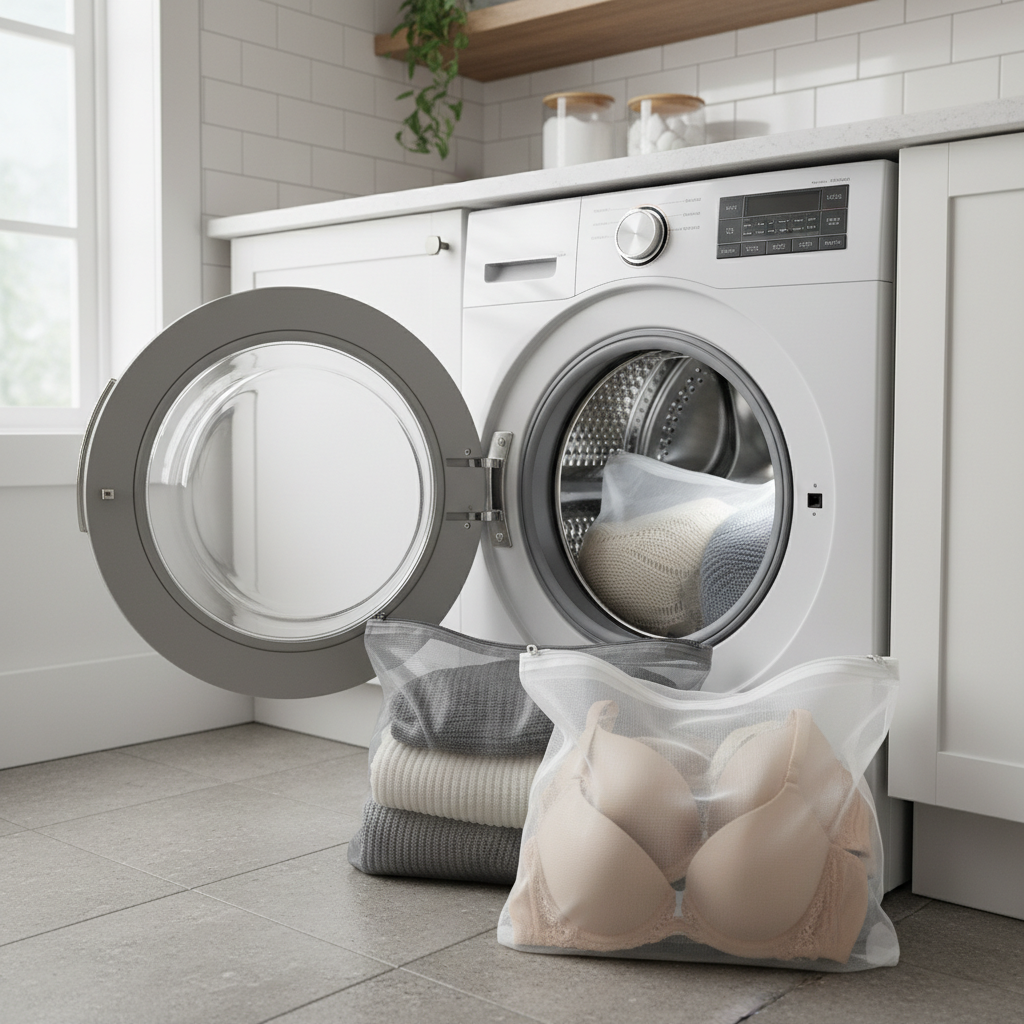
What “durable” really means for mesh laundry bags
Durability is usually less about the mesh itself and more about the parts that fail first: seams, zipper teeth, and the zipper stop. If those go, the bag turns into a snag risk instead of protection.
- Reinforced seams: Look for double stitching or binding tape along edges. Single-stitched seams can split when a bag is packed tight.
- Quality zipper with a cover: A zipper garage or fabric flap keeps the pull tab from scraping your clothes and reduces “zipper creep” mid-wash.
- Heat resistance: Some bags deform in high heat. If you machine-dry (not always recommended for delicates), you want materials that hold shape.
- Shape stability: A structured bra bag or cylinder can protect molded cups better than a floppy pouch, but only if the frame is solid.
According to FTC guidance on textile labels, you should follow garment care instructions on the clothing tag; mesh bags help, but they don’t override “hand wash only” warnings for certain fabrics.
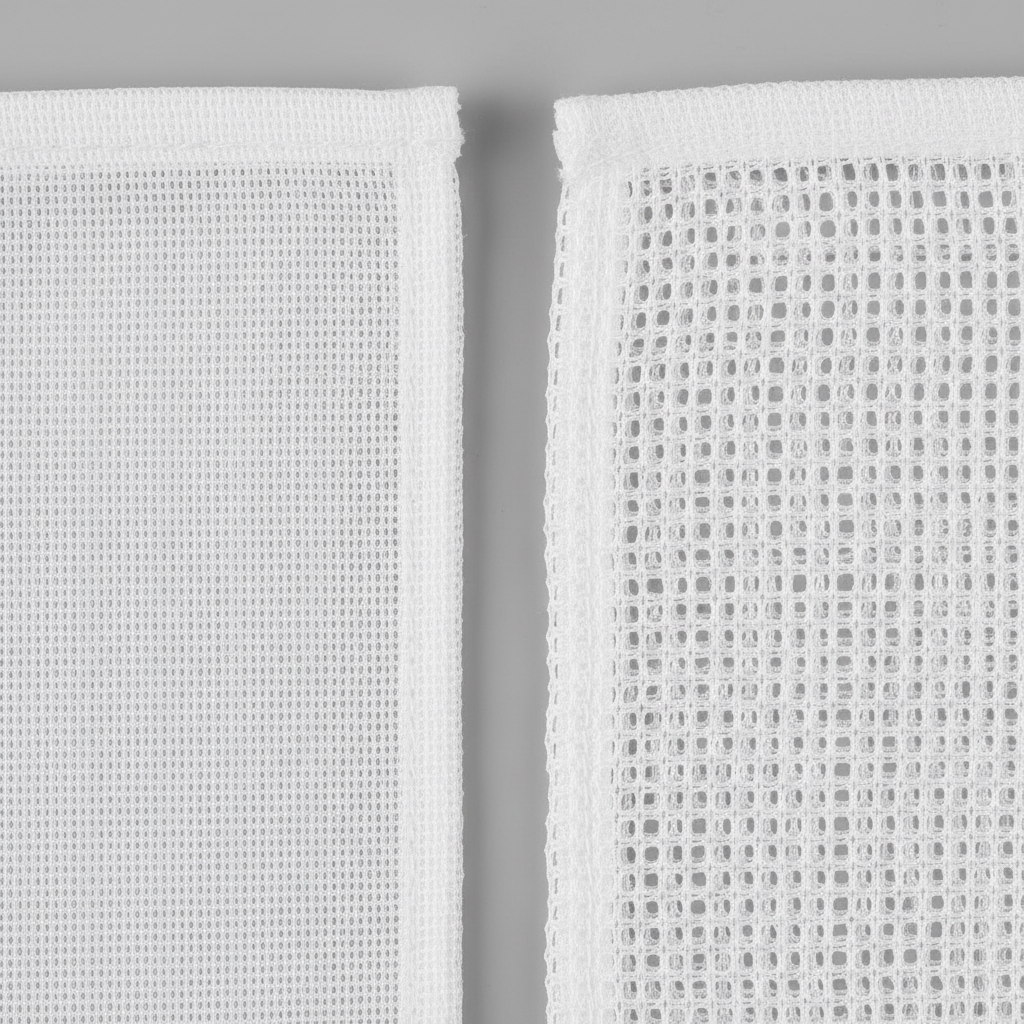
Mesh types and why the holes matter
Mesh “texture” changes how much abrasion your fabric sees. In real laundry rooms, most problems come from too much rubbing, not from water itself.
Fine mesh (small holes)
Best for lightweight knits, lace, lingerie, and anything that pills easily. It also traps less hardware contact, which is why it’s popular for delicates.
- Pros: better snag prevention, smoother surface against fabric
- Trade-offs: can restrict water flow if overstuffed, may hold lint
Medium/coarse mesh (larger holes)
Best for sturdier items that still tangle, like socks, baby clothes, or athletic wear with straps. Water moves more freely, so rinsing can be easier.
- Pros: better rinse-through, faster drying
- Trade-offs: more friction exposure, hooks can poke out if the weave is loose
If you’re buying one set for everything, pick mostly fine mesh plus one or two larger-mesh bags for bulky items. That mix tends to cover more real-life laundry needs.
Quick self-check: which bag do you actually need?
If you’ve ever bought “the popular pack” and still felt unsure, it’s usually because the sizing didn’t match your wardrobe. Use this quick list before you add anything to cart.
- You wash bras with hooks or underwire → structured bra bag or fine mesh bag with a zipper cover
- You lose socks or kids’ items → medium mesh, medium size, easy-open zipper pull
- You wash sweaters or cardigans → large fine mesh bag, don’t overfill, pick reinforced seams
- You have activewear with straps → medium mesh, long rectangle bag to reduce twisting
- You wash scrubs or small work items → larger mesh is fine, focus on zipper durability
One more honest check: if you often overload your washer, even the best mesh laundry bags durable sets will wear out faster because the bag gets crushed and dragged.
Comparison table: choosing by use-case
This table is a practical shortcut. You can still mix-and-match, but it gives you a “default” starting point.
| Use case | Best mesh type | Ideal bag size/shape | Must-have durability feature |
|---|---|---|---|
| Lingerie, lace, hosiery | Fine | Small/medium flat pouch | Covered zipper + smooth seams |
| Bras (underwire/molded cup) | Fine | Structured bra dome/cylinder | Rigid frame + zipper garage |
| Socks, baby clothes | Medium | Medium rectangle | Locking zipper pull |
| Sweaters, knits | Fine | Large rectangle | Reinforced edges/binding |
| Athletic wear with straps | Medium | Long rectangle | Strong zipper stops |
How to use mesh laundry bags so they last (and your clothes do too)
Most “my bag ripped” stories come down to loading habits and zipper handling. The fixes are simple, but they’re easy to ignore on a busy laundry day.
Step-by-step habits that make a difference
- Close all hooks and zippers on the garment before it goes in the bag. The bag is not armor, sharp hardware still chews mesh.
- Fill to about 2/3 capacity. You want room for water to circulate and for items to move gently, not compress into a tight ball.
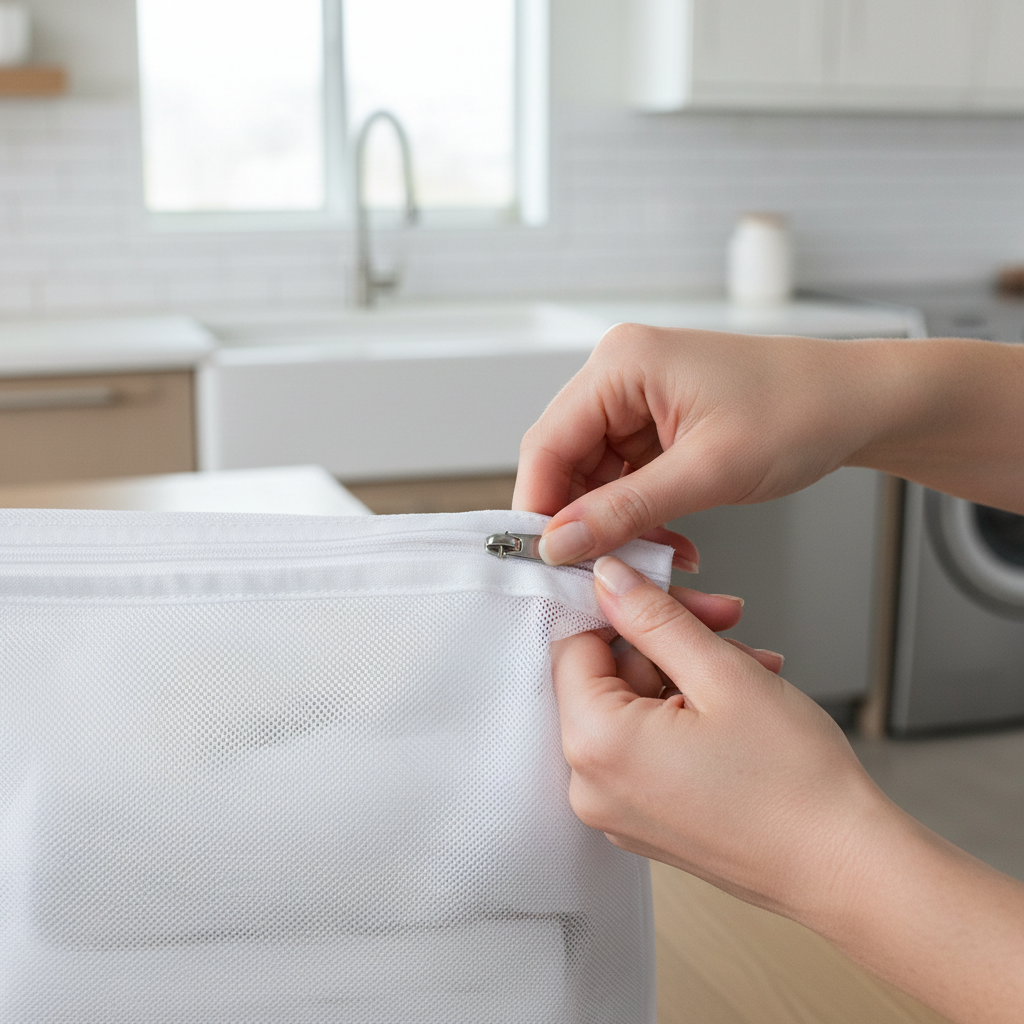
- Zip fully and tuck the pull into the zipper cover if your bag has one, this reduces catching on other items.
- Sort by weight: don’t put a delicate bra bag in the same load as heavy jeans if you can avoid it.
- Air-dry bags when possible. Heat can shorten life for some plastics and coatings.
According to ENERGY STAR laundry tips, washing full loads (without overloading) can improve efficiency; for delicates, “full” should still mean the drum has space so items tumble rather than grind.
Common mistakes that make “durable” bags fail early
It’s tempting to blame the bag, but a few patterns show up over and over.
- Overstuffing: seams pop when the bag is packed tight and then whipped around in the spin cycle.
- Mixing heavy items: towels and denim act like sandpaper and also pin the bag against the drum.
- Buying only tiny bags: if everything gets crammed into small pouches, you lose water flow and add stress to stitching.
- Ignoring zipper design: exposed metal pulls can scuff fabrics, and cheap zippers can open during washing.
- Assuming “mesh” equals “safe”: some fabrics still need gentler detergents or cold water to reduce fiber damage.
If you’re trying to protect very fragile fabrics, it’s usually smarter to reduce friction across the whole system: gentler cycle, lower spin, less detergent residue, and fewer heavy garments in the same load.
When to consider specialty bags or professional help
Most households do fine with a small set of well-built bags, but a few cases call for extra caution.
- High-end lingerie or vintage knits: you may want a structured bag plus hand-wash detergent, and in some cases true hand washing.
- Items with heavy embellishment (beads, sequins): even in a bag, they can crack or scrape, a professional cleaner might be the safer route.
- Allergies or skin sensitivity: switching wash method can help, but if irritation continues, consider asking a healthcare professional, since fabric care is only one possible factor.
Think of it this way: the best mesh laundry bags durable choice reduces risk, it doesn’t eliminate it for every fabric, every washer, every detergent.
Key takeaways and a simple buying plan
If you want one clear plan, start with three bags and expand only if you keep hitting a gap.
- Buy 1 structured bra bag if you wash bras often, it prevents cup crushing and hardware tangles.
- Add 1–2 fine mesh bags in medium/large sizes for sweaters, lace tops, and anything prone to pilling.
- Include 1 medium-mesh rectangle for socks and small items you lose or that tangle.
You’ll spend less time wrestling with random sizes, and you’ll replace bags less often because you’re using each one where it holds up best.
FAQ
- What makes the best mesh laundry bags durable for delicates?
Look for reinforced seams, a smooth fine mesh, and a zipper that stays closed with a cover or locking pull, those are the parts that usually determine lifespan. - Is fine mesh always better than coarse mesh?
Not always. Fine mesh is great for snag-prone fabrics, but medium mesh can rinse better for socks or activewear, many people end up using both. - Can I put mesh laundry bags in the dryer?
Many can handle low heat, but heat may shorten lifespan depending on materials. If your goal is durability, air-drying the bags is a safer default. - Why do my mesh bags come open in the washer?
Usually it’s the zipper design or the pull tab catching on other items. A zipper garage, locking pull, or simply tucking the pull can reduce this. - How full should a laundry bag be?
Aim for about two-thirds full so water can circulate and items can move. Overfilling increases seam stress and can trap detergent residue. - Do mesh bags prevent pilling on sweaters?
They can reduce friction, but pilling also depends on fiber type, wash cycle, and load mix. Using a gentle cycle and keeping towels/denim out helps a lot. - Can I wash shoes in a mesh laundry bag?
Some people do, but shoes are heavy and can damage bags and washer drums. If you try it, use a sturdier bag and consider checking your washer manual.
If you’re sorting delicates every week and want a more “set it and forget it” setup, consider building a small bag system by garment type, then replacing only the sizes you actually use instead of rebuying big mixed packs.