
How to organize under sink bathroom spaces usually comes down to two problems: pipes steal your best shelf space, and the stuff you store there tends to be the messy, half-used kind.
If you open the cabinet and feel a small spike of annoyance, you are not alone. This spot becomes a catch-all for backups, cleaning products, and “I might need this later” items, which is exactly why it gets out of control.
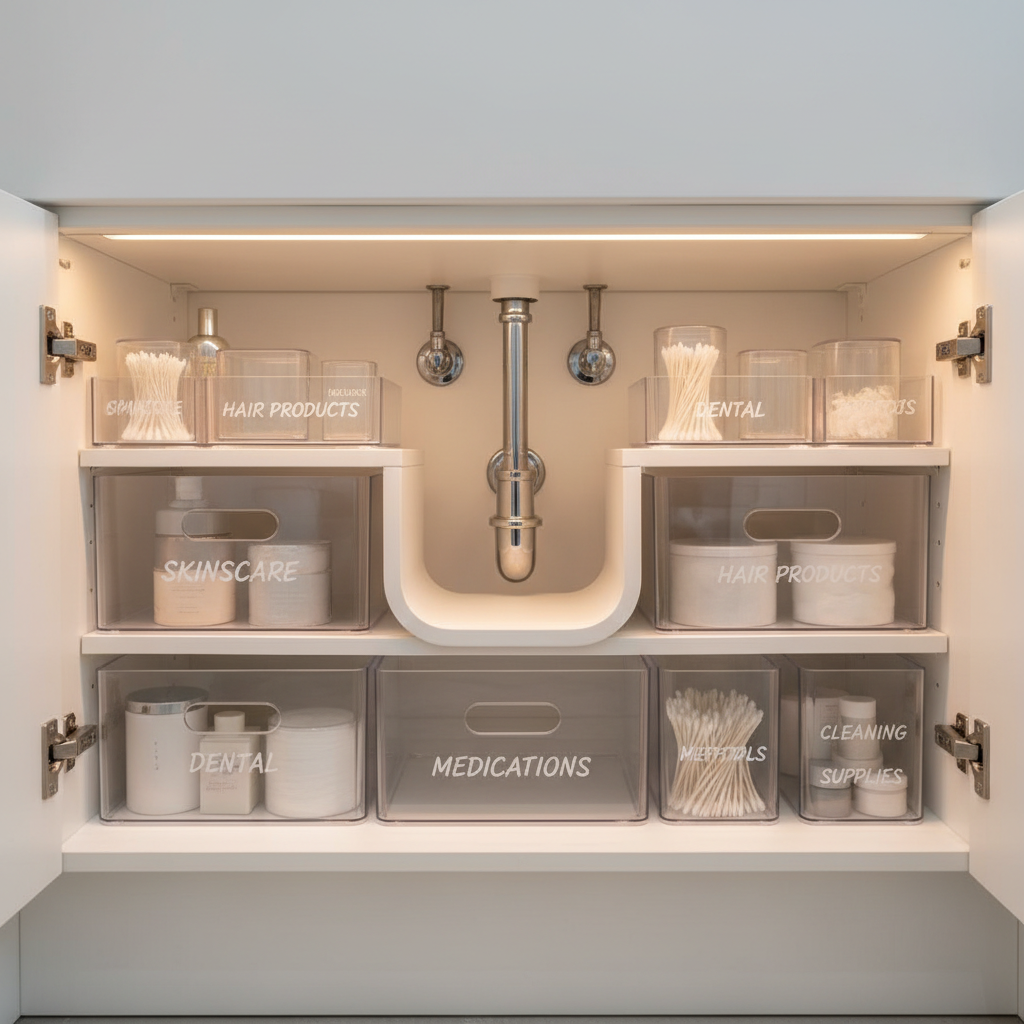
This guide focuses on what actually works in most American bathrooms: quick sorting rules, a layout that respects plumbing, and containers that keep leaks and drips from becoming a bigger headache.
One note before we start, under-sink areas can hide moisture, mold, or chemical mixing risks, so you will see a few safety callouts along the way.
Start with a fast reset: empty, wipe, and spot problems
Before you buy organizers, you need a clean baseline. Pull everything out, yes everything, and give yourself a blank cabinet for five minutes.
- Wipe and dry: Use a mild cleaner, then dry the base so you can notice new moisture later.
- Check for leaks: Look at the P-trap and supply lines. If you see active dripping or swollen particleboard, it may be time for a plumber.
- Declutter ruthlessly: Toss empty bottles, crusty sponges, and products you do not use.
According to U.S. Environmental Protection Agency (EPA)... indoor dampness can contribute to mold growth, and bathrooms are common trouble zones, so a quick moisture check here pays off.
Decide what belongs under the sink (and what should not)
The easiest way to keep this cabinet organized is to limit what earns a spot. Under-sink storage works best for categories you reach for often, plus a few backups.
Usually worth storing here
- Daily skincare backups, contact solution, cotton pads, tissues
- Bathroom cleaning supplies you use in this room
- Hair tools that fit safely (cool, cord wrapped, away from water)
- Toilet paper overflow if you do not have a linen closet
Better stored elsewhere
- Medications: Bathrooms run humid, which may affect some meds, check the label and ask a pharmacist if unsure.
- Flammables or strong chemicals: Paint thinner and similar items belong in safer storage areas, not next to a water source.
- Anything you never use but keep “just in case”
When people ask how to organize under sink bathroom cabinets, the real win is often subtraction, not a fancier bin.
Pick a layout that works with pipes, not against them
Plumbing creates awkward dead zones, so your plan should assume you will use vertical space and pull-out access.
- Create two zones: left and right of the pipe, plus a shallow front zone for quick-grab items.
- Use a U-shaped shelf or a stackable shelf that leaves room for the drain trap.
- Prefer pull-outs (sliding drawers or bins) so you can reach the back without unloading the front.
If you are renting or do not want drilling, you can still get 80% of the benefit with freestanding shelves, tension rods, and labeled bins.
Organizers that actually help (and what each one is best for)
Not every organizer earns its keep under a sink. The best choices prevent spills, maximize height, and make it easy to put things back in the right place.
| Organizer | Best for | Watch-outs |
|---|---|---|
| Sliding 2-tier under-sink drawer | Everyday items, cleaning sprays, backups | Measure around pipes, check height for tall bottles |
| Clear handled bins | Grouping by category, easy pull-and-see | Too deep can become “junk tubs” |
| Waterproof tray or drip mat | Leak protection, easy wipe-down | Still fix leaks, do not treat as a solution |
| Lazy Susan turntable | Small bottles, skincare backups, stain remover pens | Needs clearance to spin, avoid heavy items |
| Over-the-door pocket organizer | Brushes, razors, small packets, travel sizes | Door must close cleanly, avoid overstuffing |
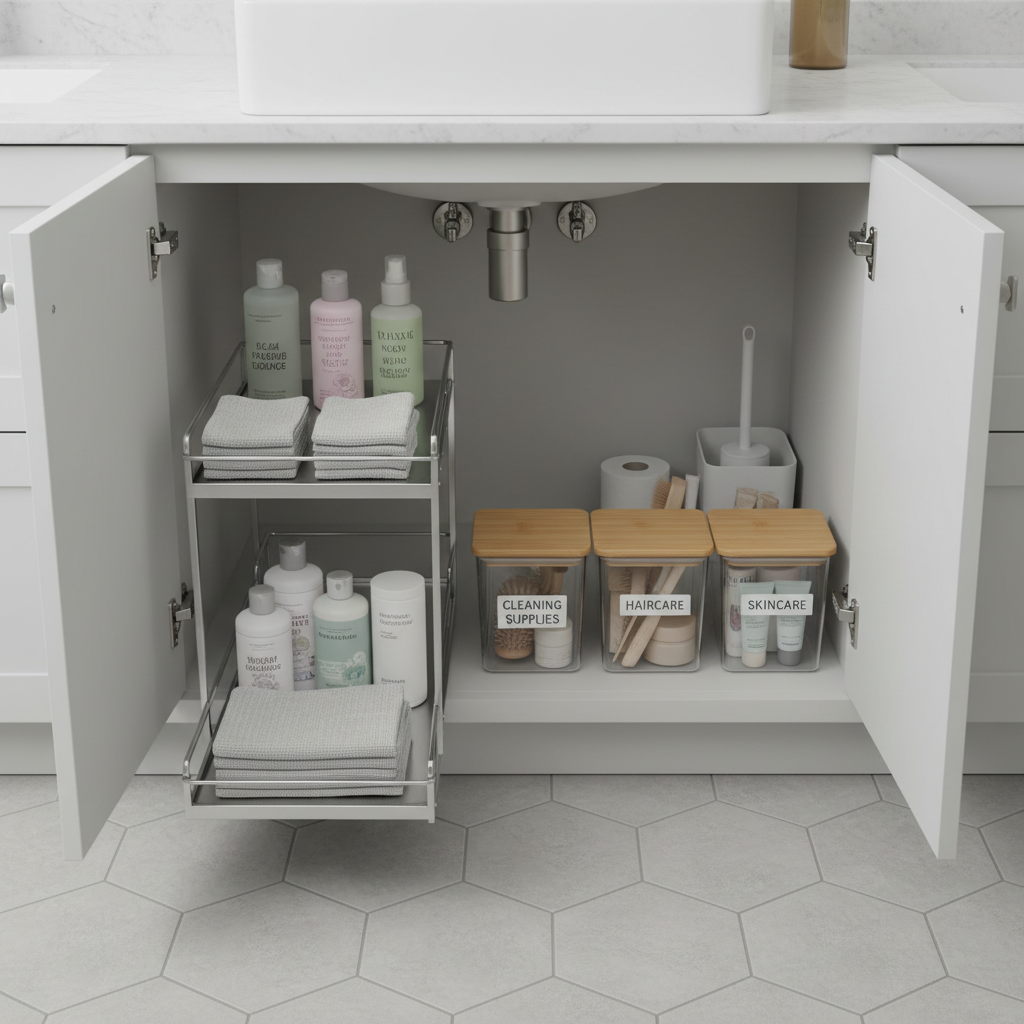
If you only buy one thing, many households get the most value from a sliding under-sink drawer, because it turns wasted depth into usable access.
A quick self-check: which under-sink situation are you in?
Different problems call for different setups. Use this quick list to stop guessing.
- You lose items in the back: you need pull-outs, not more shelves.
- Everything falls over: you need bins with sides and a “one category per bin” rule.
- You have frequent drips: you need a liner plus a plan to repair, and keep paper goods elsewhere.
- You share the bathroom: you need labeled zones per person, even if they are small.
- Cabinet is tiny: use door storage and keep only the basics under the sink.
This step matters because how to organize under sink bathroom storage is less about aesthetics and more about removing the friction that makes people stop maintaining it.
Step-by-step: a practical setup you can finish in one hour
Here is a sequence that tends to work without turning into a weekend project.
1) Sort into four piles
- Daily use: items you reach for at least weekly
- Backups: unopened replacements
- Cleaning: products for this bathroom
- Relocate: everything else
2) Assign zones inside the cabinet
- Front: daily use in a shallow bin
- Left side: cleaning items, grouped by task
- Right side: backups, grouped by type
- Door: small tools and grab-and-go items
3) Containerize, then label
- Put sprays upright in a bin so one small leak does not spread.
- Use labels that describe function, not brand names, like “Toilet,” “Sink,” “Hair,” “First Aid.”
- Keep one small “odds” bin if you must, but make it the smallest container you own.
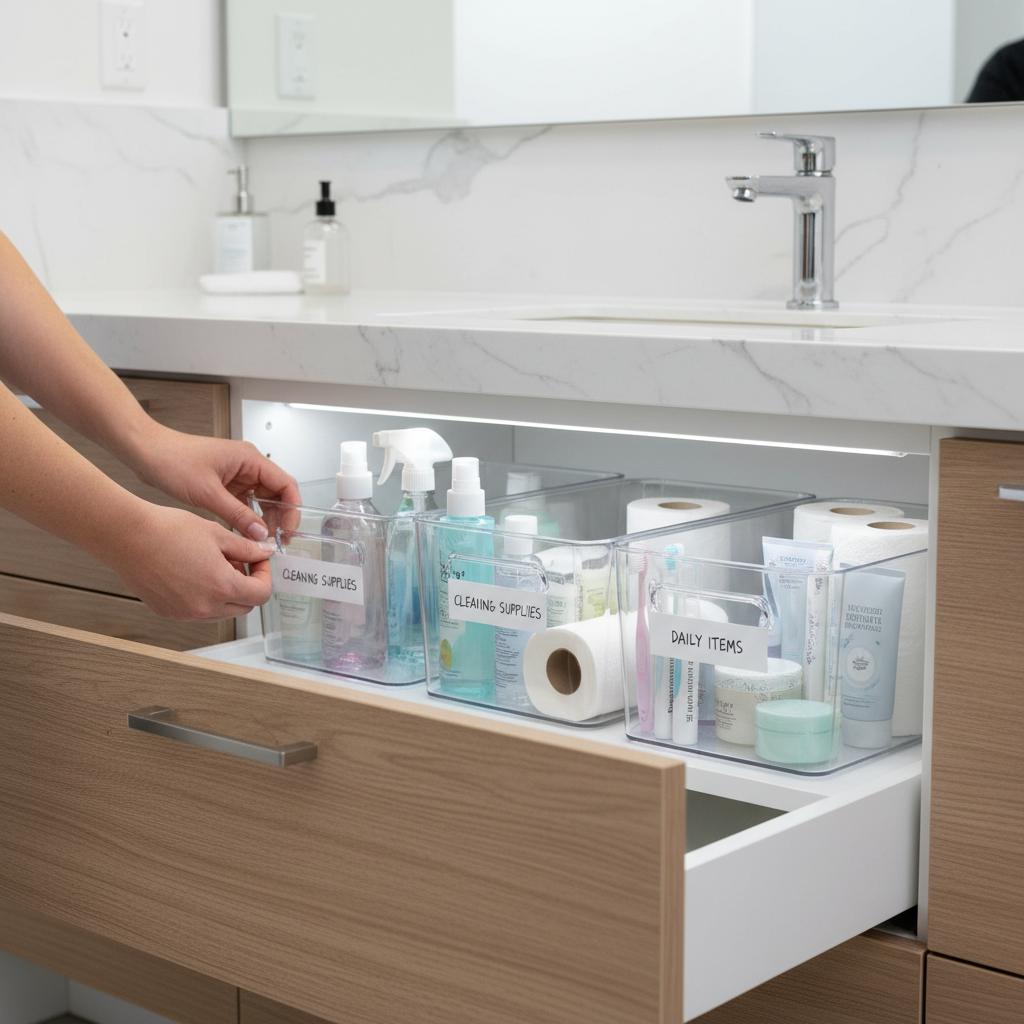
When this system works, you notice it in a week: you stop buying duplicates, you stop knocking bottles over, and you can wipe the cabinet base without a full teardown.
Safety and maintenance: the small habits that keep it organized
This cabinet sits next to water and chemicals, so a little caution matters.
- Do not mix chemicals: Never combine cleaners, and keep products in original bottles so directions stay available. According to Centers for Disease Control and Prevention (CDC)... mixing household cleaners can create dangerous gases, so storage should reduce accidental cross-use.
- Keep paper goods elevated: If you store toilet paper here, put it in a lidded bin and off the base.
- Set a 60-second reset: Once a week, put stray items back in the right bin, toss empties, and wipe obvious drips.
- Watch expiration and texture changes: Many products degrade over time, if something smells off or separates oddly, discard it.
Key takeaways: use pull-out access, assign zones around plumbing, store only what belongs in this room, and protect the cabinet base from moisture.
When it is time to get professional help
If you see recurring moisture, warped cabinet floors, or any sign of mold growth that keeps coming back after cleaning, it may be worth calling a plumber or a qualified remediation professional. The goal is not a perfect shelf, it is preventing a small leak from turning into a cabinet replacement.
If you have respiratory symptoms or suspect extensive mold, consider talking with a medical professional as well, since sensitivity varies a lot by person.
Conclusion: make it easy to put things back
The best under-sink setup is the one you can maintain when you are tired. If you do two things today, make them these: add pull-out access and commit to categories so every item has a home.
Once you see what fits and what you actually use, you can upgrade containers slowly, but the core system will already be doing the heavy lifting.
FAQ
How do I organize under a sink with a pedestal or very little cabinet space?
If there is no cabinet, use a slim rolling cart, a lidded basket, or wall-mounted storage, and keep cleaning products in a separate caddy you can carry in when needed.
What is the best way to store cleaning supplies under the bathroom sink?
Group by task in a handled bin, like “toilet” and “glass,” keep caps tight, and avoid mixing products. If kids visit your home, consider child-safety latches.
How can I prevent leaks from ruining the cabinet floor?
A waterproof liner or tray helps with small drips, but it is not a fix. If you keep seeing moisture, check connections and consider a plumber, especially if wood swells.
Should I keep medications under the bathroom sink?
Many people do, but humidity can be an issue. Check storage instructions on the label, and if unsure, a cool, dry closet shelf is usually a safer bet.
How do I keep the area from getting messy again?
Use fewer, larger categories, label them, and keep a small weekly reset. The biggest factor is making it faster to put items away than to drop them in randomly.
What containers work best for small items like razors and travel minis?
Door pockets, a small divided bin, or a shallow tray prevents tiny items from disappearing. If you share the bathroom, consider one small bin per person.
How often should I clean under the sink?
A quick wipe monthly is common, and more often if you store liquids. If you notice odors or dampness, clean and investigate sooner.
If you are trying to organize a cramped cabinet and want a more done-in-one approach, it often helps to share your cabinet measurements and what you need to store, then build a simple shopping list around one pull-out and two or three bins instead of buying random organizers.