
How to organize gardening tools starts with one simple goal: give every tool a “home” so you stop wasting time digging through piles in the garage.
If your garage is doing double duty as storage, workshop, and drop zone, garden gear gets messy fast, especially long-handled tools that don’t fit in bins and small hand tools that disappear. The good news is you don’t need a full remodel, you need a plan that matches how you actually garden.
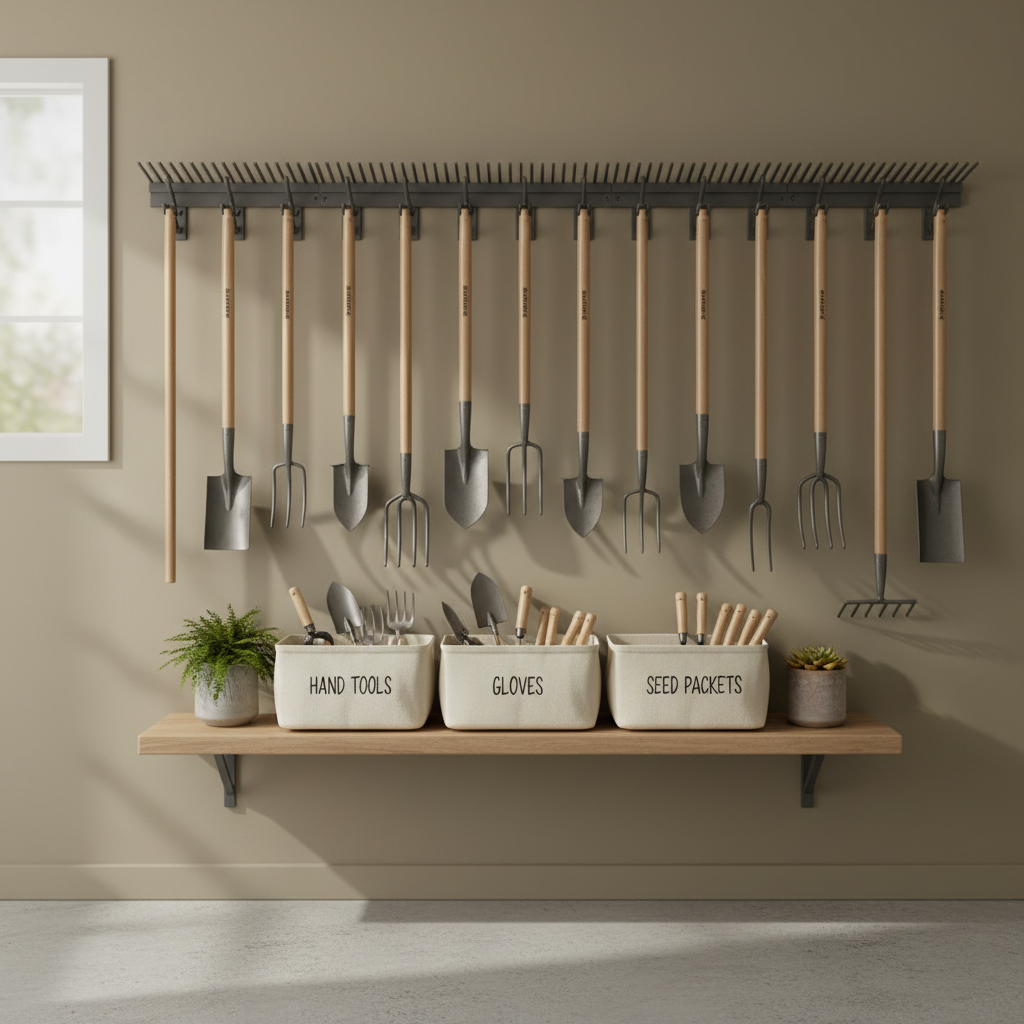
What trips most people up is organizing by “what fits” instead of organizing by “what gets used together.” Once you build a few zones and pick the right storage type for each tool category, the garage stays tidy with less effort.
Below is a practical approach: quick triage, smart storage options, an easy layout, then a simple maintenance routine that keeps it from sliding back into chaos.
Start with a 15-minute sort (it matters more than buying racks)
Before you mount hooks or buy bins, do a fast sort on the floor. You’re not trying to Marie Kondo your garage, you’re trying to stop storing unlike items together.
- Long-handled tools: rakes, shovels, hoes, cultivators, brooms
- Hand tools: pruners, trowels, weeding knives, gloves
- Power + watering: trimmer, blower, extension cords, hoses, sprinklers
- Soil + chemicals: fertilizer, seed, pesticides, sprayers
- Seasonal/rarely used: bulb planters, frost cloth, extra pots
Then make three quick piles: keep, toss/recycle, and “not sure.” That “not sure” pile is where clutter hides, so set a 7-day deadline to decide.
Choose storage by tool type (not one-size-fits-all)
Different tools fail in different storage. Long tools topple, sharp tools get dull, liquids leak. Matching storage to the tool prevents damage and reduces cleanup.
Use this table as a quick chooser.
| Tool category | Best storage | Why it works | Common mistake |
|---|---|---|---|
| Long-handled tools | Wall hooks, slatwall, vertical tool rack | Keeps heads off the floor and tools visible | Leaning in a corner where they fall and bend |
| Hand tools | Shallow labeled bin, pegboard, magnetic strip | Stops “small stuff” from disappearing | Deep tote that turns into a junk drawer |
| Pruners & blades | Sheaths, small case, dedicated hook | Protects edges and fingers | Tossing loose into a bin with metal tools |
| Hose & watering | Hose reel, wall hook, drip kit box | Prevents kinks and tangles | Leaving hoses piled on the floor |
| Fertilizer/chemicals | Sealed cabinet or lidded bin on a high shelf | Reduces spills and limits access | Storing on the floor near heat sources |
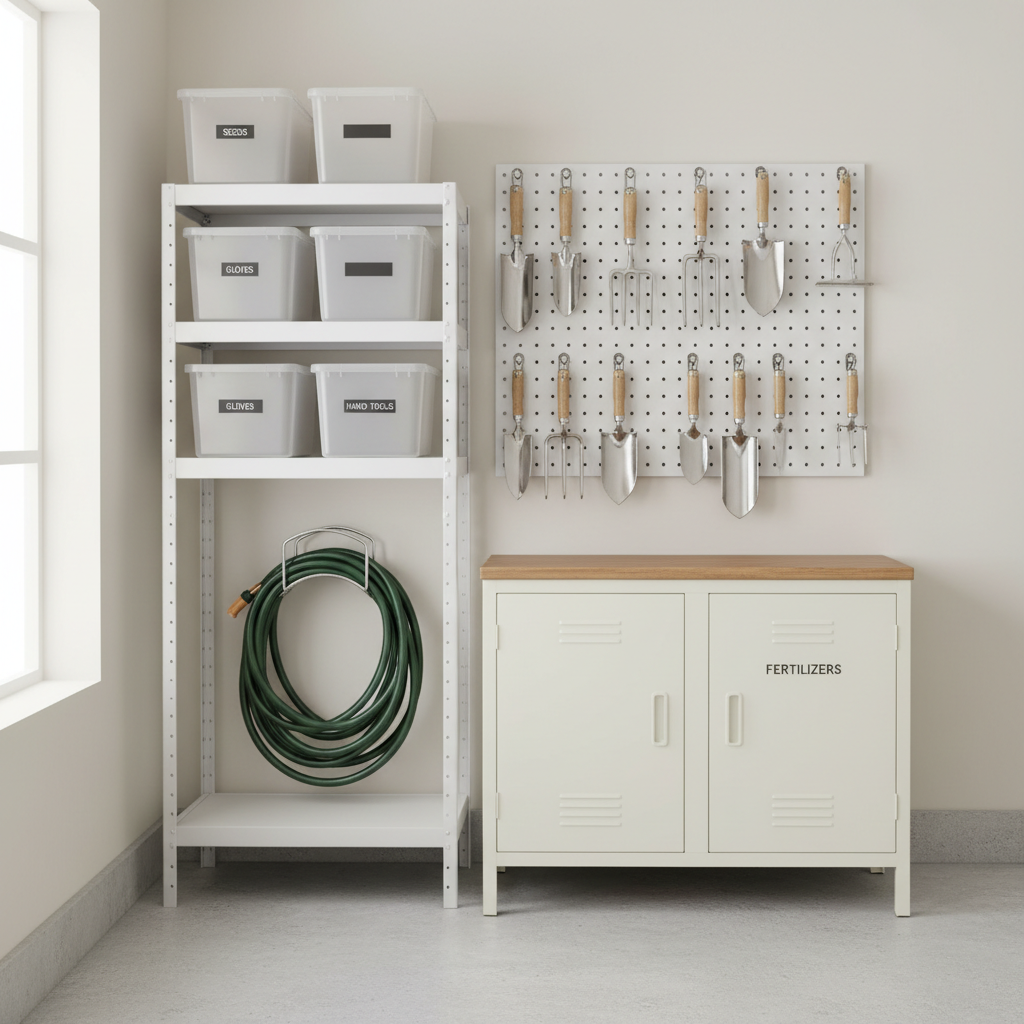
Plan your garage “garden zone” like a workflow
How to organize gardening tools in a garage gets easier when you set it up like you actually move: grab tools, prep, clean, then put away. A simple layout beats fancy systems.
Three zones that usually work in U.S. garages
- Grab-and-go wall: most-used long tools + gloves + pruners, right by the garage door
- Dirty work zone: a small shelf or folding table for potting, plus a bin for empty pots
- Backstock zone: bulk soil, fertilizer, seasonal items on higher shelves
If you only do one thing, keep daily tools at arm height and in plain sight. Hidden storage looks tidy, but it often kills follow-through.
Install the “big wins” first: wall storage and a small-tool home
You don’t need to mount everything at once. Start with the items that create the most mess: long tools and small hand tools.
Wall storage options (pick one and commit)
- Heavy-duty hooks into studs: simple and cheap, ideal for rakes/shovels
- Slatwall/track systems: more flexible if your tools change by season
- Vertical floor rack: good if you can’t drill or you rent
Practical spacing tip: leave a little air between tool heads so you’re not playing hook-tetris every time you put something back.
A “small-tool home” that actually stays organized
- One shallow bin labeled “Hand tools” (not a deep tote)
- A second bin for “Gloves + ties + twine”
- A third for “Irrigation parts” if you use drip lines or fittings
Labels can be basic masking tape. The point is to reduce decision fatigue, not win a design award.
Handle chemicals, sharp tools, and batteries safely
Organizing isn’t just about neatness. Some items should not sit on the floor or next to heat, and some deserve extra separation.
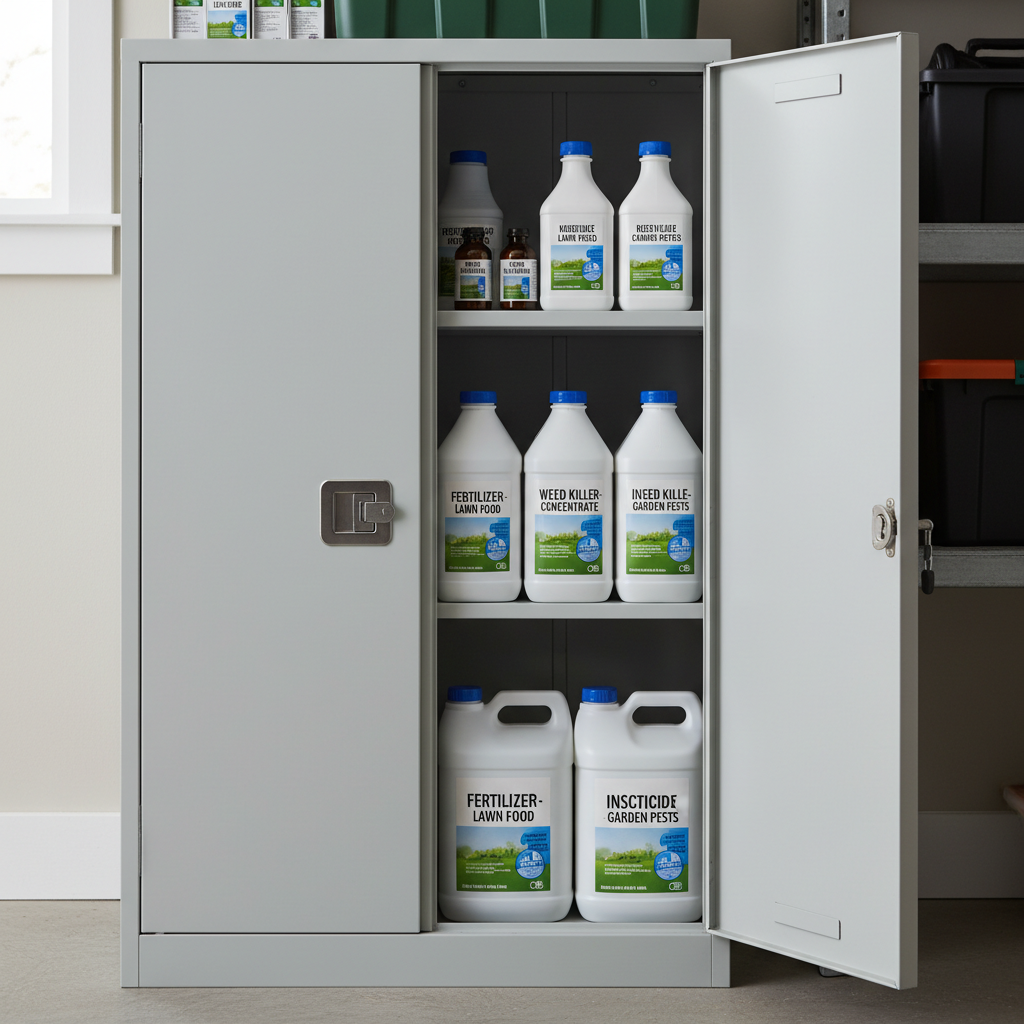
According to the U.S. Environmental Protection Agency (EPA), pesticides should be stored in their original containers with labels intact and kept out of reach of children and pets.
- Chemicals: keep upright in a lidded bin or cabinet, and avoid spots that get hot
- Pruners and saws: store with blade covers or in a dedicated spot so you don’t grab sharp metal blindly
- Battery tools: many manufacturers recommend indoor, dry storage for lithium-ion batteries; if you’re unsure, check your tool manual
If your garage has big temperature swings, consider moving chemicals and batteries to a utility closet. When in doubt, it’s reasonable to ask your local waste authority how to store and dispose of products safely in your county.
A quick self-check: what kind of “garage mess” are you dealing with?
People search how to organize gardening tools because the problem isn’t always the same. Pick the closest description and use the matching fix.
- “Everything falls over”: you need wall hooks or a vertical rack for long tools, not another shelf
- “I can’t find the small stuff”: you need shallow labeled bins or pegboard cups, and fewer categories
- “It’s organized for two weeks, then collapses”: your storage is too hard to put away, lower the friction
- “The garage is tight”: go vertical, use the back of doors, and store seasonal items high
- “I share the garage”: define a clear garden footprint, even if it’s just one wall section
Make it stick: a simple maintenance routine
The difference between “organized once” and “stays organized” is a small habit loop, especially during spring and fall when tools move daily.
- 60-second reset: hang long tools back up and return hand tools to one bin after each session
- Weekly quick sweep: empty soil spills before they become a slippery mess
- Seasonal refresh: move off-season items up high, wipe tools, and replace worn hooks or labels
Key takeaway: if you have to open three lids to put a trowel away, you probably won’t. Reduce steps until it feels almost automatic.
Common mistakes that waste time (and how to avoid them)
- Buying storage before sorting: you end up storing clutter more efficiently, not organizing
- Over-categorizing: too many labels makes cleanup slower, keep categories broad
- Storing damp tools: rust shows up fast; let tools dry, then hang them
- Using weak hooks: bent hooks drop tools and damage handles, choose hardware rated for the load
- Floor-stacking bags of soil: invites tears, spills, and pests; elevate on a shelf or pallet
Practical wrap-up: the fastest path to an organized garden setup
If you want a clean win this weekend, do the 15-minute sort, mount a simple hook row for long tools, and set up two shallow bins for small items. That alone solves most “where did it go?” moments and makes the garage feel bigger.
Then pick one maintenance habit, the 60-second reset is usually the easiest. Once you see the payoff, adding a potting shelf or cabinet becomes an upgrade, not a rescue mission.
Key points to remember
- Organize by use, not by what happens to fit in a tote
- Go vertical for long-handled tools
- Keep small tools shallow and labeled so they don’t vanish
- Store chemicals carefully and keep labels intact
FAQ
- What is the best way to hang long-handled garden tools in a garage?
In many garages, heavy-duty hooks mounted into studs or a track system works well because tools stay visible and don’t tip over. If drilling isn’t an option, a vertical floor rack is a solid fallback. - How do I organize gardening tools in a small garage with no wall space?
Prioritize vertical footprint: a slim rack, over-the-door organizers for gloves and small items, and one shelving unit for backstock. The goal is to keep the floor clear so you can still park or walk through. - How should I store hand pruners so they don’t rust?
Let them dry after use, wipe off sap and dirt, and store them in a dry spot, ideally in a small case or on a hook where air can circulate. Light oiling can help, but follow your tool’s care guidance. - Where should I keep fertilizer and pesticides in the garage?
Many people use a lidded bin or cabinet on a higher shelf, away from direct heat and moisture. Keep products in original containers with labels; if you have kids or pets, add a latch and avoid floor storage. - How often should I reorganize my garden tools?
Usually a quick seasonal refresh is enough, with a weekly mini-cleanup if you garden often. If your setup collapses weekly, that’s a sign the storage is too complicated, not that you need more willpower. - What’s a realistic budget approach to how to organize gardening tools?
Start with what you have: reuse sturdy bins, add a few quality hooks, and label with tape. Once the categories and zones work, you can invest in track systems or cabinets without guessing.
If you’re currently juggling tools between the garage floor, a corner bucket, and random shelves, a simple wall-hanging setup plus a labeled small-tools bin system is often the most “set it and forget it” starting point, and it scales nicely if you later add a potting bench or more shelving.