
Minimalist bedroom decor calm works when you treat your bedroom like a recovery space, not a storage unit with a bed in it. If your room looks “clean” but still feels busy, the issue is usually visual noise, harsh lighting, or furniture that doesn’t match how you actually live.
This matters more than people admit, because your bedroom is the one room you can’t “out-organize” with productivity hacks. A calmer setup often means fewer decisions at night, less sensory clutter, and a space that supports consistent rest.
Here’s what we’ll do: diagnose what makes a bedroom feel unsettled, then map simple upgrades for 2026 trends (warmer neutrals, better texture, smarter lighting) without turning minimalism into a cold, empty look.
What “calm minimalism” really means (and what it’s not)
Minimalism in a bedroom isn’t about having nothing, it’s about making what you keep feel intentional. A calm room usually has fewer competing focal points, softer contrast, and a layout that doesn’t force you to squeeze past furniture.
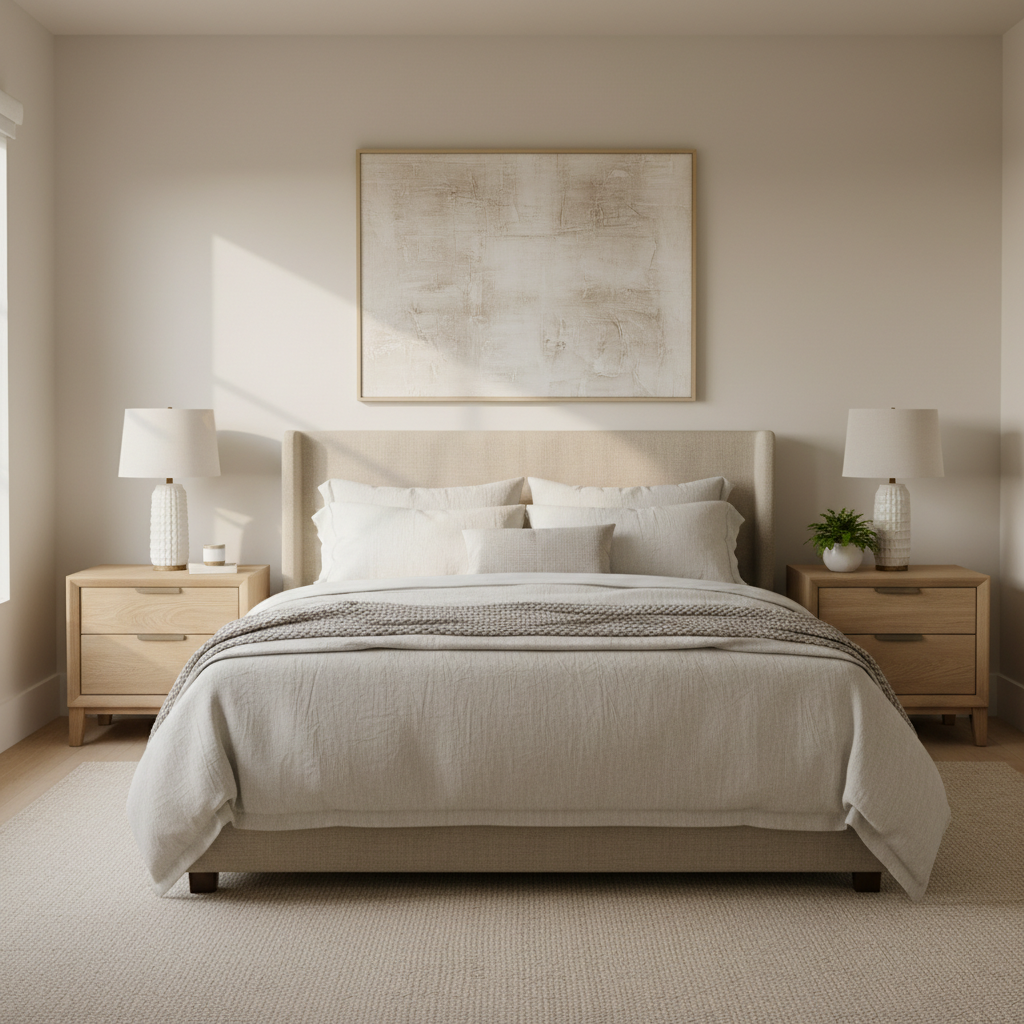
It’s also not the same as “all white everything.” A lot of people try that, then wonder why the room feels sterile. Calm minimalism often looks warmer, with matte finishes, natural fibers, and a limited color story that still has depth.
Key idea: you’re aiming for low stimulation, not zero personality.
- Low stimulation: fewer patterns, fewer small objects, softer lighting
- High comfort: breathable bedding, sound control, cozy textures
- Clear function: each surface has a job, not a pile
Why your bedroom doesn’t feel serene yet (common causes)
Most “not calm” bedrooms share a few predictable problems, and they’re usually fixable without a full remodel.
- Too many micro-items on display: skincare bottles, random chargers, mail, candles, hair tools, souvenir objects. Even if they’re neat, they read as clutter.
- Lighting that’s too cool or too bright: overhead LEDs can make a tidy room feel tense.
- Mismatch between storage and habits: if your routine creates stuff on the nightstand, you need “easy-drop” storage, not a prettier tray.
- High-contrast palette: sharp black-and-white can look stylish but may feel visually loud in a sleep space.
- Overfilled walls: gallery walls can be great, but in bedrooms they often keep the eye scanning.
According to the American Academy of Sleep Medicine, a consistent sleep routine and a bedroom environment that supports sleep are part of healthy sleep habits. Decor is not medical treatment, but it can reduce avoidable friction, like glare, clutter, and “one more task” signals.
A quick self-check: which calm-minimalist type are you?
Before you buy anything, figure out what’s actually breaking the calm. This short checklist helps you choose the right fixes.
Pick the statements that match your room
- I feel better when everything is hidden → you’ll benefit from closed storage and fewer open shelves
- I like cozy, but my room gets messy fast → you need controlled texture (bedding, rug) plus strict surface rules
- My room looks fine in the day but harsh at night → lighting plan matters more than decor
- I’m sensitive to noise/light → prioritize curtains, soft materials, and bulb temperature
- My space is small → layout and scale decisions will do more than accessories
If you checked multiple items, that’s normal. Calm bedrooms usually come from stacking a few small wins, not one dramatic purchase.
The 2026 calm palette: warm neutrals, softer contrast, real texture
In 2026, minimalist bedrooms in the US are likely to keep moving toward warmth. Think “quiet hotel” rather than “art gallery.” You can get there with a tighter palette and better texture choices.
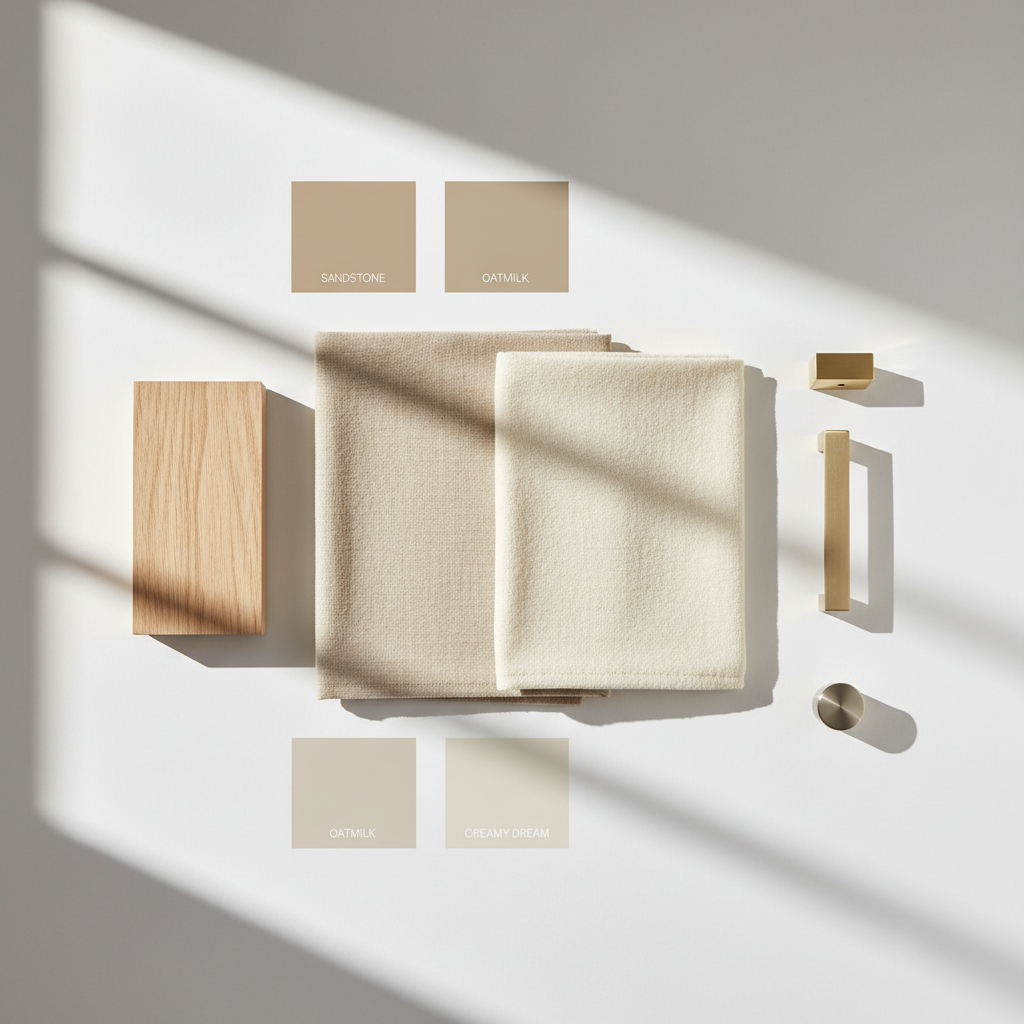
Practical palette rules that keep things calm
- Choose one “main neutral” (warm white, ivory, light beige) for walls and big textiles.
- Add one “grounding neutral” (taupe, camel, soft gray, muted clay) through wood tones, rug, or headboard.
- Limit accents to one note (olive, muted navy, charcoal, terracotta) and repeat it 2–3 times max.
Texture does the heavy lifting
Minimal rooms look expensive when they have texture: linen bedding, a wool or cotton rug, a matte ceramic lamp, a subtle slub weave curtain. If your room feels flat, texture is the fix, not more decor.
Step-by-step setup: build a calm minimalist bedroom in a weekend
This is the order that tends to work in real homes, because it respects how habits form.
1) Reset surfaces with one “landing zone” per person
- Clear nightstands to lamp + book + one catch-all (small box with lid works better than a tray if you hate visual clutter).
- Move everything else into a drawer, cabinet, or a basket inside the closet.
2) Fix lighting before you shop for decor
- Use warm bulbs; many people prefer something around 2700K for bedrooms, but comfort can vary.
- Add two light sources if you can: bedside lamp + floor lamp, or lamp + wall sconce.
- If you rent, plug-in sconces can mimic built-ins without electrical work.
3) Make the bed the visual anchor
- Pick a simple duvet cover (solid or subtle stripe), then add one textured layer: quilt, throw, or blanket.
- Keep pillows honest. If you hate moving five pillows nightly, don’t buy five pillows.
4) Choose two decor pieces that earn their spot
- One wall piece (large art or a calming print) beats a cluster of small frames.
- One natural element (plant, branch in a vase, stoneware) adds life without clutter.
Small bedroom? Use this minimalist layout logic
In tight rooms, “calm” is mostly about walking space and proportions. If you can’t open a drawer without sidestepping, the room will always feel slightly stressful.
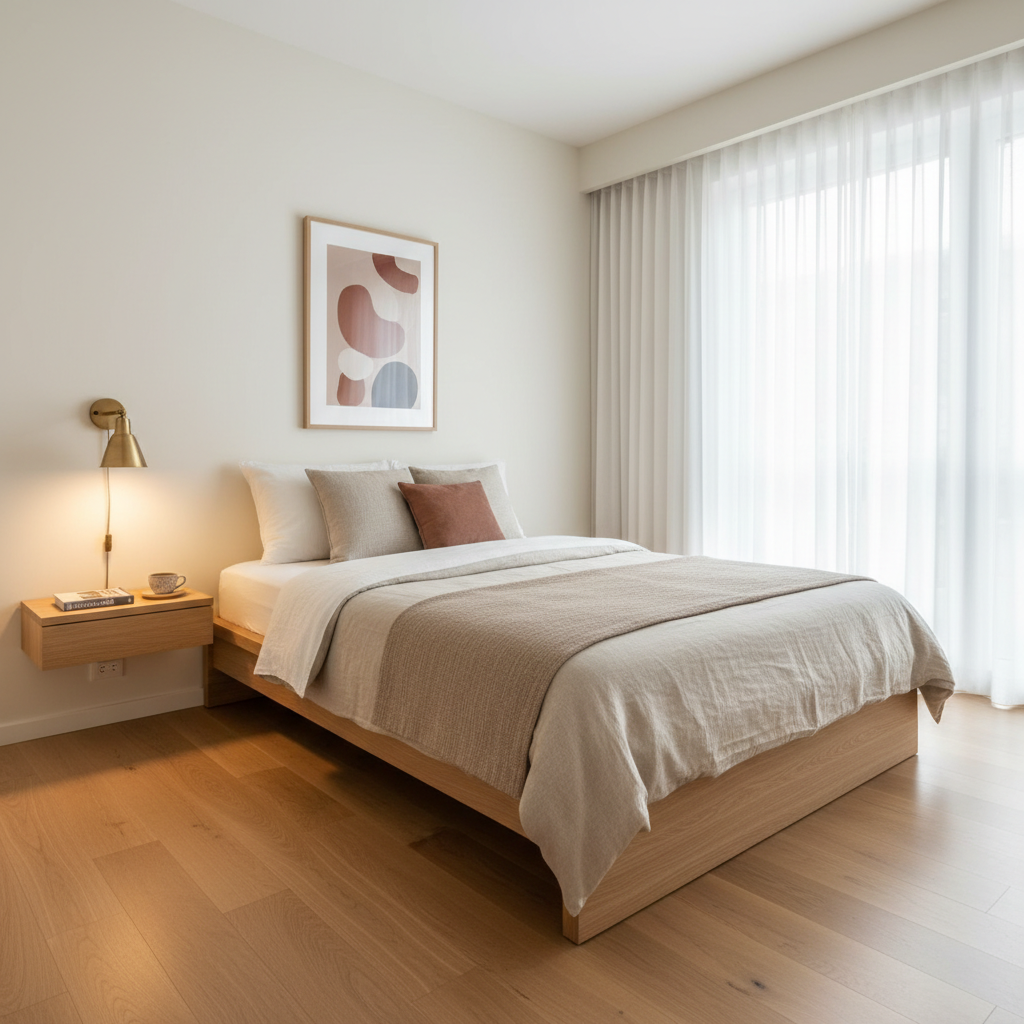
Layout moves that usually help
- Go lower: low-profile bed frames make ceilings feel taller.
- Go slimmer: narrow nightstands or wall-mounted shelves free floor space.
- Go closed: one dresser with doors can feel calmer than open cubes.
- Use one rug, not many: a larger rug can make the room feel simpler than several small ones.
If you’re stuck with an awkward layout, measure before buying. In many cases, swapping to a smaller nightstand or rotating the bed can change the whole flow.
What to buy first (and what to stop buying): a simple priority table
If you want minimalist bedroom decor calm results, spend on things you touch and see daily, then decorate last.
| Priority | Buy/Change | Why it improves calm | Skip if… |
|---|---|---|---|
| High | Warm lighting + bedside lamps | Reduces harshness at night, supports wind-down | You already have warm, dimmable light |
| High | Simple bedding in a tight palette | Largest visual surface, sets the tone | Your current bedding already feels quiet and cohesive |
| Medium | Closed storage (nightstand with drawer, lidded box) | Hides micro-clutter that keeps the eye “on” | You genuinely maintain clear surfaces easily |
| Medium | One large art piece | Creates a single focal point, less visual chatter | Your walls are already calm and balanced |
| Low | Extra decor objects (bowls, figurines, stacks) | Often turns into maintenance, not calm | You have a clear styling plan and strong editing habits |
Common mistakes that make “minimal” feel cold or unfinished
- Too many tiny accents: minimalism hates collections on display, even “cute” ones.
- Ignoring sound and light control: if streetlights or noise bother you, curtains and soft materials matter more than art.
- Buying matching sets by default: a calm room can still mix woods and metals, as long as the undertones make sense.
- Overusing stark black: black is great for structure, but in bedrooms it can read sharp if it dominates.
- Chasing trends weekly: calm rooms come from repetition and restraint, not constant swapping.
Also, if you’re making changes for sleep quality, remember decor is only one piece. If insomnia, anxiety, or breathing issues are involved, it’s smart to talk with a qualified healthcare professional.
Key takeaways (keep this simple)
- Calm minimalism = fewer visible items + warmer light + better texture.
- Fix surfaces and lighting first, then refine palette and decor.
- One strong focal point beats many small ones, especially in bedrooms.
- Storage must match habits, not your ideal fantasy routine.
Conclusion: a calmer bedroom is mostly editing, not shopping
Minimalist bedroom decor calm is achievable when you stop trying to “decorate calm” and start removing what keeps your brain alert at night. Edit the surfaces, warm up the lighting, tighten the palette, then add texture so the room feels finished rather than empty.
If you want a clear next step, pick one: change your bulbs to warm light this week, or clear and reset your nightstand tonight, both have an outsized payoff.
FAQ
- How do I make minimalist bedroom decor calm without repainting?
Start with textiles and lighting: warm bulbs, neutral bedding, and curtains in a soft weave can shift the whole mood even with the same wall color. - What colors feel most serene for a minimalist bedroom in 2026?
Warm whites, sand, oat, and soft taupe are common choices because they feel gentle at night. If you like contrast, use it in small doses, like a charcoal lamp base. - How many items should be on my nightstand for a calm look?
A good rule is 2–3 visible items. If you need more for real life, use a drawer or a lidded box so it still reads quiet. - Can a minimalist bedroom still feel cozy?
Yes, and it usually should. Cozy comes from texture and warmth: linen, wool, soft knits, and lighting that doesn’t feel like a ceiling spotlight. - What if my partner likes more stuff than I do?
Agree on “visible zones” versus “hidden zones.” Many couples do well with one curated shelf for display and the rest stored, so it doesn’t become a daily argument. - Is it better to use one big rug or two small rugs?
Often one larger rug feels calmer because it simplifies the floor visually. Two small rugs can work, but they may chop up the space in smaller rooms. - Do smart lights help with a serene bedroom?
They can, especially if you use dimming and warm presets at night. If setup stresses you out, a simple warm bulb and a plug-in dimmer might be enough.
If you’re trying to get minimalist bedroom decor calm results but keep stalling at the “what do I remove vs keep” step, it may help to build a simple room plan and shopping short-list before you spend, even a one-page checklist can make the process feel a lot more manageable.